


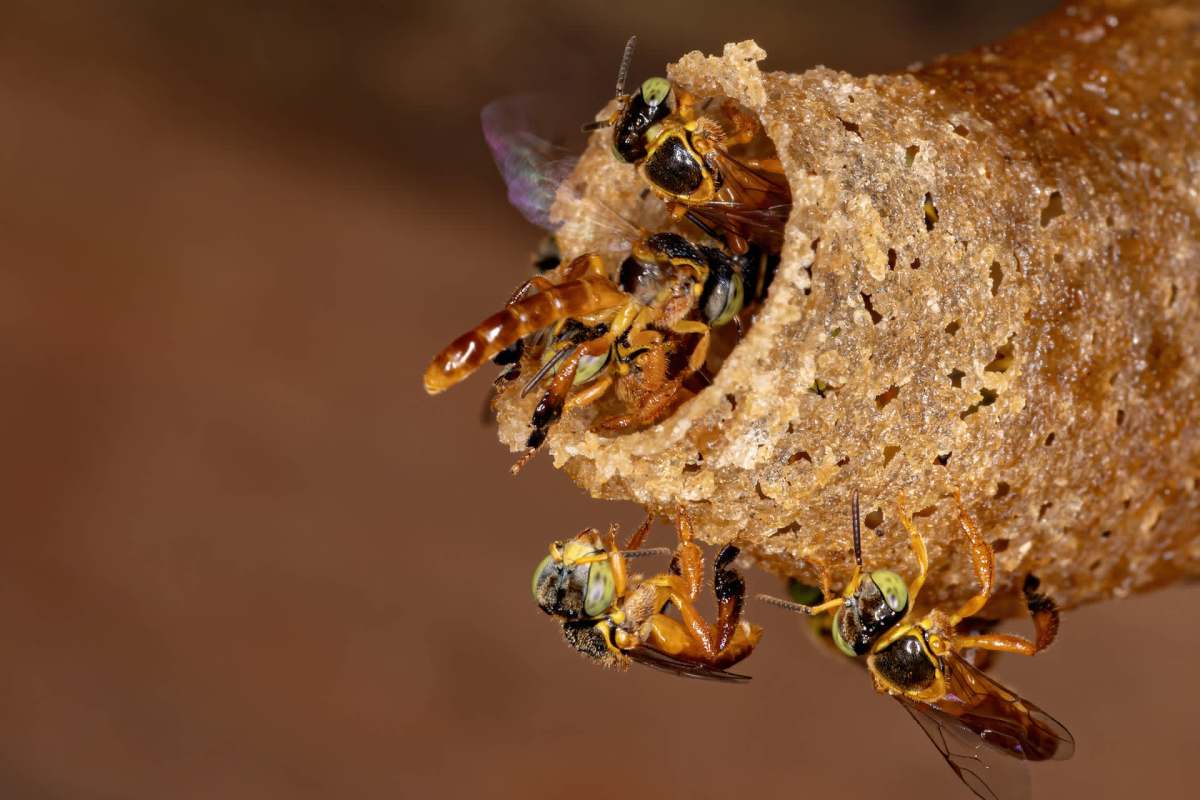
On the edge of São Paulo, a Guarani community is doing everything they can to help keep tiny native stingless bees alive. These pollinators help support forests, food production, and cultural practices, and protecting them also means keeping generations of knowledge alive.
What's happening?
In the Jaraguá Indigenous Territory, Guarani community member Marcio Karai cares for 13 varieties of native stingless bees, including Mirim and Jataí. On Aug. 4, Reuters reported that he was moving part of a colony into a small wooden box to create a new hive.
He said community elders have become increasingly worried as the bees they have long known grow harder to find.
"Our elders are very concerned about the disappearance of these native species that they have always worked with, always had close at hand, and that are becoming increasingly scarce today," he said.
Even though the bees Karai tends are not officially classified as endangered, researchers say native pollinators are facing increasing pressure. Reuters reported that Osmar Malaspina, who leads an ecotoxicology and bee-conservation research group at the Universidade Estadual Paulista, said Brazil has identified around 300 stingless bee species and that ecological damage tied to agricultural expansion may already have caused others to disappear.
Why does it matter?
A major intergovernmental biodiversity assessment from 2016 found that wild pollinators such as bees are at risk in many parts of the world because of climate change, deforestation, and pesticides.
TCD Picks » Quince Spotlight
💡These best-sellers from Quince deliver affordable, sustainable luxury for all




Pollinators such as bees are a keystone to global farming and the ecosystem — Reuters noted that animal pollinators are necessary for 90% of wild flowering plants worldwide to reproduce, and that about 75% of crops grown for people depend at least partly on pollination.
For the Guarani community, the issue is also spiritual. Honey and wax from stingless bees are used in religious life, including in candles for ceremonies.
Protecting the bees also means preserving language, spirituality, and knowledge shared between generations.
What's being done?
Karai practices meliponiculture, the care of stingless bees, by transferring material from established hives into new ones. Unlike traditional beekeeping, meliponiculture produces smaller amounts of honey that are often considered more valuable. That careful expansion helps the bees survive and reproduce in an increasingly urbanized landscape.
This work is happening in the Jaraguá Indigenous Territory, an area of Atlantic Forest that is increasingly being pressed by São Paulo's suburbs.
He described the effort as a duty to both the natural world and the people who will come after, saying his community sees itself as "the guardians of these species that are so important to our ecosystem, to our lives, and to future generations."
He also said, "We understand that the Jataí bees are also experiencing this same process of resistance."

Get TCD's free newsletters for easy tips, smart advice, and a chance to earn $5,000 toward home upgrades. To see more stories like this one, change your Google preferences here.







