


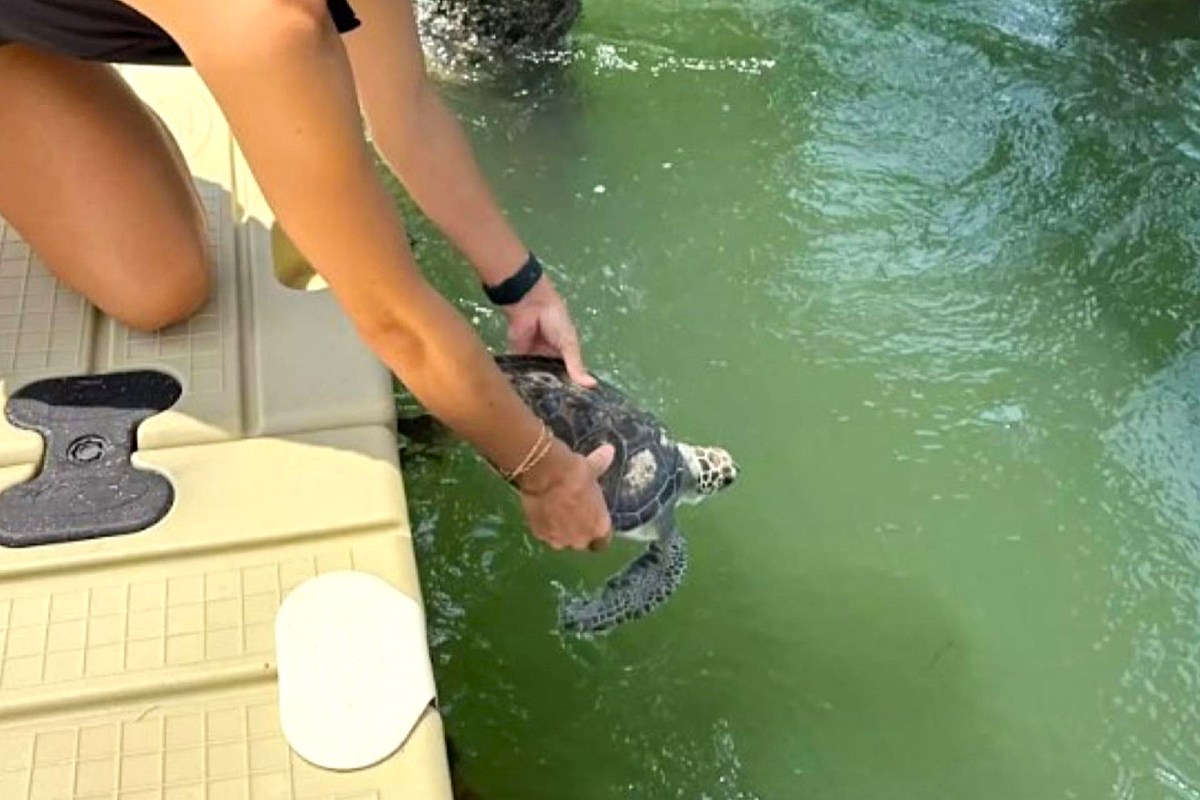
Months after a small green sea turtle was found in distress off the North Carolina coast, the animal has been released back into the wild following rehabilitation efforts.
For the local scientists who first came across the turtle during spring fieldwork, the release also brought the effort back to where it began.
What happened?
In April near Harkers Island, a research team working through the Center for Marine Sciences and Technology found a turtle in trouble.
North Carolina State University Ph.D. candidate Lindsay Curl was the first to spot it, and the group quickly brought the distressed animal to their facility.
From there, as Public Radio East reported, the North Carolina Aquarium's veterinary team assessed the turtle for injuries and maladies before it was moved to the Pine Knoll Shores facility for further rehabilitation.
This week, the turtle was released back to the ocean, and the same rescuers who had first found it were there to witness the final step in its recovery. Public Radio East shared an image of the green sea turtle being placed back into the water.
TCD Picks » Quince Spotlight
💡These best-sellers from Quince deliver affordable, sustainable luxury for all




The bittersweet release came after months of care that helped the young green sea turtle regain some weight and rebuild its strength.
Why does it matter?
Green sea turtles play an important role in coastal ecosystems. By feeding on seagrass and algae, they help maintain healthier underwater habitats, benefiting other marine species and supporting the resilience of shorelines that many communities depend on.
And in coastal North Carolina, healthy marine ecosystems support recreation, tourism, fishing, and local communities.
But sea turtles face countless threats including pollution, illness, and changing ocean conditions. And warming sands can impact turtles too, affecting even what fraction of eggs turn out to be male or female.
Luckily, rehabilitation centers give these animals a second chance while helping scientists better understand the challenges the species faces.

Get TCD's free newsletters for easy tips, smart advice, and a chance to earn $5,000 toward home upgrades. To see more stories like this one, change your Google preferences here.






