


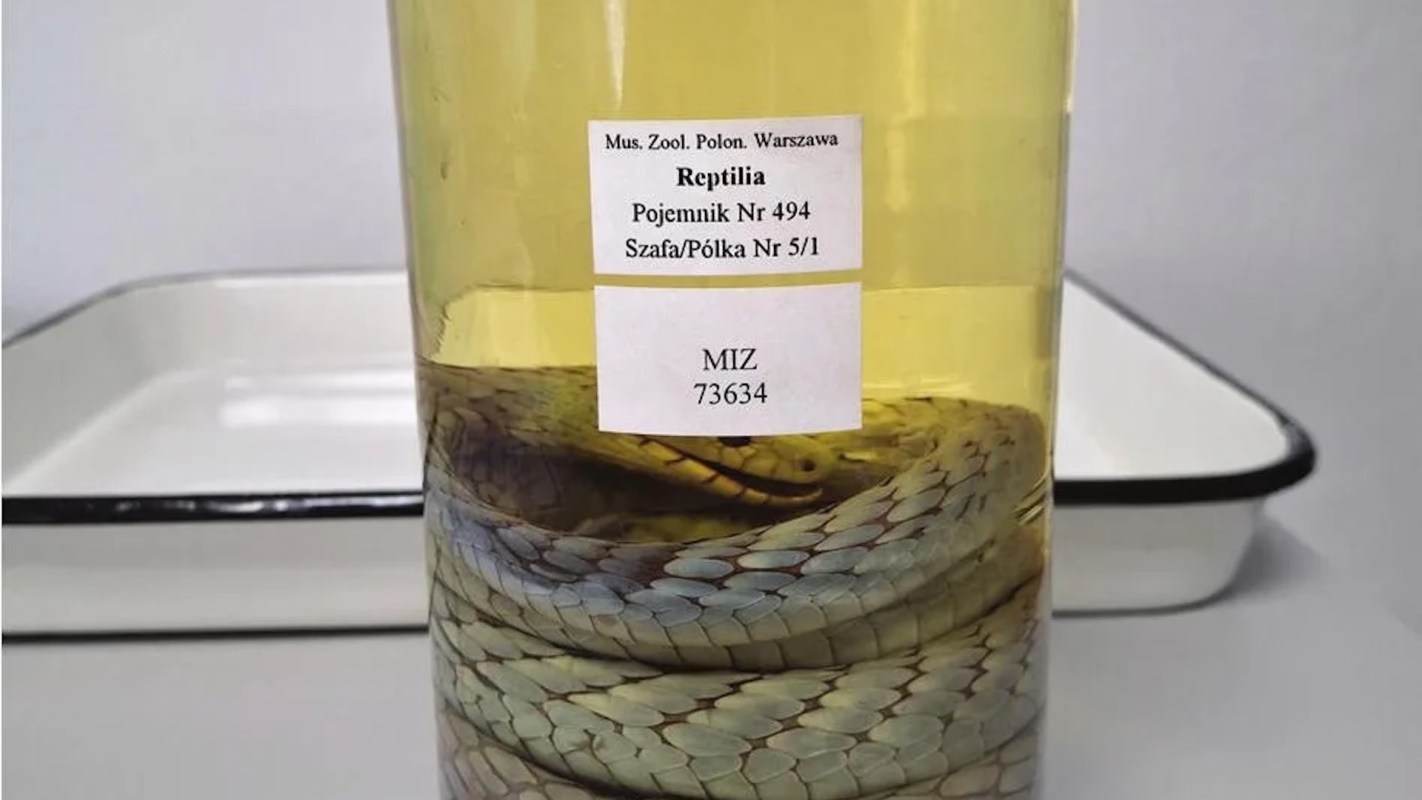
A preserved green snake in a jar could help answer one of São Tomé and Príncipe's longest-running wildlife questions: Did a green mamba really live on the islands, or has the record been mistaken for more than 150 years?
The mystery carries weight because on remote islands, a single confirmed specimen can change what scientists believe about native wildlife, evolution, and even public safety planning, as the BBC's Discover Wildlife reported.
Here's what to know
Scientists hope that a fresh look at a historic snake specimen will help settle a long-standing identification question.
When an animal appears in older records but lacks clear modern confirmation, the specimen associated with it can come to be treated almost like a ghost.
Wildlife records on isolated island chains often rely on a small base of museum samples, field notes, and historical documentation. Confirming one of those records can widen a species' accepted range, while disproving it can undo assumptions that stood for decades.
Researchers are trying to determine whether the snake was ever truly part of the islands' fauna, not whether the islands are suddenly facing a snake emergency.
TCD Picks » Quince Spotlight
💡These best-sellers from Quince deliver affordable, sustainable luxury for all




A museum specimen can be important evidence and still say nothing about large numbers of snakes currently moving across the islands.
More background
Researchers can study older preserved animals again with methods unavailable to earlier researchers, such as finer measurements, updated taxonomic rules, and DNA testing.
Because island species are often shaped by geographic separation, adding or removing one animal from the official record can alter scientists' understanding of ecological history and of how wildlife may have reached the islands at all.
Accurate species lists also have practical value. They can support stronger conservation policies, inform more reliable school and tourism materials, and improve medical preparedness if health agencies need to know which venomous animals are actually present in a region.
What's being done?
The work centers on checking archived specimens against known species and asking whether records accepted for years still hold up under modern standards.
That process could bring benefits beyond this single snake. Better museum collections, stronger cataloging, and more field surveys all help improve conservation decisions. When species are correctly identified, researchers and governments can make more informed choices about habitat protection and public education.
If someone encounters a snake, the safest response is still to keep a distance, avoid handling it, and report unusual sightings through the appropriate local channels.
Either result would be meaningful. If the ghost snake proves to be a real island record, scientists gain a missing piece of the islands' natural history.
If not, they still strengthen the scientific record by correcting a mistake that lasted far too long.
Where can I learn more?
These snake stories show how surprise encounters and fresh research can change what people think they know about elusive and venomous species.
• In China, scientists encountered a secretive mountain snake rarely seen in forest surveys.
• In Sichuan, China, fieldwork brought a rare reed snake back into view after decades.
• Under a forest log in India, researchers identified a bizarre snake species with pointed teeth.

Get TCD's free newsletters for easy tips, smart advice, and a chance to earn $5,000 toward home upgrades. To see more stories like this one, change your Google preferences here.






