


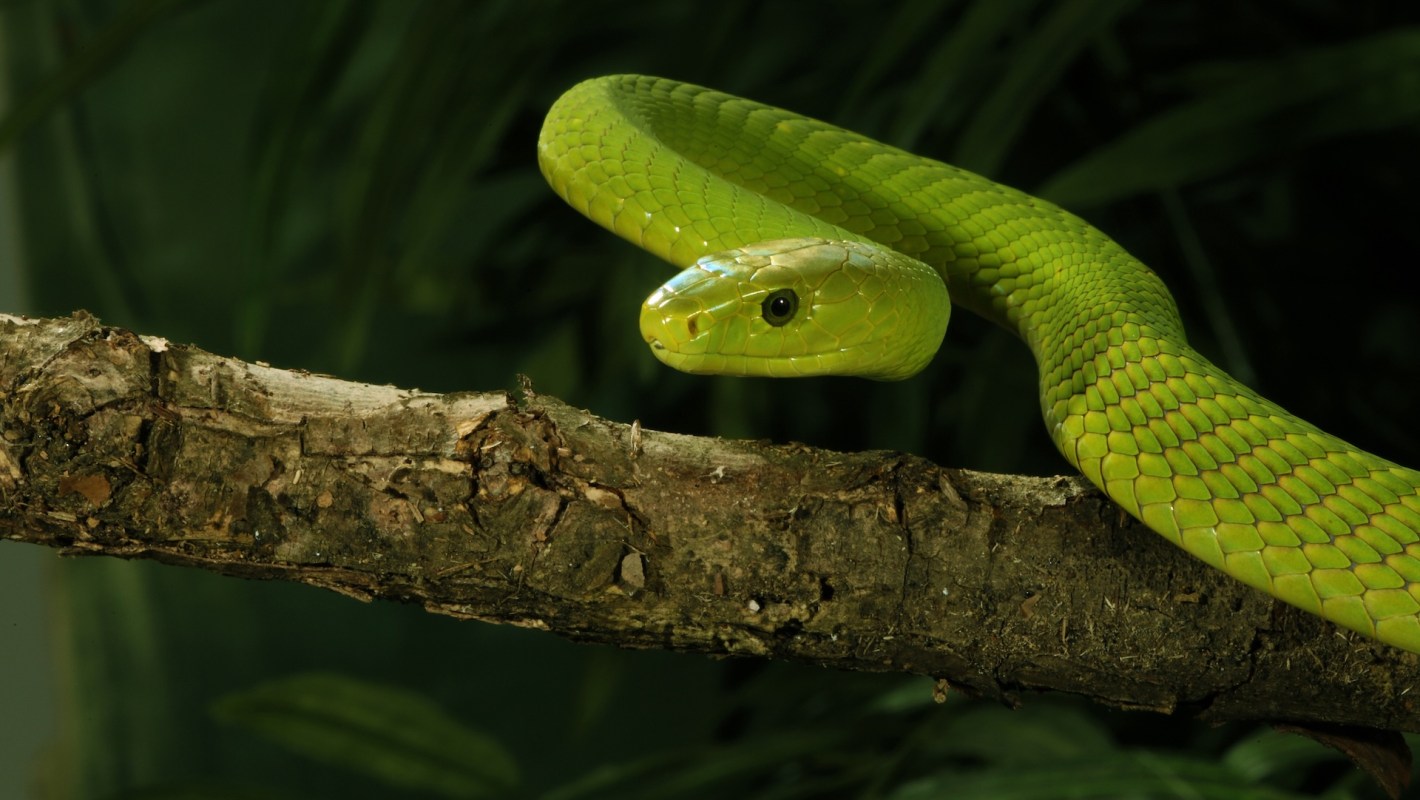
A snakebite far outside its usual range left a man unable to breathe without help.
In Switzerland, doctors treating the 59-year-old after a West African green mamba bite turned to a monitor they'd normally reserve for the operating room, not snakebite care.
Here's what to know
According to Medical Daily, the case report, published in the journal Toxicon by physicians at Lausanne University Hospital and a toxicologist from a French military hospital, described a course that began with swelling in the affected limb and progressed to worsening weakness, respiratory failure, and intensive care treatment.
The main threat was progressive paralysis, which fits the venom profile of the West African green mamba, or Dendroaspis viridis. The slim, arboreal elapid is native to West Africa's coastal forests, and its toxins mainly disrupt communication between nerves and muscles.
Although such bites are unusual in Europe and the United States, the authors said cases like it are becoming more common as exotic reptile ownership grows in wealthier countries. The emergency unfolded far from the mamba's natural range after a dangerous species was transported across continents.
Snakebite remains one of the world's most overlooked public health threats. World Health Organization figures put the global death toll from envenoming at up to 138,000 people a year, with roughly 400,000 survivors left permanently disabled, most of them in rural parts of Africa, Asia, and Latin America.
TCD Picks » Quince Spotlight
💡These best-sellers from Quince deliver affordable, sustainable luxury for all




More background
Alongside antivenom, the medical team used quantitative neuromuscular stimulation, also known as train-of-four monitoring. Anesthesiologists typically reach for that same device after surgery to check that a patient's muscle-paralyzing medication has cleared before they regain consciousness.
Here, the team repurposed the monitor to track whether nerve-to-muscle signals were still getting through after the bite. The authors didn't present that step as standard care; instead, they described it as an improvised approach that may deserve further study, while emphasizing the obvious limits of drawing conclusions from a single patient.
Getting antivenom to the patient can be harder than deciding to use it. A hospital must identify the species, choose the right product, find a supply that may be far away, and get it there under refrigeration, all while the patient's condition worsens.
What can be done?
The authors argued hospitals need a plan in place before a bite ever happens. Their recommended approach includes quickly recognizing the syndrome, identifying the species whenever possible, and coordinating among emergency teams, ICU doctors, surgeons, pharmacists, and snakebite specialists.
Switzerland isn't new to this kind of emergency. An earlier report tied the country to about 80 snakebite cases involving exotic species, logged by the Swiss Poisons Information Centre over the previous decade.
The United States has developed a more formal sourcing system through the Antivenom Index, a database run by the Association of Zoos and Aquariums. It helps hospitals find accredited zoos or aquariums with the needed product, though it works only if a U.S. zoo happens to stock antivenom for that species.
A separate review of the National Poison Data System, published in the journal Toxins, found that exotic venomous snakes caused 258 human exposures over seven years, spanning at least 61 species. About 70% of those bites happened at home.
Where can I learn more?
This Swiss green mamba case sits alongside other snakebite emergencies and treatment efforts. These stories range from experimental antidotes and unusual mamba exposures to severe bites in Florida, Egypt, and India.
• At the University of Texas, scientists are testing a speedy snakebite treatment that could improve emergency care.
• For one handler, repeated black mamba bites led to a dangerous tolerance to venom.
• In Florida's Big Cypress National Preserve, a venomous snakebite sent one person to the hospital.
• In Hurghada, Egypt, a cobra slithered up a tourist's pants during a fatal snake show.
• In India, rising temperatures are driving a looming public health crisis as snakebites increase.

Get TCD's free newsletters for easy tips, smart advice, and a chance to earn $5,000 toward home upgrades. To see more stories like this one, change your Google preferences here.






