


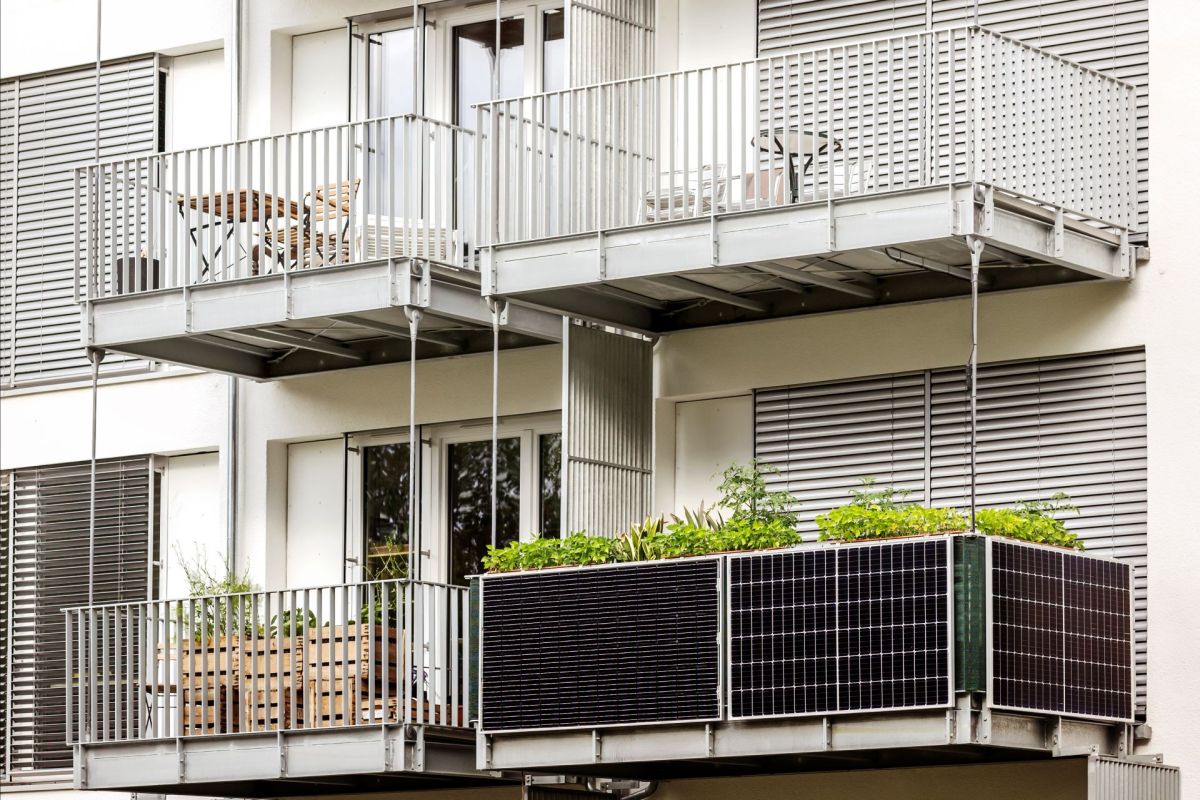
Small solar panels mounted on apartment balconies could soon become a legal option in Greece, marking a notable shift in how residents generate their own electricity.
What's happening?
According to PV Magazine, new reforms proposed by Greece's Ministry of Environment and Energy would allow residents to install small, 800-watt solar panel systems on their balconies.
It is part of a wider reform package that could change how individual consumers install solar panels and battery backup systems.
Power from those balcony photovoltaic systems could be used only on-site, with no electricity allowed to flow back into the grid. The ministry said the units would also need to meet safety standards meant to protect the grid and nearby electrical installations.
Battery storage for homes is also included in the proposal, but only when it is dedicated exclusively to self-consumption. The reform package, which went through public consultation earlier this month, also aims to make collective self-consumption easier in apartment buildings and residential complexes, as reported by PV Magazine.
Why does it matter?
For apartment residents, rooftop solar has often been difficult or entirely out of reach. Balcony solar could open the door to lower electricity bills for households that do not own a home or have control over their roof, especially in dense urban areas where shared living is common.
TCD Picks » Quince Spotlight
💡These best-sellers from Quince deliver affordable, sustainable luxury for all




The proposal also reflects a broader push to make clean energy more accessible.
Greece's ministry said, per PV Magazine, that "strengthening energy democracy through self-consumption remains a key priority for the Greek government," signaling that officials see small-scale solar as more than a niche add-on.
The proposed amendment is meant to tackle administrative and regulatory problems that emerged under the current rules.
The ministry said, according to PV Magazine, it would "regulate deficiencies that arose during the implementation of the existing self-consumption framework" by clarifying how self-consumption schemes are carried out.
From 2015 to 2019, CEEnergyNews said Greece commissioned 1,772 self-consumption systems totaling 36 megawatts. Since 2020, that has grown to 37,407 systems with a combined capacity of 1,070 megawatts.
The outlet added that the ministry is also planning a faster rollout of smart meters for owners of self-consumption systems. That could make electricity use easier to track accurately and support smoother participation in new energy-sharing arrangements.
The overhaul also includes plans for an electronic self-consumption registry. The goal is to move administrative procedures online and improve data sharing among stakeholders, which could reduce paperwork and simplify how households install and manage these systems.

Get TCD's free newsletters for easy tips, smart advice, and a chance to earn $5,000 toward home upgrades. To see more stories like this one, change your Google preferences here.






