


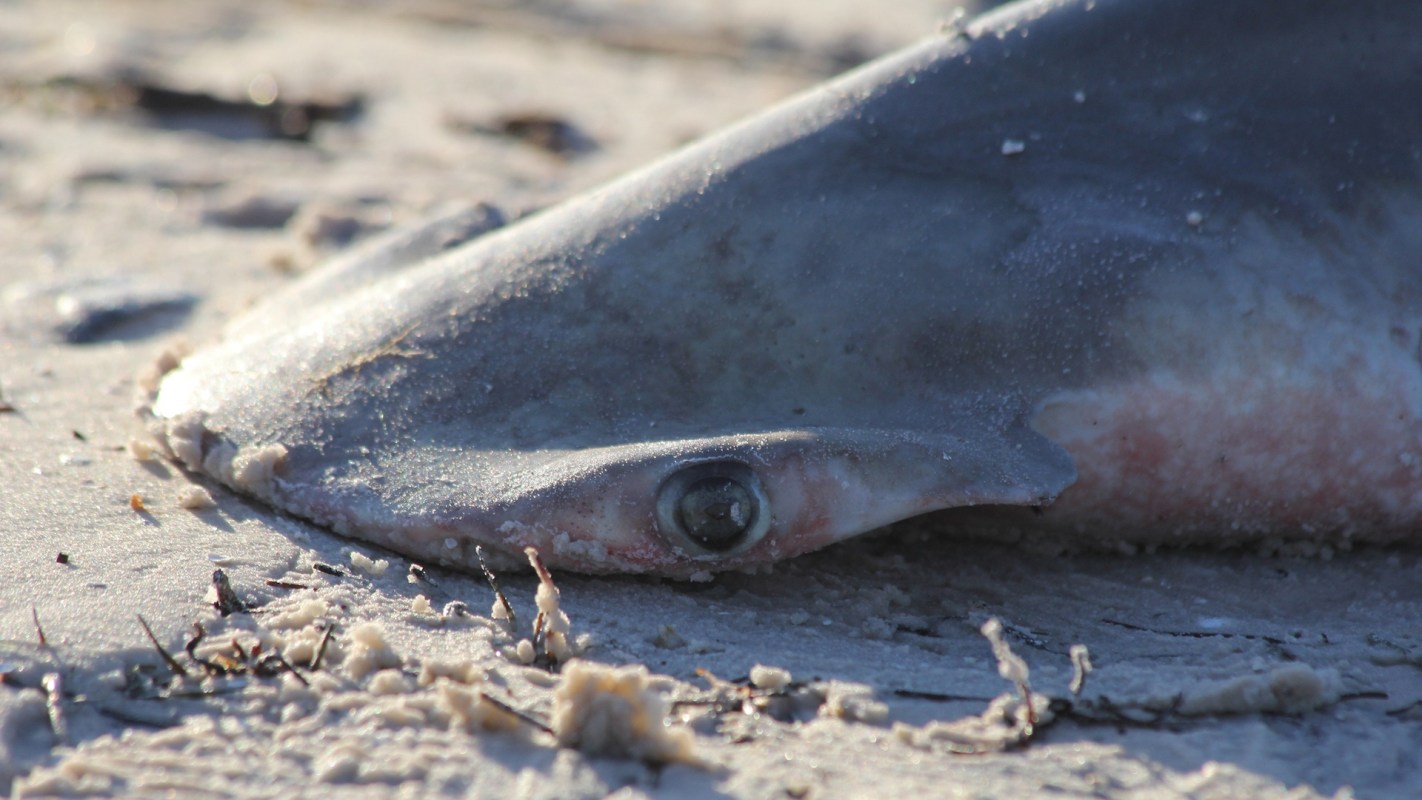
Another dead great hammerhead shark was discovered on a Florida beach this summer, deepening concerns among biologists and conservation advocates over the dwindling species.
The Jupiter, Florida, discovery brings the statewide count to at least six dead great hammerheads found in 2026, an upsetting total for a species that is critically endangered and illegal to hunt or harvest from Florida waters.
What happened?
Jupiter resident and musician Christopher Ray found the deceased shark south of the Jupiter Beach Resort, according to reporting from the Tallahassee Democrat. Although the body showed no obvious external injuries, scientists say that alone does not point to a natural death.
That lack of visible trauma has not persuaded experts that the shark simply died on its own. As the Democrat reported, a shark can end up onshore without clear outward signs of what killed it.
Hammerheads can die after prolonged struggles with fishing lines, and show few signs of their cause of death. And even those released from fishing lines may still eventually die from exhaustion.
"A natural death is not something we can rule out, but I can say it's very unlikely," Spencer Roberts, a University of Miami shark scientist and director of the nonprofit Fish Defender, told the Democrat. "Sharks sink when they die. If every shark that died in the ocean floated around, they would be all over the beach."
TCD Picks » Quince Spotlight
💡These best-sellers from Quince deliver affordable, sustainable luxury for all




Roberts and others suspect shore-based shark fishing could be part of the issue.
Elsewhere in Florida in 2026, dead great hammerheads have also been found in Hobe Sound, Juno Beach, Venice, Naples and Atlantic Beach, according to the Democrat. In Juno Beach, one carcass had been found mutilated, with its fin and tail cut off, a crime in the state.
Why does it matter?
The International Union for Conservation of Nature lists great hammerheads as critically endangered, with their numbers still decreasing.
This is especially concerning because healthy shark populations help maintain balanced marine ecosystems, which in turn support fisheries, coastal economies and the ocean environments many Florida communities rely on for recreation and tourism.
Florida law also prohibits the harvesting of them or their parts, making at least one of these finds a criminal matter.

Get TCD's free newsletters for easy tips, smart advice, and a chance to earn $5,000 toward home upgrades. To see more stories like this one, change your Google preferences here.






