


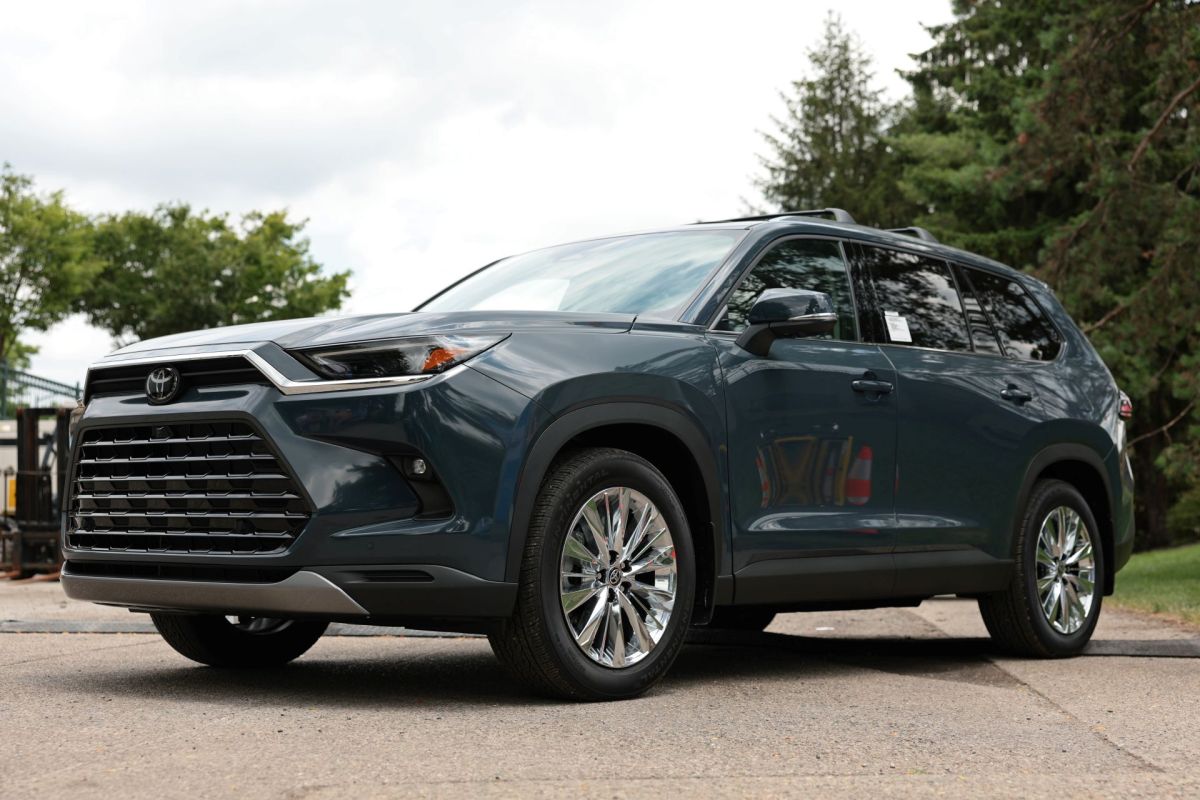
Camping trips and blackout prep have one 2025 Grand Highlander Hybrid Limited owner asking whether Toyota's factory 1,500-watt inverter can handle charging a Jackery 2000 v2, even though Jackery rates the bigger unit's AC input at up to 15 amps, or about 1,800 watts.
Here's what to know
In a Reddit post on r/Jackery, the owner explained that they already use the hybrid's two 120V AC outlets to recharge a Jackery 1000 v2 and want to step up to the 2042Wh Jackery 2000 v2 without losing that capability.
If the larger unit works with the built-in outlets, the owner could rely on the vehicle's existing equipment rather than buying a separate charging solution for campsites or power outages.
The user described the existing arrangement simply, stating that it "works great." Later, in response to another comment, they wrote, "The pure sine is a good point, but it doesn't matter in my case since I already charge 1000 v2 from those same outlets ... The 2000 v2 uses the same charging design."
A reply suggested the 2000 v2 might charge from the SUV's inverter anyway, just not necessarily under every charging setting.
One person said the unit's normal draw is "around 1200w iirc" and becomes "much lower" with quiet charging enabled. A separate commenter, citing Jackery Tech Support, posted firmer numbers: "Emergency Charge: 1700-1800 watts," "Standard Charge: ~1500 watts," and "Quiet Charge: ~400 watts."
TCD Picks » Quince Spotlight
💡These best-sellers from Quince deliver affordable, sustainable luxury for all




More background
The uncertainty comes from the difference between the power station's top AC-input spec and the vehicle inverter's output limit.
Jackery lists the 2000 v2 at 100-120V AC input with a 15A maximum, which works out to roughly 1,800 watts, versus the Grand Highlander Hybrid's 1,500-watt factory inverter.
Jackery's published recharge times also suggest the power draw varies by mode rather than staying fixed: about 1.7 hours in Emergency Super Charge, two hours in standard, and five hours in silent.
Using a factory vehicle inverter this way lets a hybrid serve as a backup charging source during an outage without a separate portable generator.
If quiet mode is the only workable setting, the benefit is convenience and avoiding extra hardware, but the downside is slower refills than the higher-draw modes.
What can be done?
Rather than treating the 15-amp input rating as the only number that matters, the better test is whether each charge mode stays under the inverter's limit.
The commenter who shared the tech support figures said quiet mode draws about 400 watts, comfortably beneath Toyota's 1,500-watt rating.
That same commenter was far less confident about the faster options, writing, "For the 2000v2, I think it's pretty certain that Emergency Charge is a no-go, Standard Charge is likely a no-go, unless your truck's inverter is under-rated, and Quiet Charge will work fine."
If those figures are accurate, this specific combination of vehicle and power station may realistically be limited to quiet mode.
Two other checks came up before buying.
One person warned that some power stations do not like certain inverter waveforms and specifically asked whether the SUV uses pure sine output. Another pointed to a slower backup option based on experience with a smaller Jackery, saying, "It's just slow but works well," about charging a Jackery 1000 v2 from a lighter outlet.
Where can I learn more?
These stories add broader context on Toyota charging tech, battery plans, and how drivers think about how much charging equipment they actually need.
• Toyota and Lexus just added a long-awaited route planning feature electric vehicle drivers had been requesting.
• Toyota says its solid-state battery program could deliver 745-mile range and 10-minute charging.
• Drivers in two-EV homes say one charger is usually enough for daily use.

Get TCD's free newsletters for easy tips, smart advice, and a chance to earn $5,000 toward home upgrades. To see more stories like this one, change your Google preferences here.






