


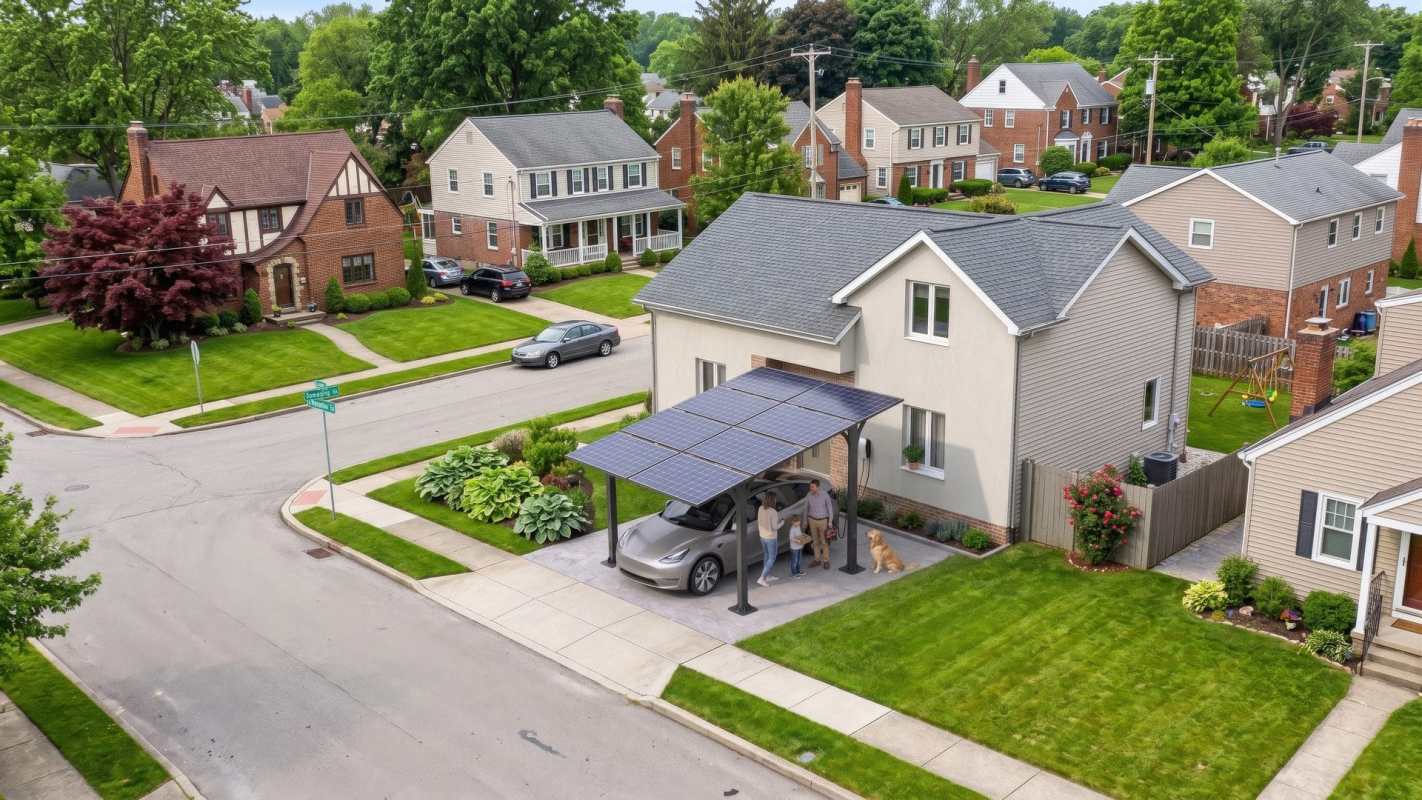
GoSun is promoting a solar carport that can be assembled in a day without concrete footers or permits, potentially allowing homeowners a way to generate electricity while sheltering their vehicles.
That being said, do local permits and physical reality line up with GoSun's claims?
Here's what to know
The GoSun Solar Carport combines a 4-kilowatt solar array with an approximately 195-square-foot structure, according to a Reddit discussion detailing the product information. Buyers can choose a basic solar structure, a grid-tied package, or a battery-equipped configuration.
The kit allegedly arrives in a single crate and can be assembled with basic hand tools by a team of two or three. Engineered base plates secure the structure to an existing surface, avoiding the need for concrete footers in many applications, the company says.
The permit claim is based on the carport's footprint falling below a common 200-square-foot threshold for accessory structures. Still, GoSun tells buyers to confirm the requirements for their property, since size alone does not make every installation exempt.
Going solar is one of the best ways to save money on home energy, and for those ready for a rooftop setup, solar leases in particular can deliver hundreds of dollars in monthly savings without upfront costs. Homeowners can use EasyHome's free explorer tool to see potential savings from vetted installers in their area.
More background
GoSun lists powering electric tractors, utility vehicles, e-bikes, tools, pumps, and homes as potential carport uses. The structure can also shelter equipment or serve as a backyard pergola or outdoor workspace while generating electricity overhead.
The company estimates that the 4-kilowatt array can generate enough energy on a sunny day for about 25 to 75 miles of driving. Actual production varies with installation quality, inverter choice, weather, panel positioning, shade, time of year, and location.
Crushed by your bills? See instant solar savings from vetted installers in just a few clicks With energy prices through the roof, there's never been a better time to go solar — and EasyHome can help you find the best prices from the best installers in your area. EasyHome takes the guesswork and headaches out of energy upgrades by showing you estimated savings from a network of vetted local partners. To get started, just enter your ZIP and share a few details about your home — seeing your estimate is really that easy. |

One commenter pushed back on the claims, saying, "The bigger concerns is their comments about no permit and no footers. My town for one requires a permit." They added, "More importantly without footers it will fly away in a wind."
Another commenter noted that, "Normally under 200 sq/ft structures = no permit, but as soon as you add electricity it changes everything."
The comments mixed curiosity with caution. The idea of a solar carport was genuinely intriguing, but the company's claims made some skeptical.
What can be done?
Before ordering, buyers should follow GoSun's instructions to check local requirements and choose anchoring suited to their property.
GoSun lists earth anchors and ground screws as options, along with anchors for asphalt or concrete and epoxy-set anchors. Avoiding concrete footers does not eliminate the need for site-specific work to secure the carport for a windy day.
GoSun also notes that the location and selected configuration determine the final snow and wind ratings. While its powder-coated steel structure and 10-degree roof are designed for outdoor exposure, those features do not remove the need to check engineering requirements for a particular installation.
For homeowners comparing clean energy options, EasyHome can also help them explore backup battery storage alongside solar. Pairing solar with a properly configured battery allows homeowners to maximize savings and power their home with solar when the grid goes down.
GoSun is accepting fully refundable reservations for its first production run, and actual shipping is scheduled for 2027, meaning buyers are placing a preorder rather than purchasing a kit available for immediate delivery.
Where can I learn more?
Installing a solar carport or backyard array means checking structural requirements and local permitting rules. These stories cover carport costs, certification requirements, wind-resistant footings, and local rules for homeowner solar projects.
• A homeowner's $14,000 carport solar quote highlighted wind requirements as a major cost factor.
• A U.K. builder's timber solar carport plans ran into complications over MCS accreditation requirements.
• A California DIYer questioned footing requirements for solar amid concerns about Santa Ana winds.
• A New York homeowner planning a backyard solar installation learned permits come before inverter decisions.
• A New York homeowner worried about DIY solar's legal status learned local permits determine requirements.

Get TCD's free newsletters for easy tips, smart advice, and a chance to earn $5,000 toward home upgrades. To see more stories like this one, change your Google preferences here.






