


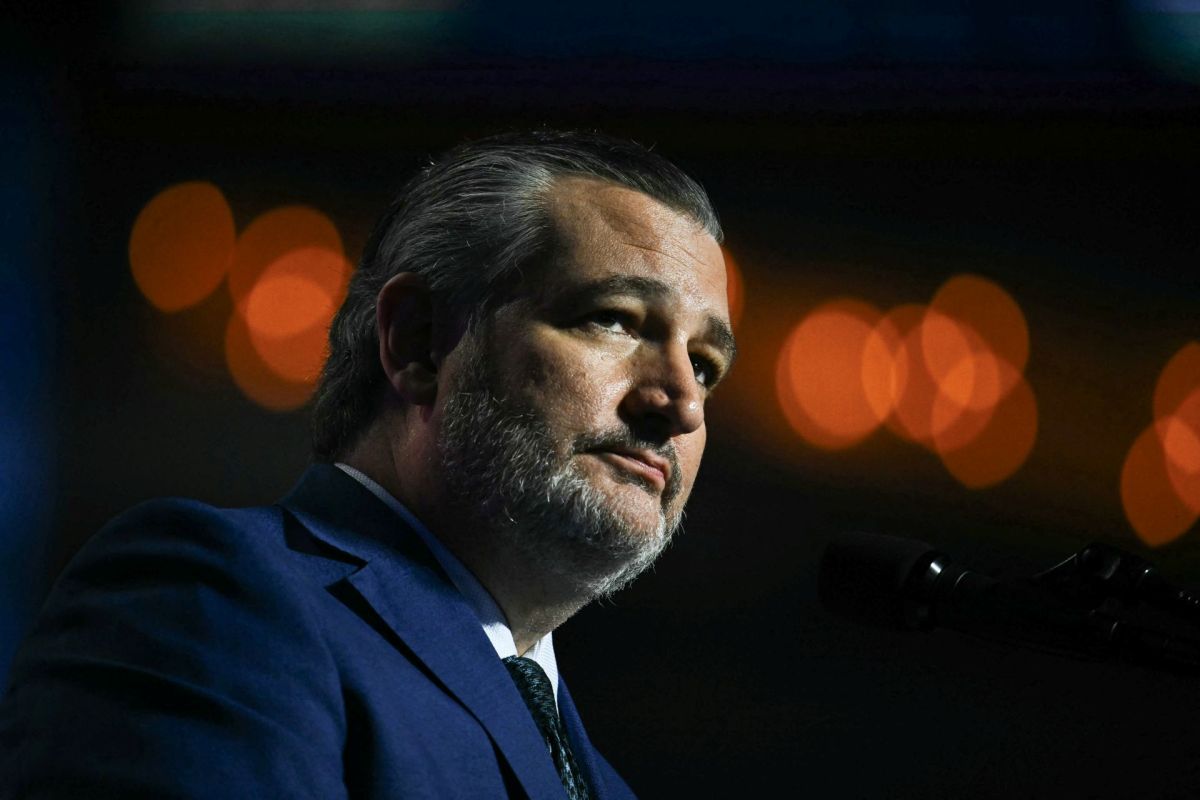
A blunt defense of accelerating artificial intelligence development is reigniting concerns about how U.S. leaders are framing the country's tech race with China.
In an Instagram clip from an interview with Senator Ted Cruz, Politico captured that anxiety in its caption, noting that even while defending AI development, Cruz called it "scary as hell."
Here's what to know
Rather than treating a slowdown as the starting point, Cruz presented AI as a competition, even with lawmakers and experts calling for development to pause or move more slowly. Cruz essentially argued the U.S. cannot stop if China keeps pressing ahead.
In the clip, Politico's Dasha Burns says, "There's a bipartisan cohort of voices right now, Republicans and Democrats, saying, 'Whoa, we need to pause, we need to really slow this thing down.'"
Cruz didn't think that was really possible, though.
"Here's the problem: We can't," he said. "That is an impossible endeavor because you know who's not pausing? China. … This is somewhat tongue-in-cheek, but not entirely. If there are going to be killer robots, I'd rather they be American killer robots and not Chinese killer robots."
TCD Picks » Quince Spotlight
💡These best-sellers from Quince deliver affordable, sustainable luxury for all




One commenter wrote, "Yeah if anybody is going to destroy the Earth … it's going to be us."
Said another: "In the 20th century we had something called 'Nuclear Anti-Proliferation' between the US and Russia and China as well — in the 21st century we will need to have AI (and probably also drone) Anti-Proliferation. We did it before we can do it again."
More background
The interview comes amid turmoil in the AI industry, with Anthropic employee Jacob Coxon, also a former OpenAI staffer, resigning last week over concerns that multiple AI companies are building AI so quickly and enabling it to improve itself to the point that it could escape human control and bring about mass casualty events.
There have also been major questions about resource and land usage. Training and operating advanced AI systems requires enormous data centers, which can consume vast amounts of electricity and water. That demand can put added strain on the energy grid and, in some cases, contribute to higher utility costs or more pollution if it is met through energy sources such as oil, gas, and coal.
On top of that, many data centers also result in a lot of noise in their areas, so much so that many communities have had major protests against the prospect of proposed new builds.
AI is not inherently harmful, of course. The technology can help forecast electricity demand, improve the performance of wind and solar systems, reduce industrial waste, and make the grid more efficient.
Nonetheless, those benefits come with serious tradeoffs. A national-security framing can also make oversight more difficult politically. When AI is discussed mainly as a race to outpace a geopolitical rival and perhaps even gain military defense superiority, concerns about transparency, labor disruption, misinformation, surveillance, autonomous weapons, and even AI escaping human control can be pushed aside in favor of speed.
Where can I learn more?
These articles dig into whether Washington should slow deployment, how public backlash is building, and what happens when infrastructure demand outpaces oversight. They also show how all the race talk around AI is running into real fights over climate, electricity, water, and regulation.
• In Congress, Republicans rejected AI safeguards even as critics warned about climate and health costs.
• Across the U.S., backlash against AI is growing as jobs, water, and grid stress mount.
• At Big Tech companies, AI infrastructure spending is surging faster than the power grid can keep up.

Get TCD's free newsletters for easy tips, smart advice, and a chance to earn $5,000 toward home upgrades. To see more stories like this one, change your Google preferences here.






