


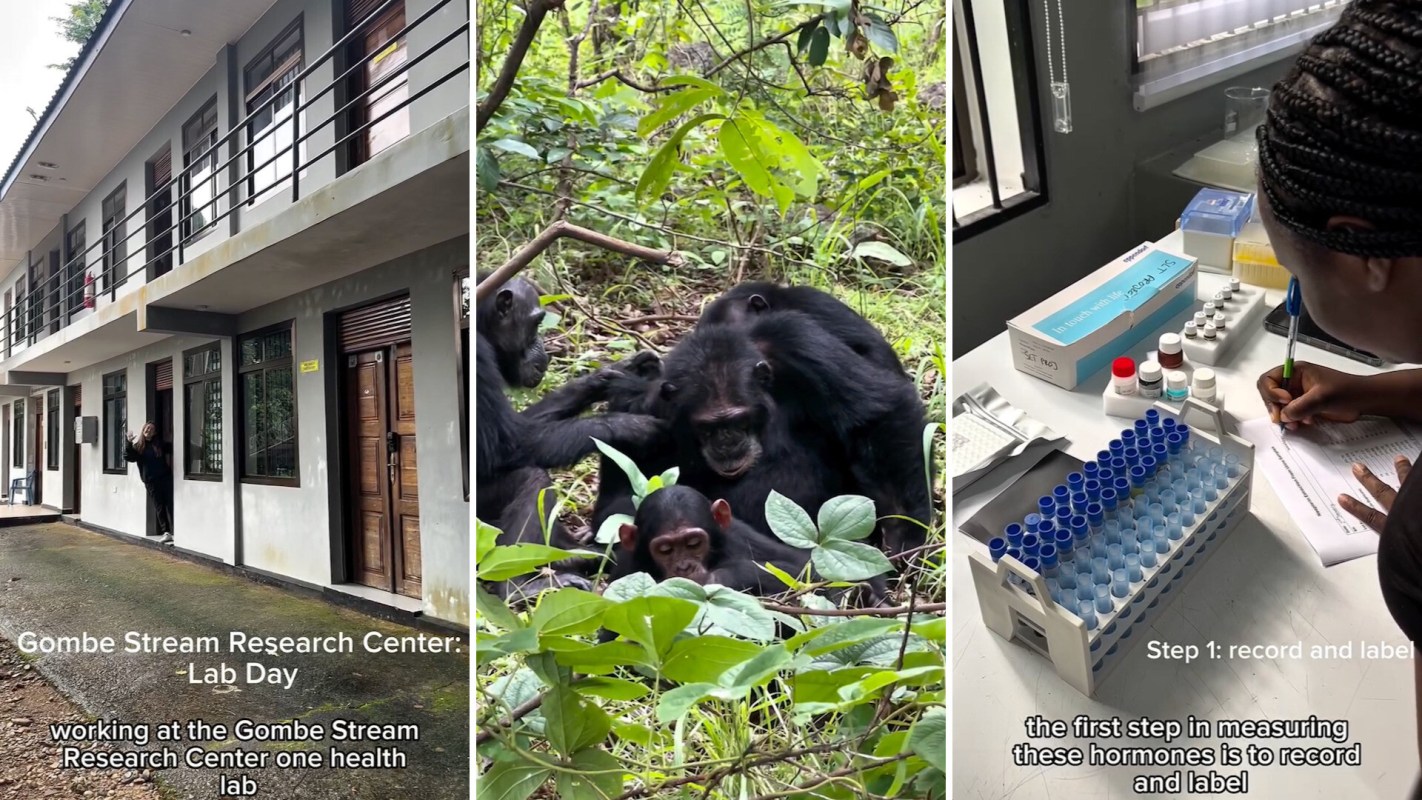
A new Instagram post is giving viewers a rare look inside one of the world's most famous chimpanzee research sites — and showing how a urine sample collected in the forest can become useful health data later that same day.
Set in Gombe National Park, the reel follows graduate students studying biomarkers linked to stress and immune function in wild chimpanzees, with testing carried out on-site within hours.
What happened?
In a post shared by the Jane Goodall Institute (@janegoodallinst) on Instagram, George Washington University graduate students Sims Patton and Abigail McClain show what a workday looks like at Gombe's One Health Lab. The caption explains: "Spend a day in the lab with Gombe graduate students Sims Patton and Abigail McClain from George Washington University!"
Rather than opening in the lab, the video begins in the forest with noninvasive urine collection from chimpanzees, then moves to lab processing with a research assistant identified as Lighty.
As the narration explains, the team is studying "how cortisol and neopterin, biomarkers of stress and inflammation, change in response to social situations like bond partner loss and aggression."
Before the team gets a final reading, the samples are logged and labeled, checked for urine-specific gravity, diluted, and prepared on an assay plate for analysis with a portable absorbance reader.
TCD Picks » Quince Spotlight
💡These best-sellers from Quince deliver affordable, sustainable luxury for all




One especially striking detail is how quickly the work can be done.
"This portable plate reader allows us to conduct these tests here at Gombe instead of shipping samples back to the U.S., which saves us tons of time and money," the narrator says.
Why does it matter?
Animal health data help scientists better understand the pressures wild chimpanzees face — from injury and social disruption to inflammation and chronic stress.
The caption notes that the team has spent the last year "measuring stress hormones and immune function in the chimpanzees of Gombe National Park," the same site identified there as the setting for Dr. Jane Goodall's landmark research.
The post also shows how conservation science can be done closer to where animals live. Faster, on-site testing can cut costs, avoid delays, and make it easier for local and international teams to respond when a chimpanzee is injured or showing signs of illness.
That kind of capacity can support both wildlife welfare and the communities and researchers working to protect shared ecosystems.
The work reflects the "One Health" idea that human, animal, and environmental well-being are connected. Better tools in the field can strengthen conservation efforts while building local research infrastructure, rather than relying entirely on overseas labs.
What are people saying?
Comments on the post included praise for the lab and the researchers.
One commenter wrote, "The Gombe lab is the best!! So happy to have amazing colleagues to work with!"
"Dream job," one person commented, while another added, "Amazing work everyone. Keep going."
The post ends: "And in just a few short hours, we have our cortisol and neopterin results. Thanks for spending a lab day with us!"

Get TCD's free newsletters for easy tips, smart advice, and a chance to earn $5,000 toward home upgrades. To see more stories like this one, change your Google preferences here.






