


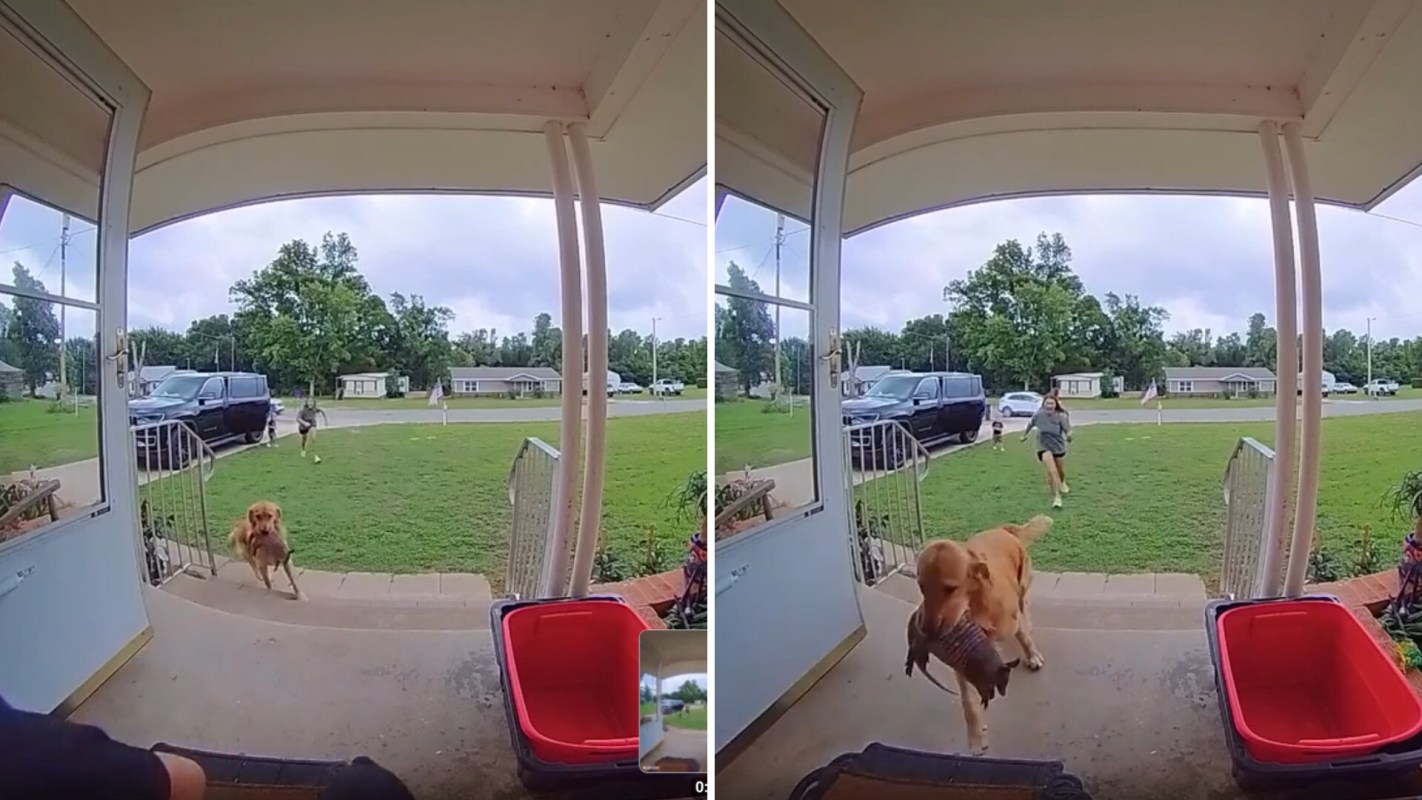
Online clips rarely get stranger than a golden retriever crossing the threshold with an armadillo in its mouth. A young woman chasing behind appeared to see it the same way, breaking into a panicked reaction as it happened before she could stop it.
What happened?
That was the absurd scene in a post on Reddit, where a video captured the retriever carrying a live armadillo indoors while a woman chased after them, screaming, "Bingo, drop it! No! Noooo!" Once the dog was inside the house, the door camera showed the woman standing on the front porch, continuing to scream.
(Click here to view embed if it does not appear.)
The clip has picked up hundreds of comments, and many of the most notable replies were less interested in the commotion than in the health concerns that can come with such close contact with wildlife.
One commenter noted that while human transmission is uncommon and the disease is treatable, it's worth warning that "the nine-banded armadillo naturally carries the bacteria that causes leprosy ... remove it from the property, then wash with hot water and soap."
Why does it matter?
Even if transmission is uncommon, letting a pet grab or carry a wild animal can create a chain of exposure for everyone in the house. A dog's mouth, fur, and paws can spread dirt, bacteria, and other contaminants onto floors, furniture, and human hands within seconds.
TCD Picks » Quince Spotlight
💡These best-sellers from Quince deliver affordable, sustainable luxury for all




As neighborhoods expand, lawns replace natural habitat, and pets spend more time in yards that overlap with wildlife territory, people create more opportunities for these encounters.
As BBC Future has reported, many human-wildlife conflicts are tied at least in part to the ways people reshape and enter animal habitats.
Armadillos are especially likely to appear near homes because they forage for insects in soil, gardens, and landscaped areas. For a curious dog, that movement can easily become something to chase, sniff out, or retrieve. An ordinary backyard can quickly become a point of contact between people, pets, and wildlife.
What can I do?
If your dog tangles with an armadillo or any other wild animal, the safest first step is to separate your pet from it without using your bare hands. If possible, keep children away from the area and avoid touching the wild animal directly.
Afterward, wash any exposed skin with hot water and soap, and clean any surfaces the animal may have touched.
If your dog was bitten or scratched, or if anyone had direct contact with saliva, blood, or broken skin, it is wise to contact a veterinarian or medical professional for guidance.
Supervision can make a major difference. Keeping dogs on a leash or closely monitored in the yard — especially at dawn, dusk, or night — can help reduce sudden encounters with wildlife.
Homeowners can also make yards less attractive to foraging animals by limiting easy food sources, securing trash, and contacting local wildlife professionals if an animal keeps returning, rather than trying to handle it themselves.

Get TCD's free newsletters for easy tips, smart advice, and a chance to earn $5,000 toward home upgrades. To see more stories like this one, change your Google preferences here.






