


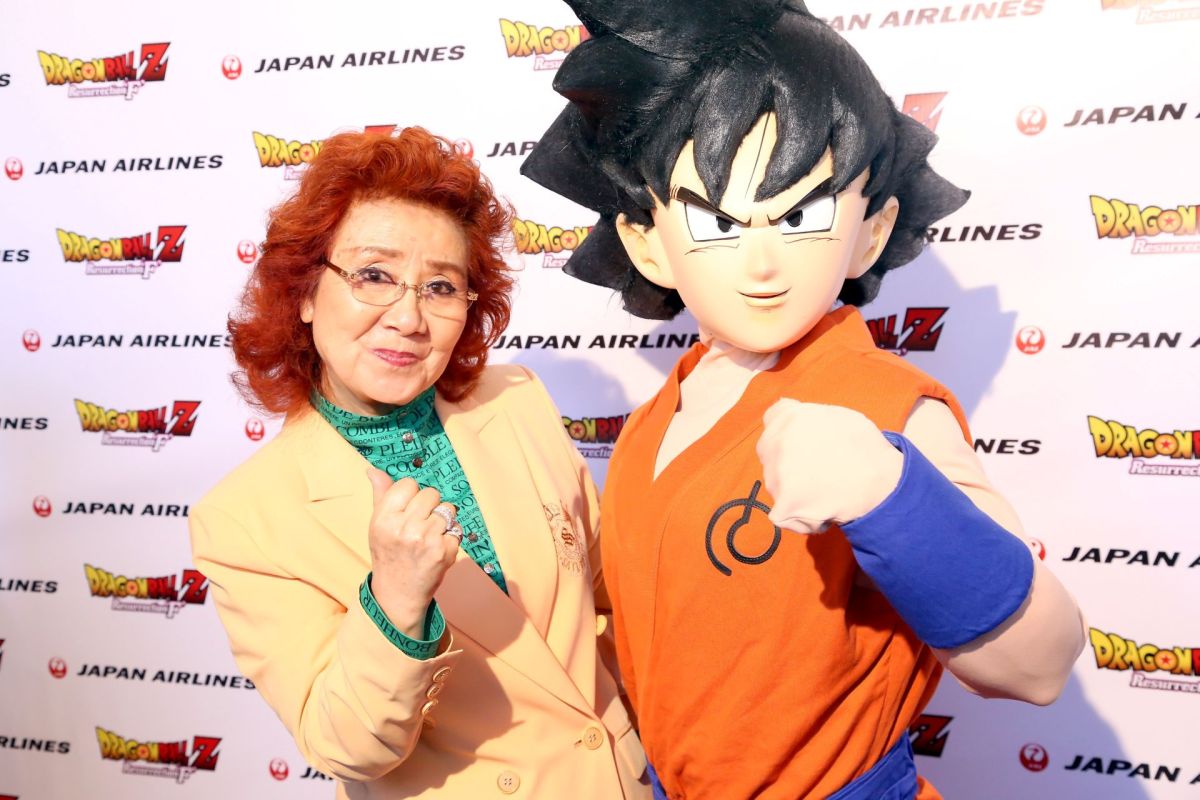
Artificial intelligence-generated videos mimicking her voice have drawn public rebuke from Masako Nozawa, the 89-year-old Japanese performer widely known for playing Goku in the Dragon Ball franchise.
In her view, that unauthorized use is "like theft."
Here's what to know
Nozawa told Japanese broadcaster NHK that she did not know AI videos were being made with her voice without permission. NDTV reported that she called the practice "unforgivable."
"I cannot tolerate it being used without permission. I want them to follow the rules," Nozawa said.
This was the first time she had addressed the matter publicly.
Her career extends well beyond Goku: she has also voiced Hiroshi in Dokonjo Gaeru and Tetsuro Hoshino in Galaxy Express 999.
TCD Picks » Quince Spotlight
💡These best-sellers from Quince deliver affordable, sustainable luxury for all




Across Japan and elsewhere, artists face a growing problem with AI impersonation, especially as voice-cloning tools become easier to use and harder for audiences to spot.
More background
For Nozawa, the dispute is not just about permission; it is also about the nature of performance.
She stressed that even a close imitation is still not truly hers, saying: "That's not my voice. I can't forgive them for using it without permission; it's like theft, and it makes me furious."
Her objection also underscores what voice actors say they actually bring to their work: performance, not just sound.
She said the imitation lacked what she brings to her work: it "did not have her heart" — a reminder that voice acting is defined by emotional expression, not merely by matching pitch or tone.
The rapid spread of tools that can generate videos with voices like Nozawa's also connects to a broader debate about AI's costs and benefits. AI can help optimize clean-energy systems and improve power-grid forecasting, but the same boom can also drive high electricity and water use, create security and misuse risks, and contribute to societal costs such as higher energy bills.
Cases like Nozawa's raise concerns beyond entertainment, including intellectual property, consent, and the speed at which powerful systems are scaling across industries.
What's being done?
Japan's entertainment industry is starting to respond.
The Japan Actors Union has introduced its first AI-voice guidelines, creating a formal consent framework for performers and agencies.
With about 2,600 members, including voice actors, the union said a voice cannot be used in AI videos unless the performer or their agency has given prior consent.
The guidance also covers deceased performers. When AI is trained on a dead person's voice, the rules say developers must respect that person's wishes from their lifetime and obtain permission from relatives or other relevant parties.
Those steps don't settle every dispute, but they represent a concrete attempt to draw boundaries around a fast-moving technology — the kind of rules Nozawa said she wants respected.
Nozawa said, "It might even be a perfect copy. But it has no heart, does it? Without heart, it's no good, whatever the role. Even a voice that's only crying is different when you cry with real feeling. That's what I believe."

Get TCD's free newsletters for easy tips, smart advice, and a chance to earn $5,000 toward home upgrades. To see more stories like this one, change your Google preferences here.






