


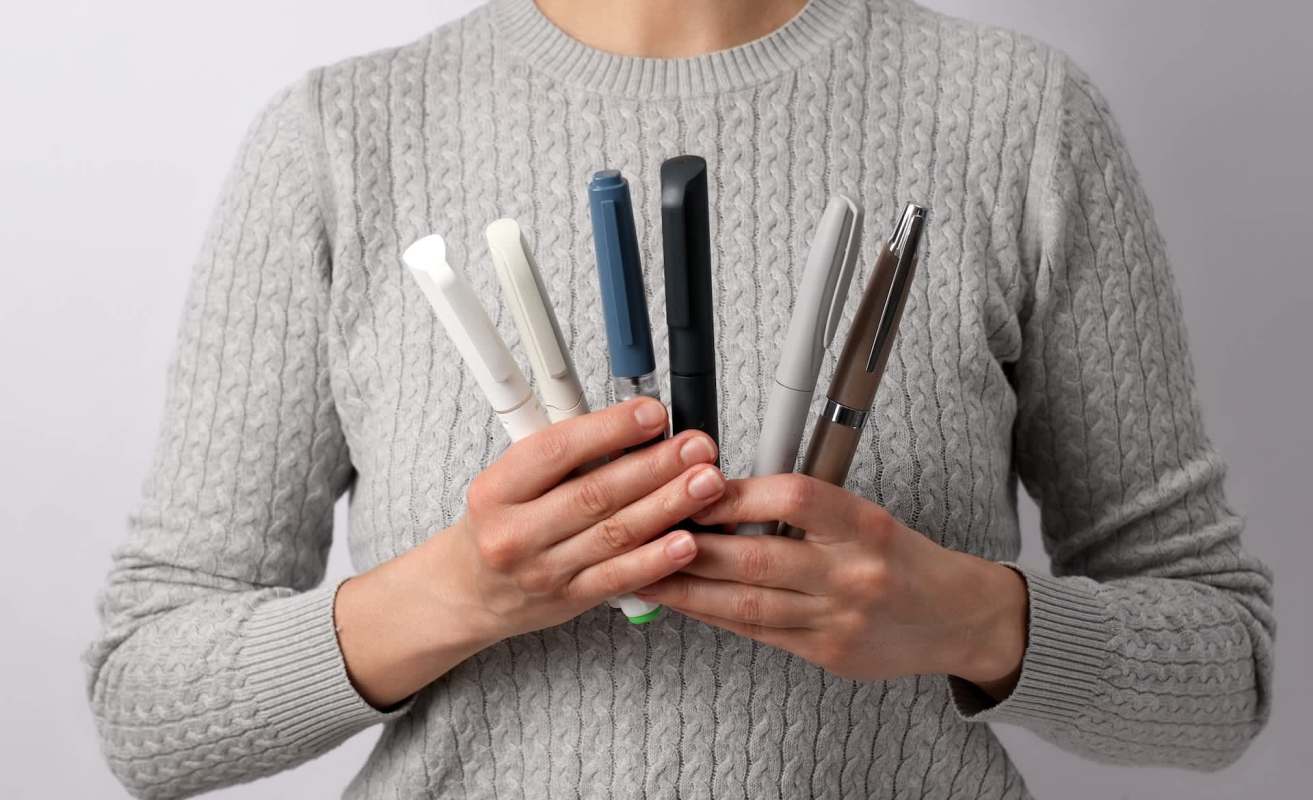
TikTok users are being served melodramatic slideshows of crying women confessing that they hid GLP-1 injections from loved ones — only for a sister, father, or daughter to respond with perfect words of support — and it's reportedly all been designed by AI.
Here's what to know
According to Futurism, accounts including "WellWithHer" and "Lara" paired images of tearful women with alleged family texts about secret GLP-1 use. In one post, a caption reads, "I hid my GLP-1 from my sister for six months … She just sent me this. I cried."
The emotional reveal is followed by an apparent ad cue. In the next slide, a text from "Sis" says, "I saw the pens in your bag on Sunday and i didn't say anything because i didn't want you to feel judged. I've watched you hate yourself in photos since we were teenagers. If something is finally making you feel okay in your own body, i'm not going to be the person who makes you feel bad about it. I'm so proud of you. And i'm sorry it took me this long to say it," followed by an Enzo reminder: "Time for your GLP-1 injection! Log your dose to keep the streak."
Other posts used nearly identical emotional setups to promote DreamMe, another GLP-1 tracker.
The strategy did not stop with weight-loss tracking. Futurism reported that a separate TikTok account, "Ashley Miller," used AI-generated breakup and engagement stories to promote Zenit, a wellness app, while "Lauren<3" pushed the AI companion app Daimon through similar emotional breakup content.
Some viewers appeared to take the stories at face value, but some seem to believe they're real. On a Zenit post where a mother seemingly warned her son's fiancée not to marry him, one commenter wrote, "If the mama says this to you. Run. She's trying to protect you girl. I'm sorry."
TCD Picks » Quince Spotlight
💡These best-sellers from Quince deliver affordable, sustainable luxury for all




More background
Futurism found that some unrelated accounts used strikingly similar details, including dog wallpapers with Crocs on their heads, pointing to a templated form of synthetic marketing rather than a few isolated posts.
The pattern is repetitive in showing embarrassment and concealment that give way to sudden reassurance. One GLP-1-themed post features a fake daughter named Emma, who supposedly discovers medication in the fridge and tells her mother, "I know you think i don't notice but you never get in the pictures with us and you didn't come in the pool all summer. i just want you to be in the pictures. also you have been way less tired lately and i like it. i'm proud of you. can we get tacos after practice. love you."
DreamMe's website uses a similar tone, describing its cartoon fish mascot as a user's "new GLP-1 best friend" and claiming, "Real journeys. Real members," per Futurism.
AI tools that generate images, text, and chatbot conversations may help optimize power demand and support cleaner energy systems, but they also consume electricity and water. When apps like Enzo, DreamMe, Zenit, and Daimon use AI to mass-produce manipulative content, it raises concerns about deception, security, and the energy use and costs tied to low-value synthetic media.
What's being done?
After Futurism contacted the companies and TikTok accounts involved, the account tied to Zenit was deactivated. Pedro Pérez, the independent developer behind Zenit, said he personally operated the account and that "no third party of marketing agency" was involved.
According to Futurism, Pérez said, "The visuals were AI-generated and the posts promoted my app, so they should have been labeled as such." He added that TikTok did not let him add labels for AI-generated and commercial content to videos that were already live, so he deleted the account.
The account linked to Daimon was also scrubbed, and its handle changed from "Lauren<3" to "yooo," Futurism reported. Prospinity, the company behind Daimon, said the content was "absolutely not operated by our internal marketing team" and blamed outside affiliates, adding that it "took action to shut down these activities."
DreamMe did not respond to questions sent to the email addresses on its website, and an email to Enzo bounced back. Futurism also reported that the accounts tied to those products kept posting, with the Enzo-linked account shifting to a peptide tracker and the DreamMe account promoting a phone-locking app.
Pérez said, "I think transparency matters, especially for a wellness app, which is why I've made this change."

Get TCD's free newsletters for easy tips, smart advice, and a chance to earn $5,000 toward home upgrades. To see more stories like this one, change your Google preferences here.






