


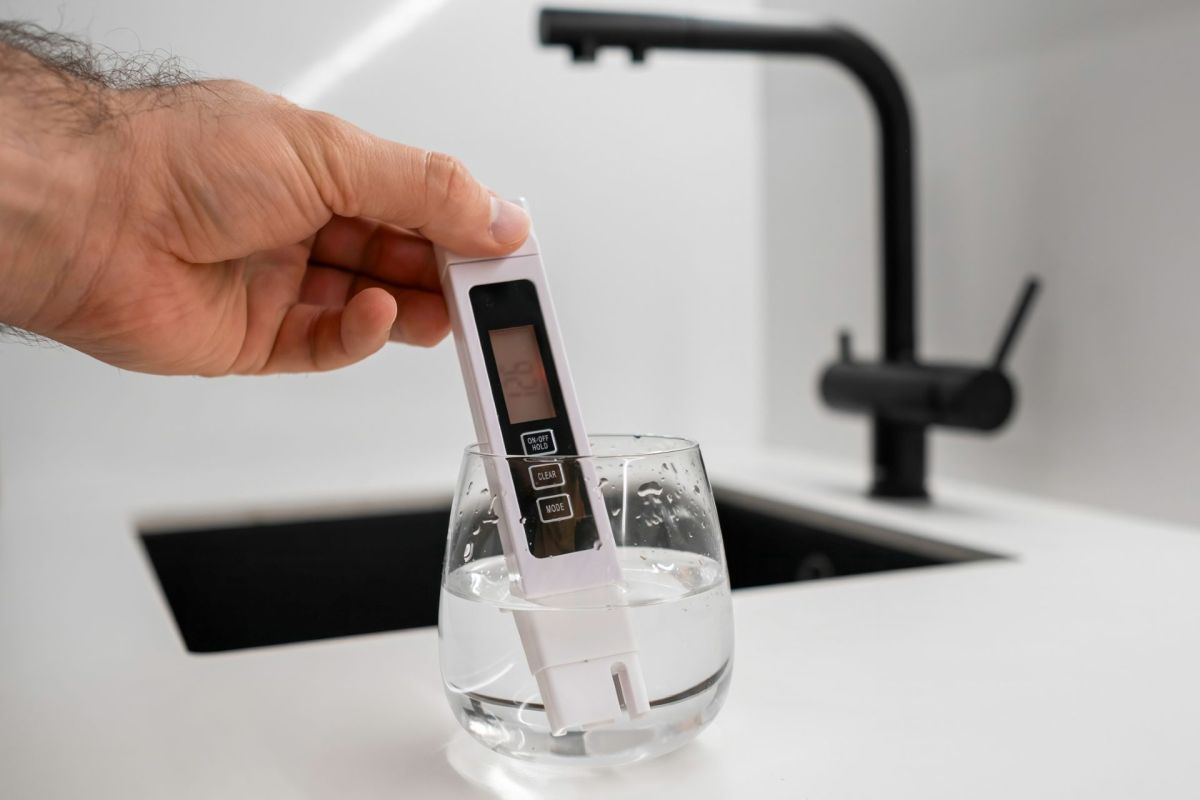
Residents of Gibraltar, Michigan, received a concerning public notice in October after July drinking water tests found elevated lead readings in five of the 20 residences tested.
Here's what to know
Michigan requires public notification when water sampling exceeds its lead "action level," a treatment benchmark that Gibraltar surpassed, according to Michigan Public.
Several other communities supplied by the Great Lakes Water Authority also recorded elevated lead readings in samples. The authority supplies water to Gibraltar and more than 100 communities in total.
Exceeding the action level indicates that treatment is failing to prevent lead in pipes or household plumbing from contaminating tap water.
Michigan Public reported that Gibraltar officials had not made a representative available for comment.
Lead in drinking water is unsafe at any concentration.
TCD Picks » Quince Spotlight
💡These best-sellers from Quince deliver affordable, sustainable luxury for all




Michigan's 12-parts-per-billion lead action threshold reflects a reduction made by the state's environmental agency after the Flint water crisis.
The threshold is expected to fall further in 2027, to 10 parts per billion. Federal regulators also tightened their requirements after Michigan's change.
What can be done?
Michigan Public identified an NSF-certified filter as the most effective protection against lead in drinking water.
According to the Centers for Disease Control and Prevention, children are especially vulnerable to lead exposure because they are rapidly growing and absorb lead at much faster rates than adults. Symptoms of lead poisoning may also not present immediately, emphasizing the importance of blood tests.
Lead remains in water even after boiling, but it can be filtered out with a filter certified by an independent testing organization that indicates NSF/ANSI Standard 53 for lead removal and NSF/ANSI Standard 42 for particulate removal.
Michigan Public reported that regulators would finalize certification and release the newest water test results by January 2027.

Get TCD's free newsletters for easy tips, smart advice, and a chance to earn $5,000 toward home upgrades. To see more stories like this one, change your Google preferences here.






