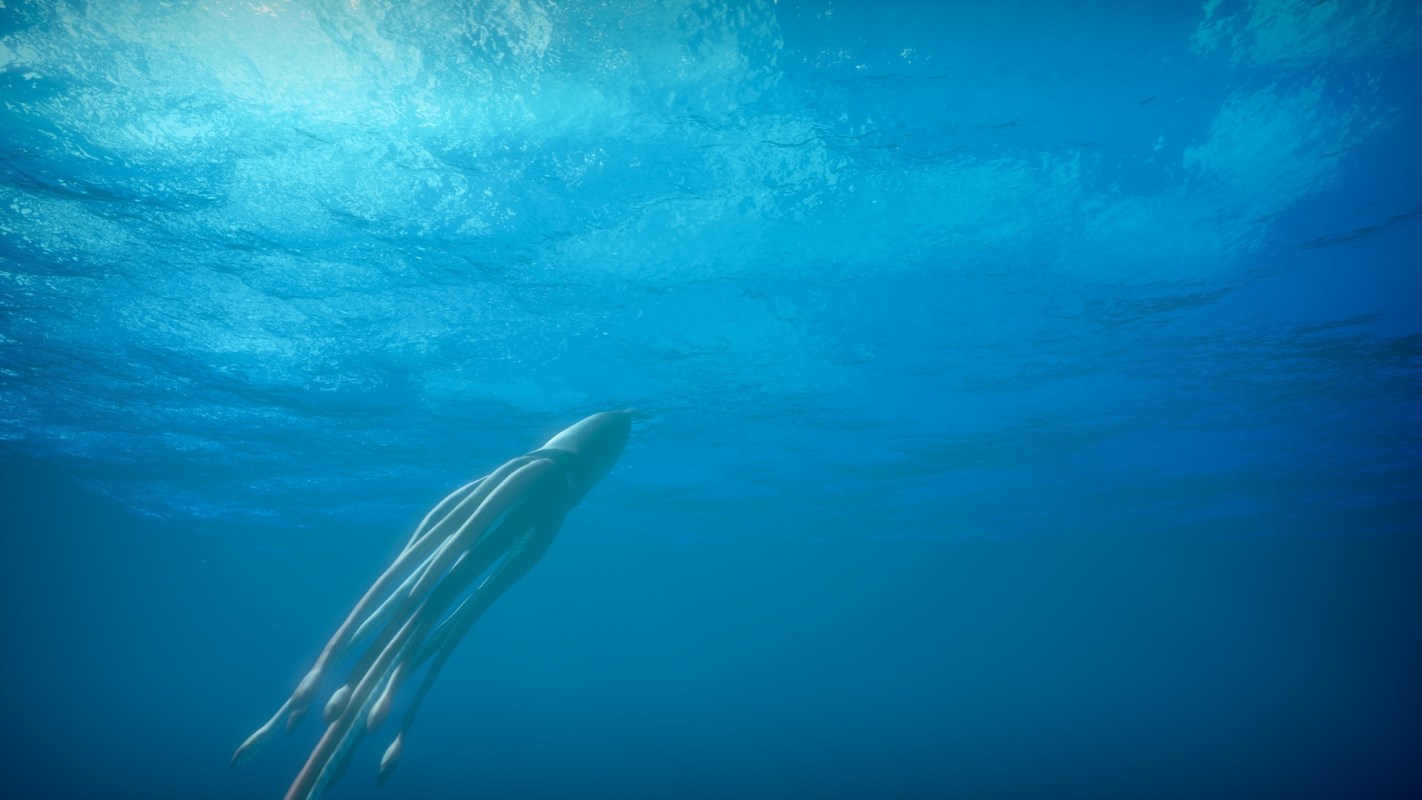
Few ocean animals have spent so long suspended between reality and myth as the giant squid.
The enduring mystery behind these animals resurfaced after archival footage, identified as the first recording of a live giant squid, was shared to Instagram.
Here's what to know
The Instagram post says a key breakthrough came in 2006, when Japanese researchers used bait near the Ogasawara Islands to capture the first footage of a living giant squid.
Up until that point, the species was known mostly through carcasses that washed ashore. As the video's poster, Histopedia, said, "These animals can reach around 43 feet in length, yet they spend their lives in the dark depths of the ocean, making encounters extremely rare."
The post also mentioned two previous sightings that helped shape our understanding of the rare animal.
In 2012, scientists recorded a live giant squid in its natural deep-sea habitat, revealing its elusive behavior and massive size. In 2019, another expedition documented a living giant squid in the Gulf of Mexico.
TCD Picks » Quince Spotlight
💡These best-sellers from Quince deliver affordable, sustainable luxury for all




More background
With its enormous size and the fact that it is hard to find, the giant squid has fascinated scientists and storytellers for generations. It lives far below the sunlit surface, where pressure is intense, light is limited, and direct observation is quite rare.
The first confirmed footage of a living individual took generations to capture despite centuries of speculation. Washed-up remains could show scientists what the animal looked like, but not how it hunted, moved, or behaved in its natural environment.
Researchers have made headway in understanding these animals by combining deep-sea exploration with more precise imaging tools. That progress can be seen in the timeline itself, from the bait-assisted 2006 footage near the Ogasawara Islands to live recordings gathered during the 2012 and 2019 expeditions.
These methods give scientists the opportunity to study rare animals without the guesswork and with more direct evidence. Every confirmed sighting can add to what researchers know about range, behavior, and habitat.

Get TCD's free newsletters for easy tips, smart advice, and a chance to earn $5,000 toward home upgrades. To see more stories like this one, change your Google preferences here.