


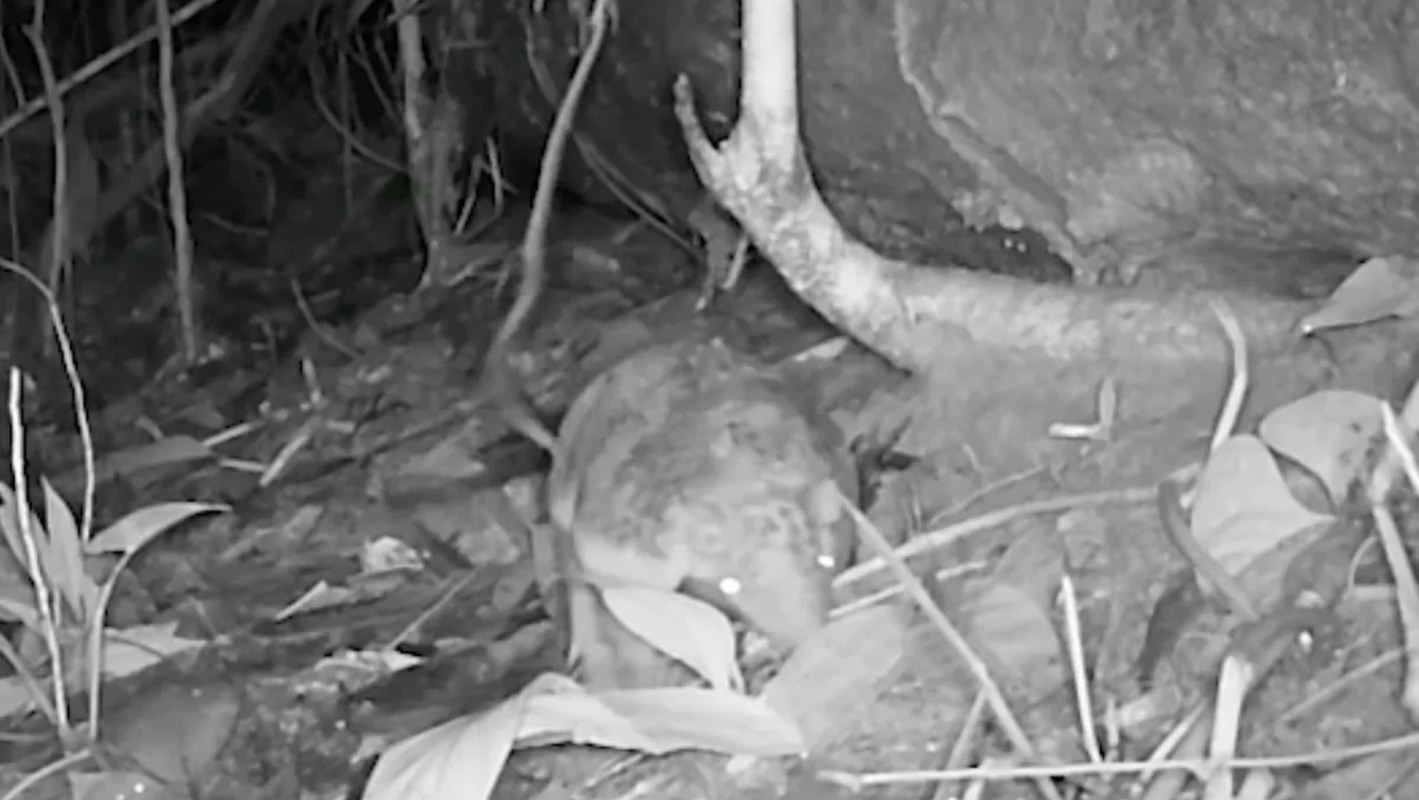
Researchers reviewing trail-camera footage from Peru's Loreto rainforest discovered a juvenile giant armadillo — a notoriously elusive species — moving along the forest floor.
Here's what to know
Discover Magazine reported that researchers with Amazon Research International set the camera in Loreto's Native Community of San Francisco, where it captured the young giant armadillo moving along the forest floor, hesitating at a fallen tree, and then disappearing from view.
The sighting is especially significant because babies are particularly hard to document in a species that is both difficult to spy and slow to reproduce.
Rosa Vásquez Espinoza — the conservationist who founded Amazon Research International — told the BBC that teams can deploy hundreds of cameras for years without ever filming this species, per Discover Magazine.
She credited this successful placement to Indigenous knowledge, highlighting the research value of local expertise, which can produce the kind of evidence conservation planning often depends on.
Discover Magazine, citing the World Land Trust, said the giant armadillo is the largest member of its family and can grow nearly 4 feet long. The animal is generally solitary and active at night, using burrows during the day and foraging after dark for prey such as termites, ants, spiders, and worms.
TCD Picks » Quince Spotlight
💡These best-sellers from Quince deliver affordable, sustainable luxury for all




More background
The International Union for Conservation of Nature categorized the giant armadillo as vulnerable in 2024 — a step above endangered.
Its population is shrinking as deforestation, ranching, and other agriculture wipe out habitats, with hunting and trapping adding further pressure. Because their habitats are often cleared for cattle ranching, farming, and wood plantations, giant armadillos lose space to forage, dig burrows, and avoid predators or human disturbance.
Baby sightings are rare because females breed infrequently, sometimes only once every two to three years, and, according to the BBC, the species produces only a small number of offspring at a time.
Community-backed habitat protection can help preserve forest ecosystems that support pollinators, wildlife, and the ecological stability local residents depend on.
What's being done?
In 2025, officials in Peru's province of Satipo approved the first ordinance granting stingless bees legal rights. Vásquez Espinoza helped advance that legislation, which says the bees have rights to exist, thrive, live in a healthy habitat, and have representation in court if threatened.
Those protections bring major benefits because bee habitats overlap with areas used by giant armadillos. Protecting land for one vulnerable species can also help shelter others that share the same forest.
Amazon Research International hopes to use the recent footage to support a new law in Loreto to protect armadillos and other mammals in the region, particularly animals already on the International Union for Conservation of Nature Red List.

Get TCD's free newsletters for easy tips, smart advice, and a chance to earn $5,000 toward home upgrades. To see more stories like this one, change your Google preferences here.






