


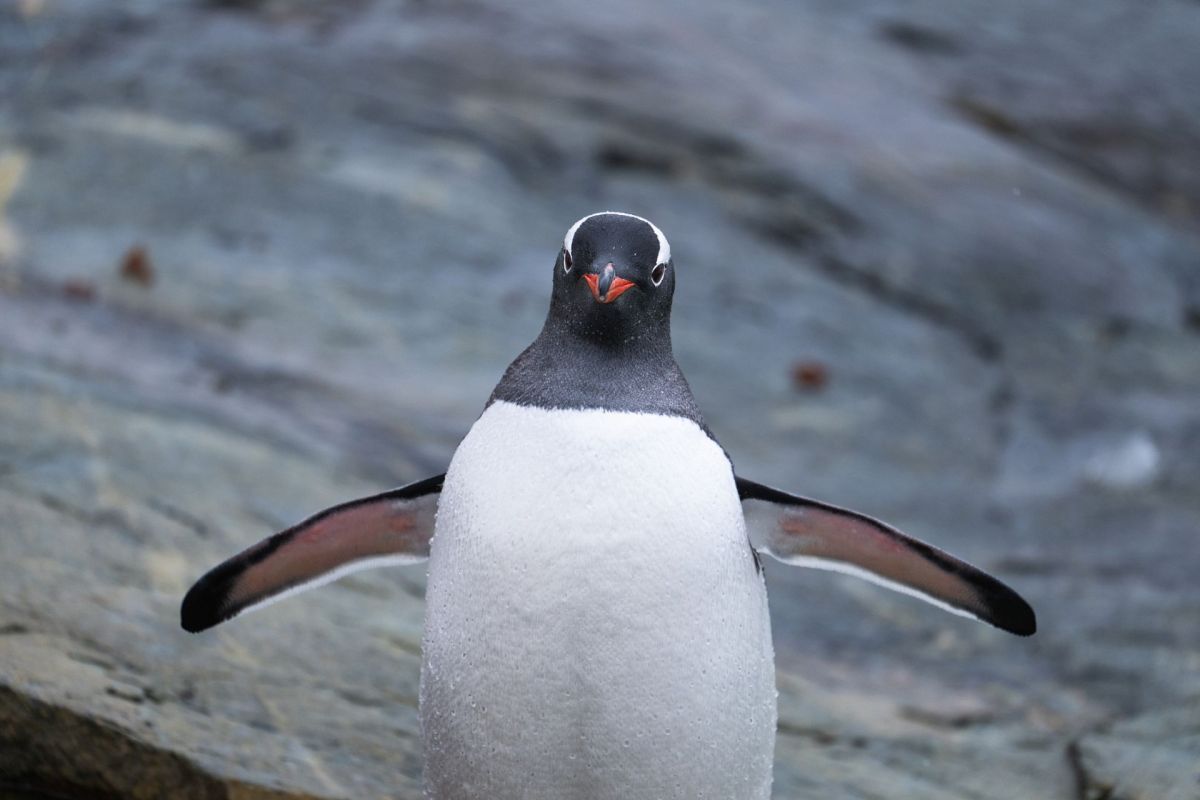
A gentoo penguin population on an Indian Ocean island group has been identified as its own species, People reported.
Here's what to know
A new analysis of gentoo penguins concluded that the birds fall into four evolutionary lineages rather than a single species. One of those lineages, the southeastern gentoo penguin, is now recognized as Pygoscelis kerguelensis. It inhabits the Kerguelen Islands, roughly 1,200 miles north of Antarctica, according to People.
The study appeared in Communications Biology. Chilean researchers worked on it with biologists at the University of California, Berkeley.
According to BBC's Discover Wildlife, scientists had not identified a new penguin species since 1921, when the northern rockhopper penguin was identified.
Under the updated classification, gentoo penguins are grouped into northern, southern, southeastern, and eastern groups.
More background
The researchers linked each gentoo lineage to a different set of genetic traits that may help it cope with local conditions.
TCD Picks » Quince Spotlight
💡These best-sellers from Quince deliver affordable, sustainable luxury for all




In the southern gentoo, which is the only lineage living in Antarctica, Discover Wildlife said they found more genes associated with "heat generation, fat and lipid storage and light perception." All of these traits are more suited to living in colder habitats.
The eastern gentoo, meanwhile, showed more genes related to "energy-efficient carbohydrate metabolism and enhanced diving capacity."
Seabirds are often considered indicators of ocean health, so understanding which populations are thriving or struggling can give scientists and communities a clearer view of how environments are changing.
What's being done?
Better classification can lead to better protection. If several distinct groups are lumped together as one species, steep declines in one region can be overlooked.
To gauge future threats, the researchers also modeled what may lie ahead. They concluded that habitat may contract sharply for the southeastern, northern, and eastern gentoo penguins. On the other hand, the southern gentoo may be able to expand its range, People reported.
That kind of research can help guide conservation planning. It can also help governments, nonprofits, and local communities focus limited resources where they can do the most good.
Where can I learn more?
There's a lot more that scientists can learn from penguins to better protect the environment.
• In Antarctica, satellite imaging of emperor penguins' guano trails revealed previously unknown colonies.
• Emperor penguin breeding failure in Antarctica is worsening as extreme sea ice losses spread.
• Off South Africa, African penguin numbers could collapse enough to vanish in the wild.

Get TCD's free newsletters for easy tips, smart advice, and a chance to earn $5,000 toward home upgrades. To see more stories like this one, change your Google preferences here.






