


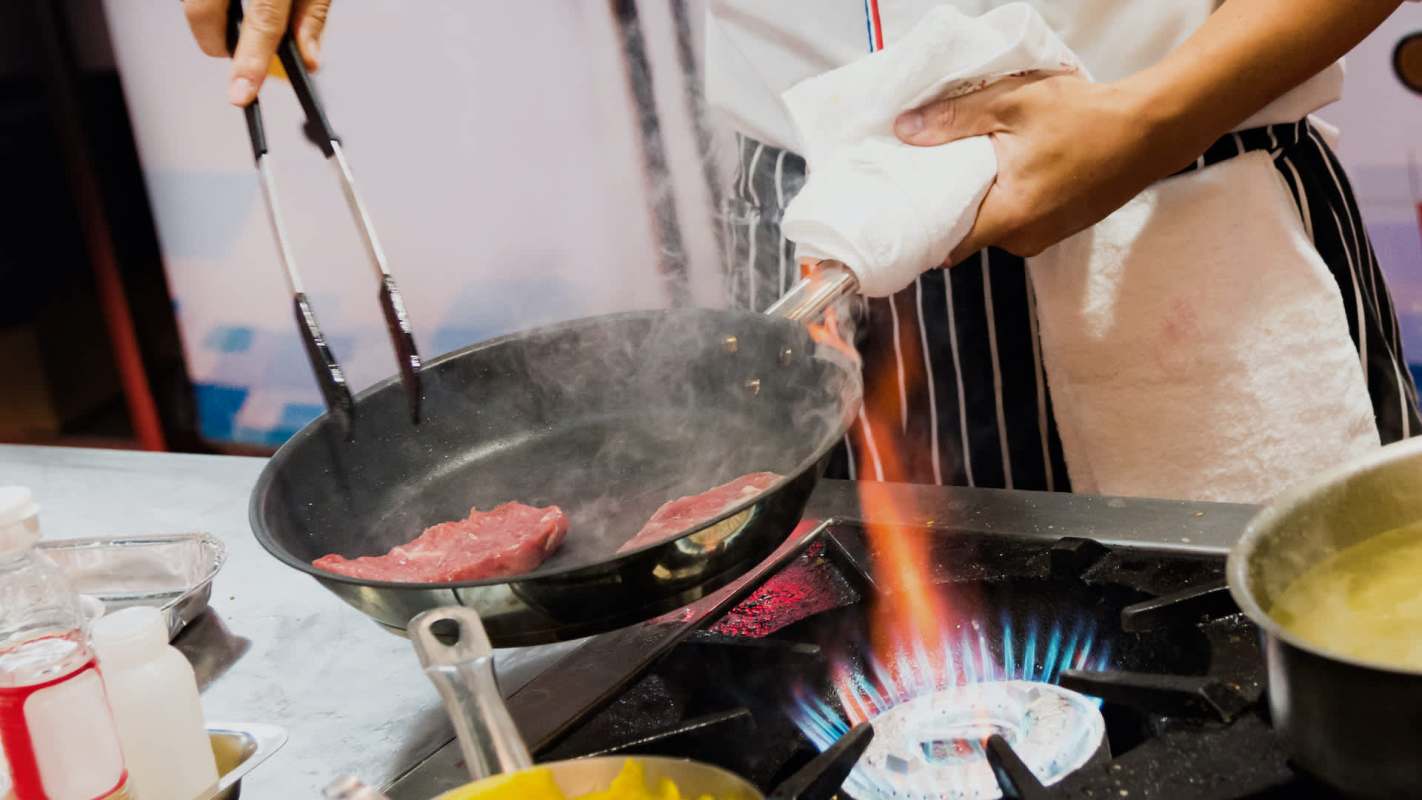
Gas-powered restaurant kitchens may be exacting an overlooked toll on workers, contributing to nausea, intense heat, and poor air quality during service.
A new U.S. study found that even with robust commercial ventilation, kitchens that rely on equipment that uses fossil fuels can expose cooks to elevated pollution and heat.
Here's what to know
In research published in Environmental Research Letters, scientists compared 27 commercial kitchens in California, New York, and Pennsylvania including three all-electric sites and 24 that used gas or propane.
As Canary Media detailed, they found stark differences in temperature and air quality between the kitchens. Most notably, researchers reported that the all-electric equipment avoided the same dangerous levels of heat and pollution.
A team from PSE Healthy Energy, Stanford, and NYU placed monitoring equipment around each facility. With plastic tubes linking gas analyzers to several points in each kitchen, the researchers measured pollutant concentrations and temperatures during shifts and for as long as a week afterward.
Christopher Galarza, a longtime chef and co-author of the study, told Canary Media that the data aligned with what he had experienced himself.
TCD Picks » Quince Spotlight
💡These best-sellers from Quince deliver affordable, sustainable luxury for all




"I can't tell you how many times … we throw up and get back to work," Galarza said. "No matter where you turn, you're being assaulted by [dry and wet heat]."
More background
Canary Media reported that there are an estimated 15.7 million U.S. food service workers. A 2022 National Restaurant Association Research Group survey found more than three-quarters of U.S. restaurants burn gas.
Participating locations ranged from neighborhood restaurants to Michelin-starred kitchens, and the study also included higher education dining halls and senior facilities.
The menus spanned American and Chinese dishes, as well as French and Italian fare and baked goods.
Researchers found that the added pollution and excess heat showed up even when commercial-grade ventilation was running. Workers were subject to 90 degrees-plus heat and unsafe levels of nitrogen dioxide. Some gas-powered kitchens even had unsafe levels of carbon monoxide and benzene.
Shifting to electric equipment could mean less excess heat in the workspace and fewer harmful combustion byproducts moving through the air. In the study, electric kitchens had the lowest levels of these dangerous compounds and were within safety guidelines.
What's being done?
The findings support a transition to all-electric commercial kitchens.
After years of cooking over gas, Galarza told Canary Media working in an all-electric kitchen felt fundamentally different, and the study's measurements backed up that firsthand impression.
"For the first time in my career I was able to do what I loved — and not feel like I'm dying," Galarza recalled.
The outlet reported that he helped recruit most of the participating kitchens for the research. Galarza hopes the findings reach people who can make decisions that will make kitchens safer.
"The people who are bankrolling these kitchens — like the CFOs of these large hotel chains and these big conglomerate restaurants — those people need to understand what it is they're putting their people in front of," Galarza concluded to Canary Media.
Where can I learn more?
The same concerns show up at home in the kitchen and elsewhere, too.
• Across U.S. homes, gas-powered appliances can worsen indoor air quality beyond the stove itself.
• In home kitchens, induction and electric ranges offer cleaner alternatives to cooking with gas.
• U.S. health officials warn that common home appliances can release dangerous carbon monoxide indoors.

Get TCD's free newsletters for easy tips, smart advice, and a chance to earn $5,000 toward home upgrades. To see more stories like this one, change your Google preferences here.






