


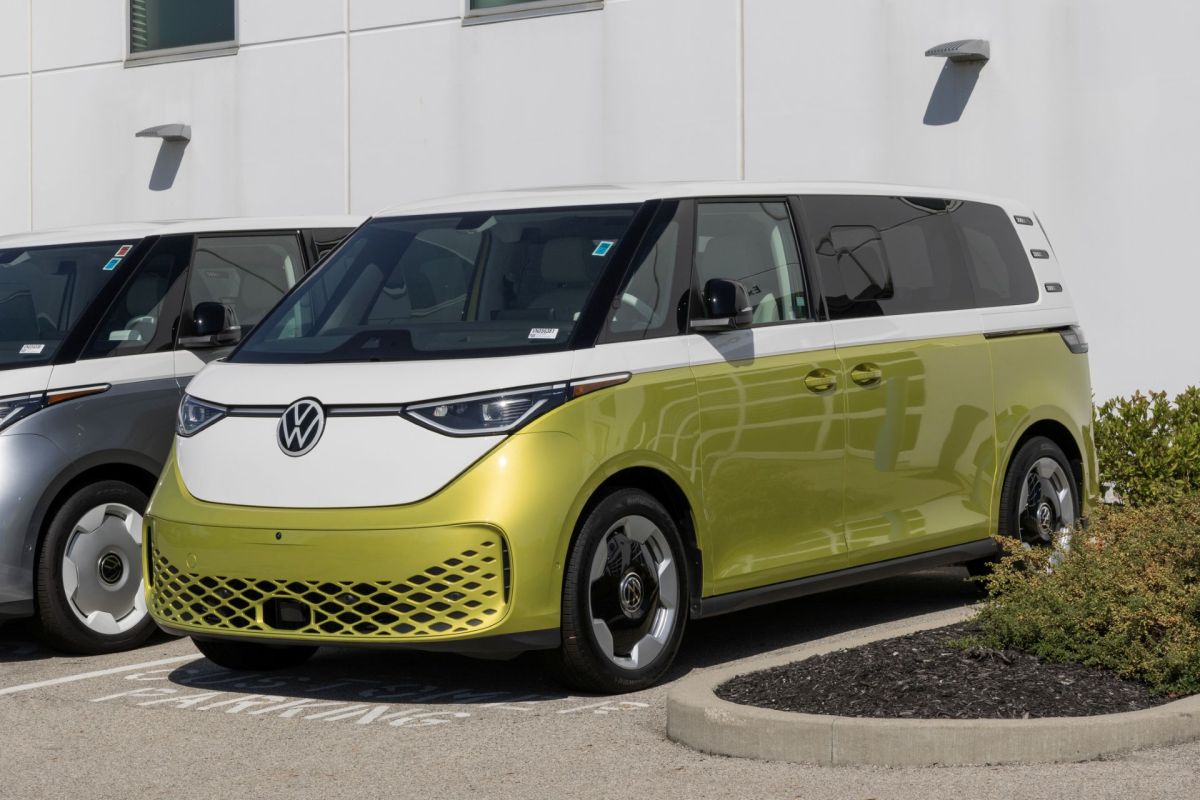
Families shopping for an electric vehicle that can handle kids, strollers, sports equipment, and groceries keep running into the same problem: there are still very few EV minivans to choose from.
That was the clear takeaway in a recent Reddit discussion on r/electricvehicles, where drivers compared family-friendly EVs, including the ID Buzz, Kia EV9, crossover EVs, and large SUVs.
The conversation highlighted a frustration: While the idea of an electric minivan makes obvious sense for many households, the U.S. market still offers surprisingly few true minivan-style options.
What is an EV minivan?
An EV minivan is a battery-electric van built mainly to carry people and cargo, much like a traditional gas-powered minivan. In practical terms, that usually means a spacious cabin, easy entry and exit, flexible seating, and more usable storage than many crossovers or SUVs.
On paper, the format seems like a natural fit for electrification. Minivans are commonly used for school drop-offs, errands, and short family trips — the kind of daily driving that often pairs well with home charging. But in the United States, shoppers have had almost no real choices.
Why are EV minivans important?
The main reason EV minivans matter is straightforward: Families want practical electric vehicles, not only stylish SUVs. For households with multiple children, car seats, or bulky cargo, a minivan can be easier to use day to day than a three-row crossover.
TCD Picks » Quince Spotlight
💡These best-sellers from Quince deliver affordable, sustainable luxury for all




That gap showed up clearly in the Reddit thread. Commenters noted that electric minivans are available in other parts of the world from automakers like Volkswagen and Mercedes, as well as Ford, Kia, Li Auto, Zeekr, Maxus, and Xpeng. But in the U.S., many shoppers said the ID Buzz is basically the only widely recognized option — and even that one has faced criticism over price and range. Some families said they wanted a van but ended up choosing something else, such as the Kia EV9, because it felt easier to justify.
"My wife and I wanted one so bad. Then we tried to buy one. Way too expensive for what it was. We ended up in an EV9," one user wrote.
Why are there so few EV minivans in the US?
Part of the answer seems to come down to automaker priorities.
There are technical challenges too. Several commenters pointed out that minivans need large interiors, flexible seating, and fold-flat configurations that can make battery packaging more complicated. Their boxier shape can also be less aerodynamic than lower, sleeker EVs, which may make it harder to offer long range without increasing battery size and cost.
That does not mean the format is a bad fit for electric power. In fact, many people in the discussion argued the opposite. A well-executed electric minivan could be even better than a gas version, thanks to a quieter cabin, strong low-speed torque, and more efficient everyday driving.
How EV minivans could help families and the environment
A good EV minivan could give larger families a way to cut gasoline use without giving up the space they need. That matters because many households today still feel pushed toward gas-powered minivans or large SUVs simply because there are not enough electric options that truly fit family life.
This could reduce tailpipe pollution in neighborhoods, especially around schools and in dense suburban areas where family vehicles spend a lot of time in stop-and-go traffic.
They could also make EV adoption feel more realistic for buyers who have been overlooked by the current wave of sedans and smaller crossovers. For many parents, convenience can often matter more than image — and sliding doors, low floors, and adaptable cargo space can make a real difference.
What are shoppers choosing instead?
Until more true electric minivans arrive, many buyers are settling for options that feel close enough.
In the Reddit discussion, commenters mentioned large three-row EVs and other van-adjacent models as partial substitutes. One person pointed to the Lucid Gravity as an example of how much potential there is in a spacious, van-like electric design, even if it is not sold as a minivan.
Others said the ID Buzz comes closest to what families are asking for, but still misses the mark for some shoppers because of cost or range limitations. That tension helps explain the frustration: The demand appears to be there, but the product lineup remains thin.
For now, the question is not whether families want EV minivans. It is whether automakers decide that practicality is worth building.

Get TCD's free newsletters for easy tips, smart advice, and a chance to earn $5,000 toward home upgrades. To see more stories like this one, change your Google preferences here.






