


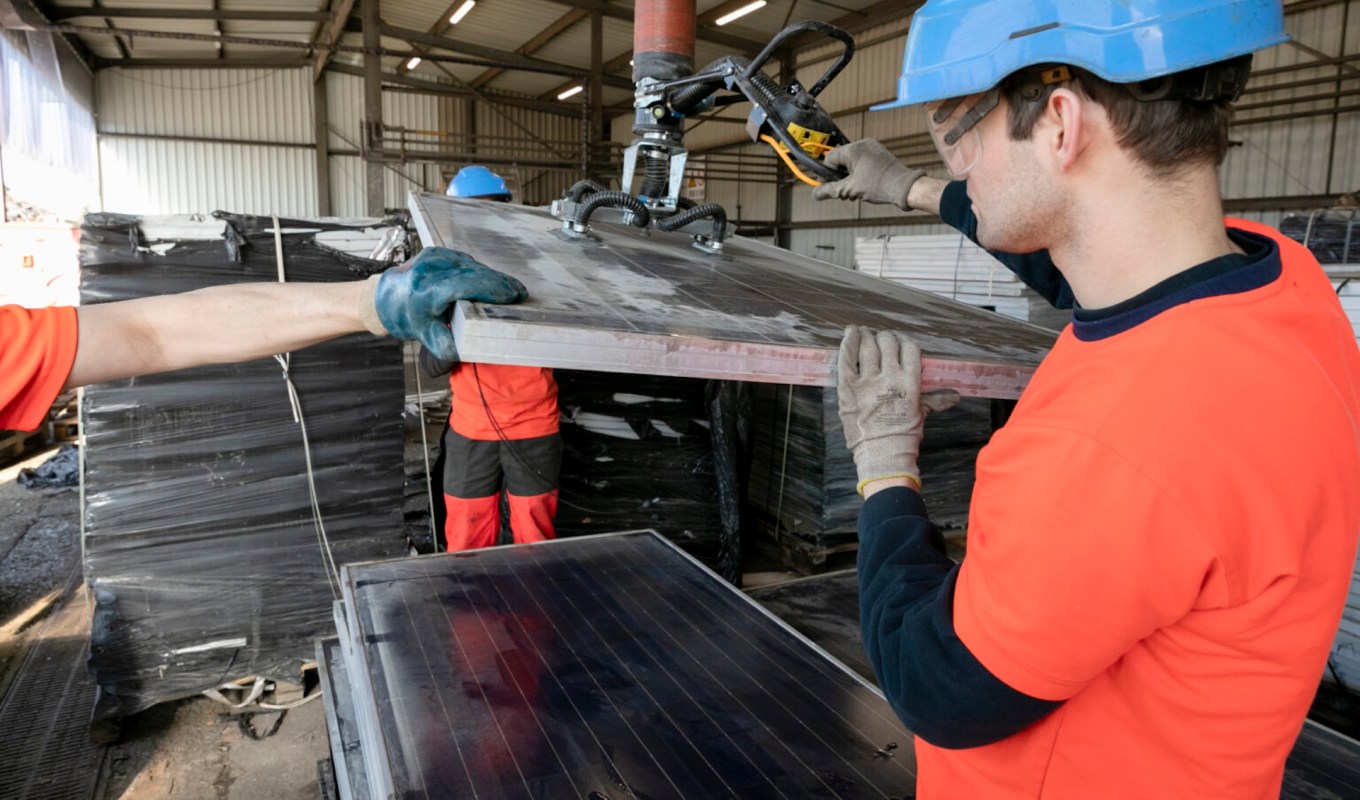
France is preparing for a wave of hard-to-recycle solar panel waste, and it is looking for a homegrown solution, according to pv magazine.
Soren, the organization that oversees collection and processing of end-of-life photovoltaic modules in the country, opened a search for companies that can develop a domestic recycling pathway for thin-film solar panels.
Here's what to know
The move has highlighted the need for governments and industries to establish plans for end-of-life solar panels and other renewable energy equipment. Proper disposal can keep solar panels out of landfills and make certain materials available for reuse.
When it comes to solar, the crystalline-silicon panels that dominate the market already have a disposal pipeline. However, thin-film modules require a different approach, which has not yet been put in place, pv magazine reported.
The search seeks to handle cadmium telluride and copper indium gallium selenide modules, while the ability to process amorphous silicon would be a plus. Applications are due by late October.
Any system will need to process modules from multiple manufacturers within the same technology family.
TCD Picks » Quince Spotlight
💡These best-sellers from Quince deliver affordable, sustainable luxury for all




Whichever organization Soren selects will have its work cut out. Many tons of thin-film modules are already awaiting proper disposal.
Once a processing route is operating, Soren expects an early priority to be a 1,300-tonne batch of CdTe modules from German manufacturer Calyxo, the magazine noted.
More background
To estimate the coming need, Soren commissioned the Becquerel Institute to forecast thin-film panel treatment volumes in France and across Europe. That work relied on published research as well as interviews with industry participants, including module manufacturers, project developers, and waste management companies, according to pv magazine.
Based on the available data, the researchers forecasted rapid growth in volume.
For CdTe modules in France, the study projects that Soren could face processing volumes of 770 tonnes in 2027, 2,660 tonnes in 2030, and 15,000 tonnes (16,535 tons) in 2037.
For CIGS modules, the study puts the stream at 430 tonnes in 2027, 1,090 tonnes in 2030, and 2,900 tonnes in 2037, per pv magazine.
What's being done?
Though the challenge is daunting, Soren's search for a processor for thin-film solar modules highlights the importance of implementing cradle-to-grave lifecycles for renewable energy equipment.
Though renewable energy sources like solar, wind, and hydro offer a number of advantages when it comes to public health and the environment, they still produce some waste. To maximize the benefits of a cleaner-energy future, governments and industry need to come together to ensure that materials are reused or recycled as well as disposed of properly.
At the consumer level, individuals can make sure that they recycle or properly dispose of their own products, from glass and aluminum cans to hazardous household chemicals and e-waste.

Get TCD's free newsletters for easy tips, smart advice, and a chance to earn $5,000 toward home upgrades. To see more stories like this one, change your Google preferences here.






