


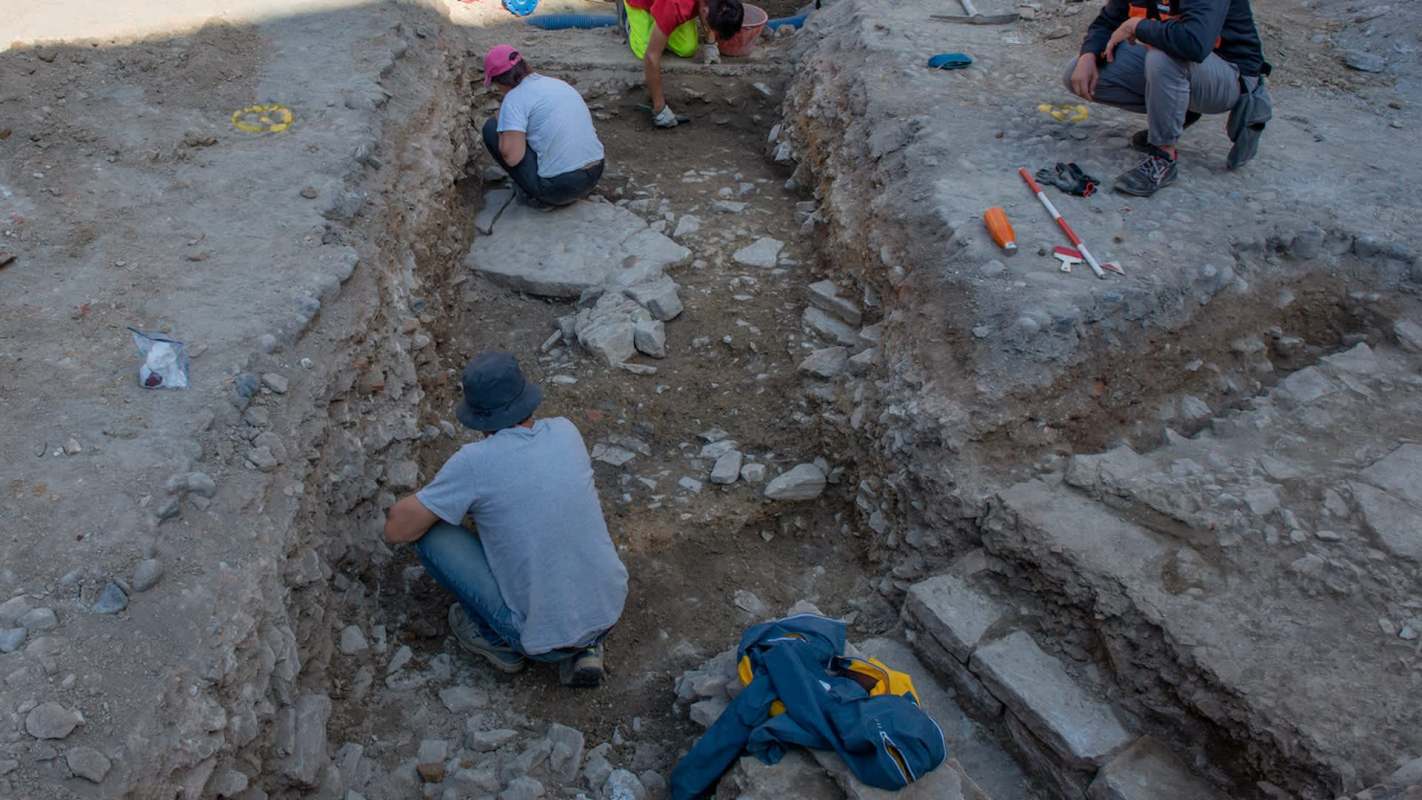
A planned home build on a popular French hillside turned into a major historical discovery.
Here's what to know
Construction was set to begin on the property until an unexpected find.
Beneath Montbellant Hill in Tonnerre, archaeologists with the French National Institute for Preventive Archaeological Research uncovered evidence that the slope once held a dense two-thousand-year-old city.
Remains of buildings that included workshops and several cellars from the first century B.C.E. were identified, as Popular Mechanics reported. The French National Institute for Preventive Archaeological Research said the dig covers roughly 8,000 square feet and contains evidence from multiple periods of occupation dating all the way back to the Iron Age.
Artifacts including pottery and coins point to an established community on the hill before Roman rule.
"The location of several buildings on the steep slopes of Montbellant Hill testifies to a dense and constrained occupation," the French National Institute for Preventive Archaeological Research said.
TCD Picks » Quince Spotlight
💡These best-sellers from Quince deliver affordable, sustainable luxury for all




More background
Because Montbellant Hill is so steep, the people living there would have needed to arrange homes, work areas, and storage carefully within a tight landscape.
Evidence from the hill spans about 1,500 years, continuing through the Roman era and lasting into the medieval period before activity waned, according to Popular Mechanics.
Among the finds was a Gallic fortress, a cellar containing a "beautifully made stone staircase," and a nearby Roman-era cellar set slightly higher, adding to the evidence that later construction was placed over or around older remains.
What's being done?
Researchers are interpreting the Tonnerre discovery alongside a nearby 2024 excavation to provide a fuller view of how the hillside was used over the centuries.
Viewed across that long span, the evidence may help archaeologists better understand urban development over time, particularly how people handled construction, storage, and limited space.
Where can I learn more?
The stories below trace similar moments when buried history surfaced unexpectedly, bringing long-hidden communities and ceremonial spaces back into view.
• Beneath Notre Dame, a 2,000-year-old Paris emerged during excavation before restoration work moved forward.
• At the source of the Seine in Burgundy, archaeologists uncovered a lost healing sanctuary.
• Along Turkey's Black Sea coast, ruins of an ancient city resurfaced amid drought conditions.
• In Peru, excavation revealed a long-hidden city tied to the ancient Caral civilization.
• On England's Suffolk coast, construction crews unearthed a rare Neolithic enclosure dating to 3800 B.C.

Get TCD's free newsletters for easy tips, smart advice, and a chance to earn $5,000 toward home upgrades. To see more stories like this one, change your Google preferences here.






