


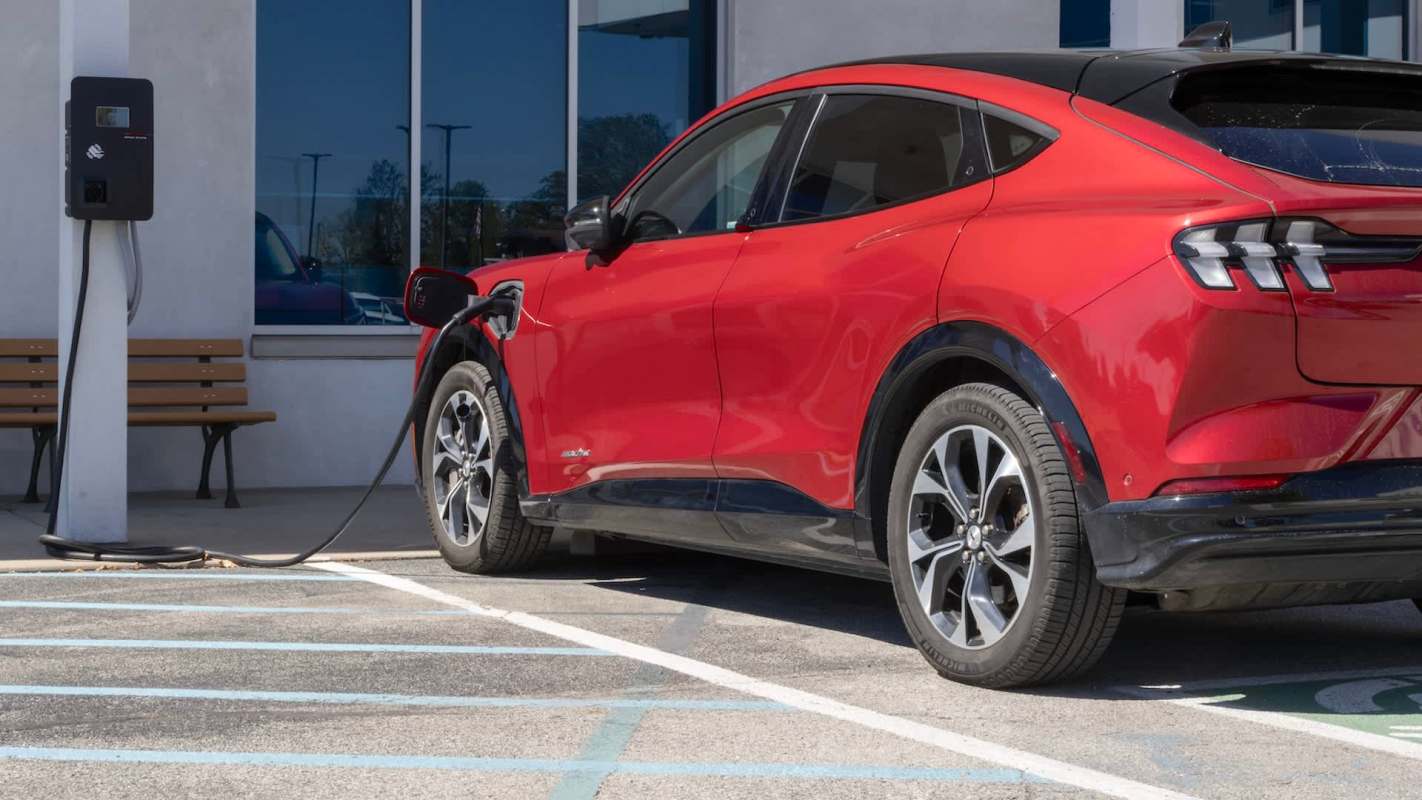
Some of Ford's earliest Mustang Mach-E electric vehicles have surpassed 200,000 miles, with their batteries still holding much of their original capacity, according to the automaker.
In a study covering roughly 36,000 vehicles, the more than 30 cars that reached that milestone retained an average of 88% of their battery capacity.
Here's what to know
Battery capacity averaged 92% after five years among the 2021 Mach-Es Ford studied, as InsideEVs detailed. The analysis covered all North American buyers from that debut model year.
Vehicles with more than 100,000 miles were nearly on par with the fleet as a whole, retaining more than 91% of their battery capacity on average despite heavier use. Ford's study included over 2,000 Mach-Es in that higher-mileage group.
Across the full group, Ford found that 95% of vehicles retained between 87% and 97% of their battery capacity.
InsideEVs noted Mach-Es with lithium-iron-phosphate batteries were not included in the five-year study because Ford introduced those batteries for the 2023 model year. The findings cover nickel-cobalt-manganese batteries.
TCD Picks » Quince Spotlight
💡These best-sellers from Quince deliver affordable, sustainable luxury for all




More background
Ford estimated that a 2021 Mach-E originally rated for 305 miles of range would have about 280 miles remaining after five years and roughly 55,000 miles. That is a mere reduction of 25 miles.
Independent battery-testing company Aviloo also reported strong results for the Mach-E, the outlet noted.
Aviloo recorded 92.5% battery health for the Mach-E, compared with 88.9% for the Tesla Model 3 and 90.3% for the Model Y. Its analysis covered more than 500,000 battery tests, with most EV models showing 90% to 94% battery health at around 93,000 miles.
Electric vehicles still offered an average of 95% of their original range after five years in a separate analysis by used-EV analytics company Recurrent. That analysis used a range-based methodology.
What can be done?
First-generation Mach-Es are entering the used market, often priced well below their original sticker prices. As TechTimes suggested, this study provides evidence that these used EVs may be an even better value than expected because of their robust batteries.
As for existing owners, InsideEVs shared a number of tips to preserve the battery that Ford provided. During peak heat, it advises parking in shaded areas. Owners can also precondition the cabin while the vehicle is still plugged in, reducing the battery's heating or cooling load.
For everyday charging, Ford recommends relying on Level 2 AC charging, while reserving DC fast charging for longer journeys or infrequent battery top-ups.
Ford is using patterns from the Mach-E fleet to inform its upcoming electric vehicles, including the budget Fathom pickup. Kevin Vander Laan, who leads Ford's technical work on high-voltage battery systems and cells, described the process as "continuous learning," according to InsideEVs.
"We have a design that we deeply understand, the data is flowing in, we're learning from that, and feeding that to the engineering teams in the company here," he explained.
Where can I learn more?
Battery durability matters when buying an EV, along with range, charging, and resale value.
• Ford is putting larger batteries in every 2027 Mach-E, making longer range about $4,000 cheaper.
• A dealer warned a 79 battery score could sink a 200,000-mile EV's $8,000 trade-in.
• A Chevrolet Bolt reached 471,000 miles, including 330,000 miles on a used battery.

Get TCD's free newsletters for easy tips, smart advice, and a chance to earn $5,000 toward home upgrades. To see more stories like this one, change your Google preferences here.






