


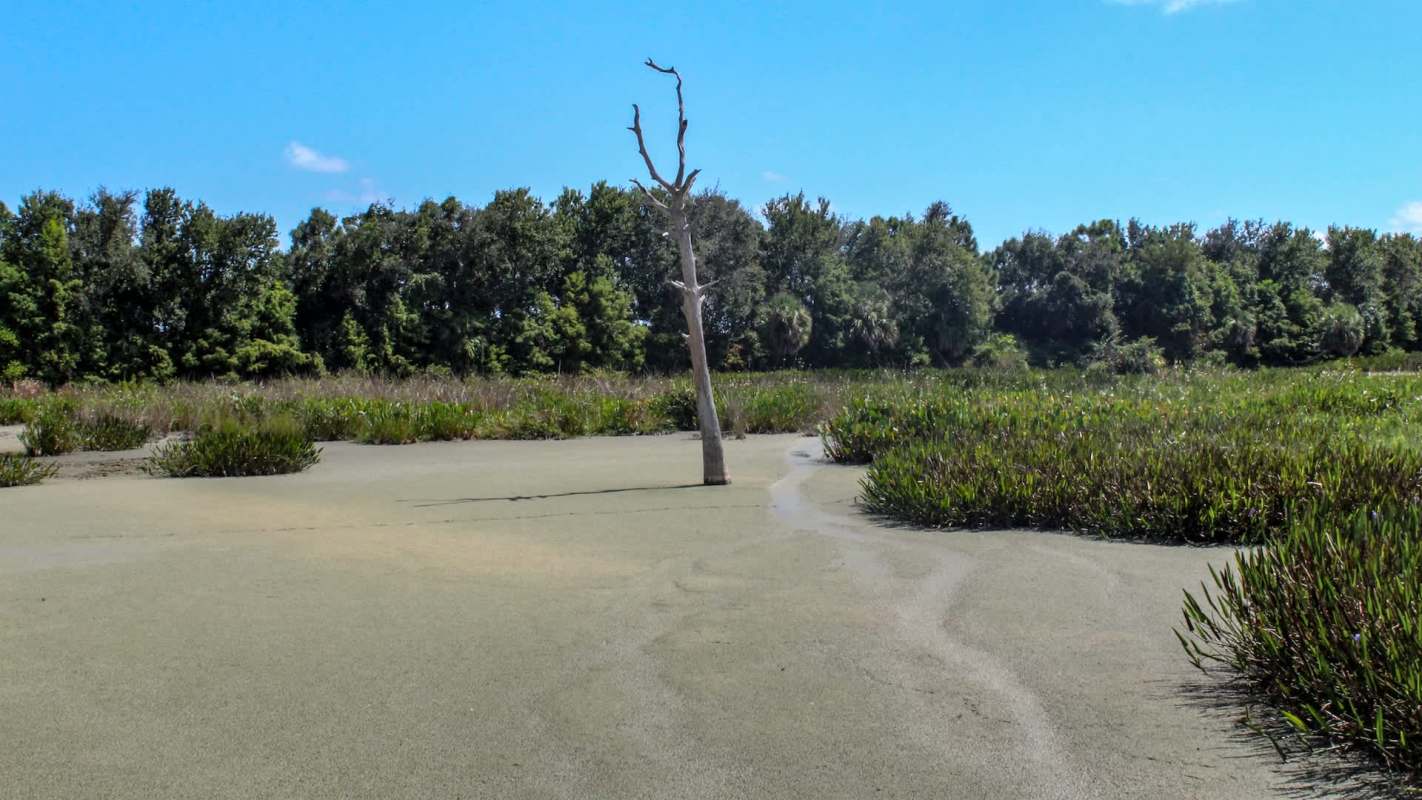
A state better known for downpours and wetlands is dealing with the opposite extreme. Florida is in the midst of a major drought, and the fallout reaches beyond brittle grass and fading lawns.
Here's what to know
As the Sarasota Herald-Tribune reported, by mid-July 2026, drought-affected areas were home to 15.5 million of Florida's 23.5 million residents, raising alarms about both wildfire risk and access to clean drinking water.
Although Florida is typically driest from November to May, that seasonal pattern has stretched later into the year. Drought conditions are measured using indicators such as rainfall, soil moisture, streamflow, and local observations.
NASA data cited by the Herald-Tribune shows Florida has recorded some of its largest shares of severe, extreme, and exceptional drought since 2000. As of mid-July 2026, no part of Florida was in exceptional drought, though 16.2% of the state was in extreme drought.
Two Gulf Coast counties have seen some of the worst impacts. National Integrated Drought Information System data showed all of Sarasota County was under drought, and the county posted its fifth-driest June in 132 years. In Manatee County, June was the fourth-driest in that same 132-year span, with drought affecting the entire county as well.
That timing has made the situation more dangerous. Because the 2026 dry spell continued into Florida's lightning season, strikes hitting dry ground are far more likely to ignite wildfires.
TCD Picks » Quince Spotlight
💡These best-sellers from Quince deliver affordable, sustainable luxury for all




More background
Drinking water systems are also under pressure. Florida International University research cited by the Herald-Tribune found that long-lasting dry conditions can threaten access to clean water, pushing local governments and organizations to protect that access.
In Sarasota County, Brooke Bailey, Sarasota County's public utilities director, said drinking water comes from three primary sources — the Peace River/Manasota Regional Water Supply Authority, Manatee County, and the T. Mabry Carlton, Jr. Memorial Reserve Treatment Plant.
Bailey told the Herald-Tribune, "Sarasota County Public Utilities uses a water treatment process called Electrodialysis Reversal (EDR) to demineralize and prepare our water for drinking."
Manatee County officials described a comparable approach. Chris Collins, Manatee County's utilities deputy director, said the county's system "utilizes a diversified water supply that includes surface water from Lake Manatee and groundwater wells," adding that the facility continues to monitor and treat water to meet or exceed state and federal drinking water standards before it reaches customers.
What's being done?
To stretch available supplies, local agencies are relying on conservation plans. Bailey said, "Sarasota County remains on a once-per-week watering schedule year-round to conserve water." Collins said Manatee County prepares by "maintaining multiple water sources, following established water shortage plans when necessary, and working closely with SWFWMD to ensure water supplies remain reliable."
Questions are also growing about where future water supplies will come from. ManaSota-88 Inc., a local environmental nonprofit, has raised concerns that the Southwest Florida Water Management District may begin drawing water from additional natural sources if it lifts its water storage emergency order.
Randy Smith, resource management director for the Southwest Florida Water Management District, said current protections are designed to prevent that. "Minimum flows and levels are scientifically established limits set by the district to protect natural water bodies from significant ecological harm," Smith said. He also said the district has prioritized more than $600 million in cooperative funding for alternative water supply projects over the next 20 years.
Storage and alternative supplies are also part of the Peace River Manasota Regional Water Supply Authority's strategy for reducing pressure on traditional groundwater sources.
Richard Anderson, who leads the Peace River Manasota Regional Water Supply Authority, said: "The key to using a seasonally available surface water as a reliable public water supply is the ability to harvest and store large volumes of water during relatively short periods of availability."
Where can I learn more?
Florida's drought is unfolding alongside larger concerns about strained water supplies and rising fire danger. The coverage below looks at worsening dry conditions across the state, possible relief from tropical moisture, and emergency responses to fast-moving drought elsewhere.
• In southwest Florida, the state's main water reserve is half empty, leaving roughly eight months of supply.
• Tropical soaking in central Florida threatened flash floods while easing drought.
• Officials across the Southeast warned rapid-onset drought risk could spread with little notice.

Get TCD's free newsletters for easy tips, smart advice, and a chance to earn $5,000 toward home upgrades. To see more stories like this one, change your Google preferences here.






