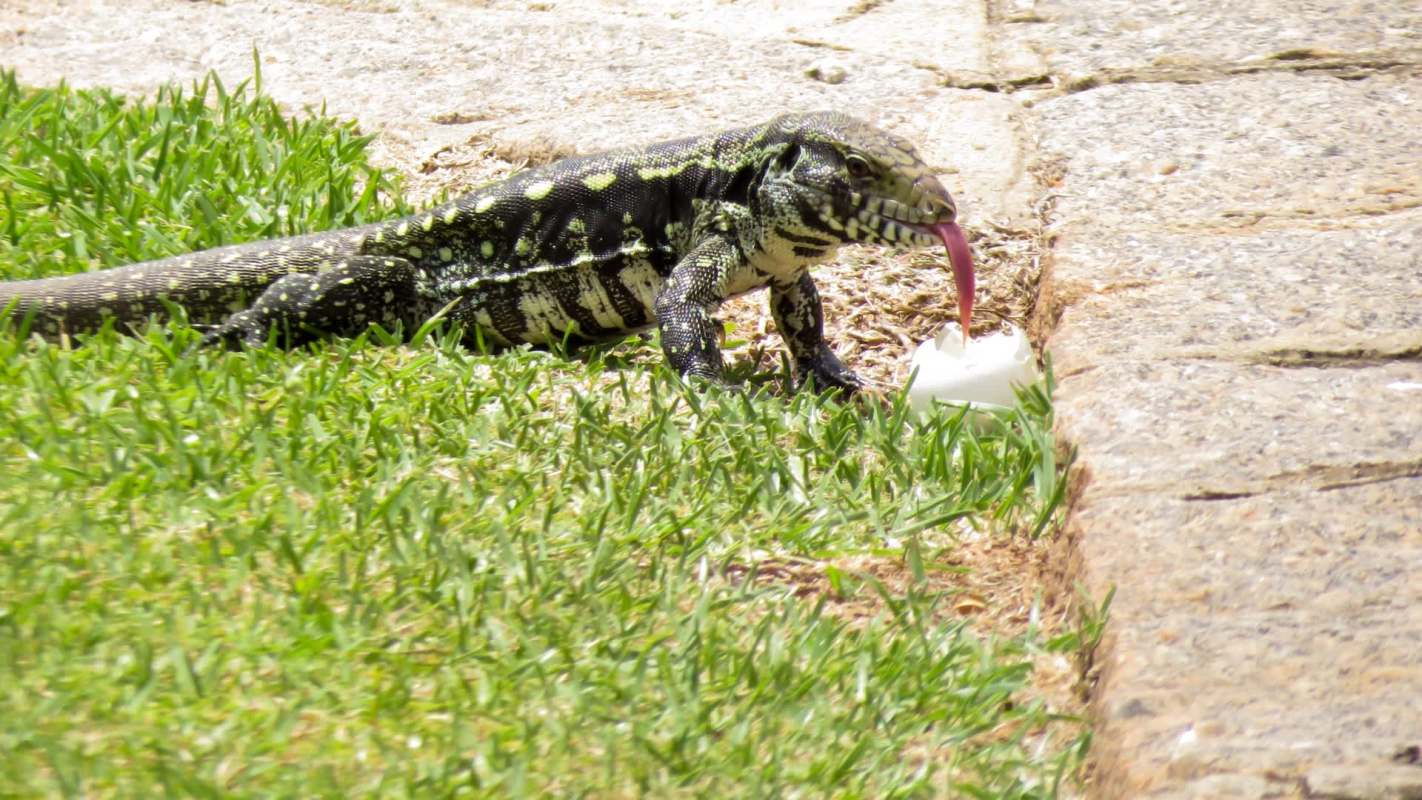
A Florida falconer's American kestrel named "Baby Bird" has joined an experimental effort to detect invasive lizards as Argentine black and white tegus spread across Florida.
The falconer used the small raptor at a pilot event focused on invasive lizards. The effort comes as Argentine black and white tegus appear in more parts of Florida, where the nearly 5-foot reptiles are worrying residents and threatening native species in neighborhoods and near waterways.
What's happening?
The Argentine black and white tegu, a large lizard native to South America, is expanding its range in Florida and has also been reported in Georgia and as far north as Maryland, according to Florida Today.
The reptiles entered the wild through the pet trade around 2002, and they have since become a growing concern. The University of Georgia's EDDMapS site shows more than 11,700 tegu sightings across Florida, according to Florida Today, including 46 in Brevard County.
St. Lucie County was recently identified as having an emerging tegu population, while breeding groups have already been documented in Hillsborough, Miami-Dade, and Charlotte counties. In Brevard, sightings have clustered near Lake Poinsett, Palm Bay, Merritt Island, and Viera.
Viera resident Dave Yolitz, who caught and put down a 3-foot tegu near his home, warned, "All it takes is a couple, then we end up with a 'pythons-in-the-Everglades' sort of scenario."
TCD Picks » Good Store Spotlight
Get 10% off your next purchase with code TCD10




Why does it matter?
Tegus eat plants and smaller animals, but also target the eggs and nests of sea turtles, alligators, gopher tortoises, and ground-nesting birds.
No known reports link tegus to attacks on humans, but officials still urge residents to keep their distance, since the reptiles can lash out when cornered. "They're fast, and their tails whip," said Poinsett Shores resident Brady Deluca.
What's being done?
Florida made owning, selling, or breeding tegus illegal in 2021 as part of restrictions on high-risk nonnative reptiles.
Cape Canaveral urged residents on Facebook to report sightings to the Florida Fish and Wildlife Conservation Commission's Exotic Species Hotline at 1-888-483-4681 or through IveGot1.org, adding: "Do not attempt to capture them yourself."
TCD Picks » Quince Spotlight
💡These best-sellers from Quince deliver affordable, sustainable luxury for all




Wildlife managers are testing a mix of detection tools, including dogs, drones, and trained birds of prey. A St. Lucie County pilot program enlisted a local falconer's American kestrel, "Baby Bird," to search for invasive lizards. Tegus have also prompted warnings across the South as the species spreads beyond Florida.
"It was pretty strong," Yolitz said of the tegu he caught. "It's a pretty hefty creature." Deluca added another reason neighbors are uneasy: "Apparently, they're great swimmers."

Get TCD's free newsletters for easy tips, smart advice, and a chance to earn $5,000 toward home upgrades. To see more stories like this one, change your Google preferences here.