


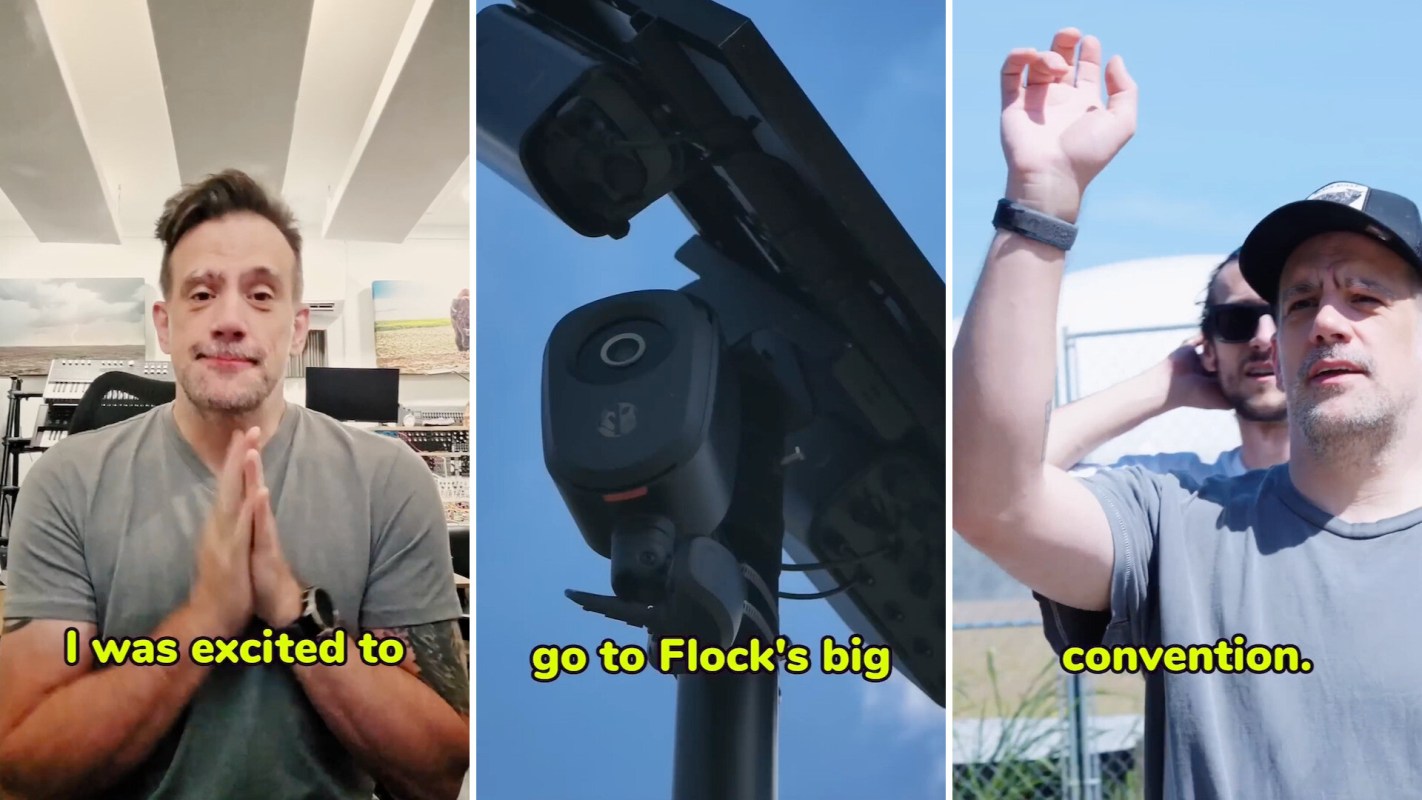
Flock Safety has argued that police can use its automated license plate reader cameras to track drivers without a warrant because people on public roads do not have a reasonable expectation of privacy.
At the company's police convention in Atlanta, YouTube host Benn Jordan turned that logic back on Flock by aiming surveillance tools at the company behind them.
Here's what to know
According to Reason, Jordan, a vocal Flock critic on YouTube, planned to attend the company's Atlanta conference to better understand its ties to law enforcement.
He said that after downloading the event app, he discovered the full attendee list exposed in the source code and reported it to the company.
Jordan said Flock revoked his conference tickets after learning he intended to be there. He also told the outlet that a Flock employee called his hotel and canceled a room he had booked himself, and that nearby rooms and parking lots also seemed to be booked up.
Even so, Jordan found a public parking spot near the hotel and set up a van with antennas, Wi-Fi adapters, and other radio gear. He said the equipment let him receive signals from wireless microphones inside the convention hall.
TCD Picks » Quince Spotlight
💡These best-sellers from Quince deliver affordable, sustainable luxury for all




"Everything was on public channels," Jordan told Reason.
He also used a drone to photograph attendees as they left the event, then applied facial recognition to identify them. Jordan summed up the point of the exercise in his video title: "Flock values their privacy. Oh well."
More background
Flock and many of the police agencies that use its products have embraced a broad view of surveillance in public places, one that allows ordinary people to be tracked, logged, and searched without a warrant. But when comparable tactics were directed at company executives and public officials, privacy limits appeared much more important.
Its system connects police departments nationwide through a shared database, a model that has fueled concerns about how easily information can be accessed, passed around, or abused.
Reason reported that officers have used Flock data while pursuing romantic interests, and that faulty identifications have been linked to one woman spending two weeks in jail and another being detained at gunpoint.
Privacy concerns also led to concrete fallout in 2026: 56 cities and towns have ended their Flock contracts, and Ring backed away from a planned partnership with the company after backlash.
What can be done?
Jordan told Reason that he would rather see license plate surveillance eliminated altogether. But he has also suggested a narrower option for places that insist on using it: cameras owned by cities, databases controlled by those same communities, and a rule requiring police to obtain a judge's warrant before accessing the data.
He said, "Public officials should know that you can't go to a private thing where journalists aren't allowed and not expect anybody to fly a drone from public view. You should be a little unsettled about going to something like that."

Get TCD's free newsletters for easy tips, smart advice, and a chance to earn $5,000 toward home upgrades. To see more stories like this one, change your Google preferences here.






