


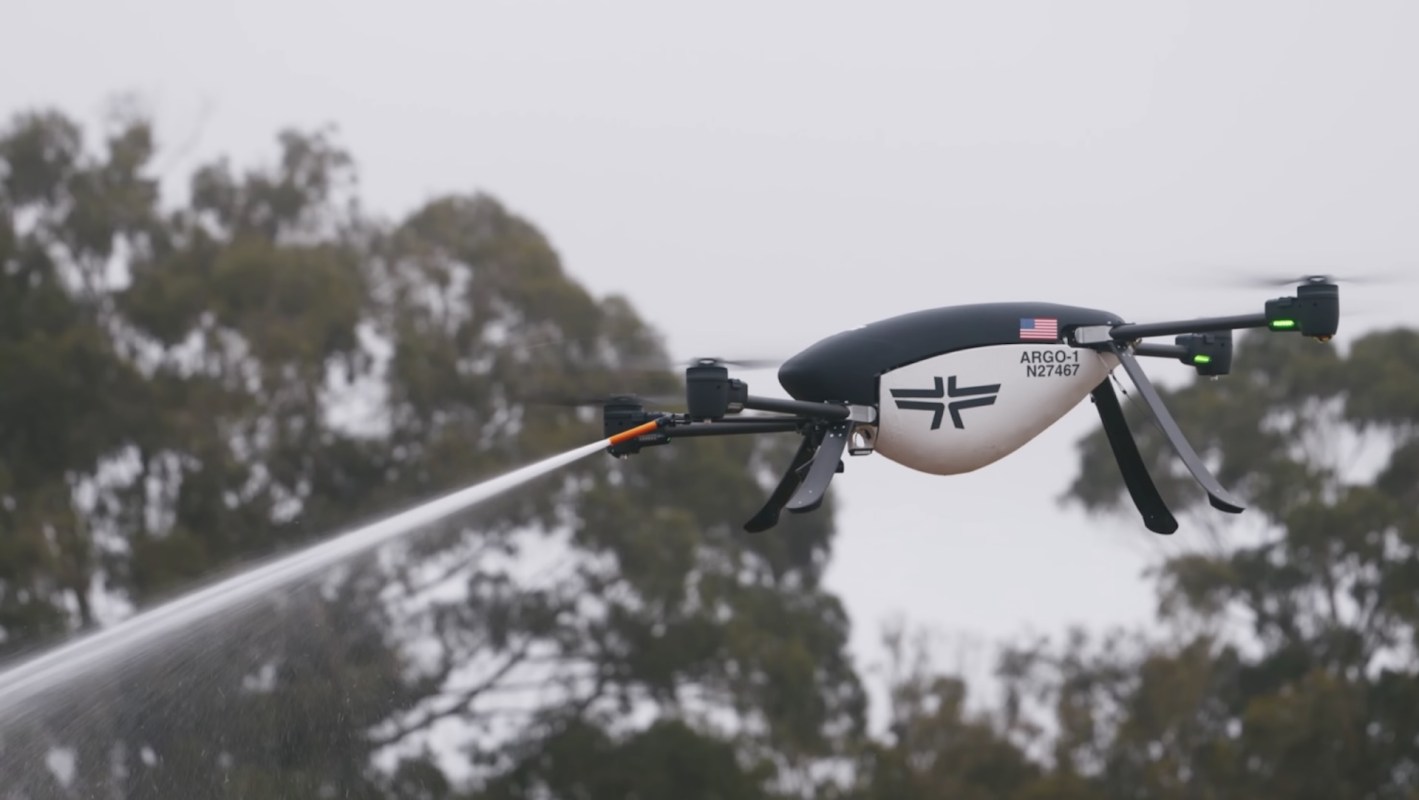
With wildfires becoming a more prolific issue as man-made climate change increases aridity in U.S. forests, fire officials are testing autonomous drones as an early response tool. The hope is that these aircraft can identify fresh ignitions and drop water or fire retardant before a small flare-up becomes a large emergency.
What's happening?
This summer, trials in California and Alaska are putting that idea to the test, according to Ars Technica.
During a July 15 exercise, the California Department of Forestry and Fire Protection used five autonomous drones in a field test that together released about 500 to 1,000 gallons of fire-suppression foam.
According to Ars Technica, the trial aimed to help California-based drone company Seneca and non-profit FireWERX.
Seneca says each Argo-1 drone carries about 100 pounds of water or retardant and is intended to fly in swarms of four to six, the outlet reported. A human first enters a GPS waypoint, and the drones then use onboard sensors to locate a heat signature and move into place for a spray drop.
Ars Technica noted another similar method. Near Fairbanks, Alaska, the XPRIZE Wildfire competition recently examined a different setup from Germany-based Dryad Networks. Its Silvaguard system combines solar-powered sensors attached to trees with drones built to locate and extinguish fires autonomously.
TCD Picks » Quince Spotlight
💡These best-sellers from Quince deliver affordable, sustainable luxury for all




Why does it matter?
Wildfires are becoming a more constant threat as hotter, drier conditions raise the odds that a spark can turn into a fast-moving emergency. That means one of the biggest opportunities often comes at the very beginning, before flames spread into forests, neighborhoods, or power infrastructure.
If drones can reliably knock down small fires early, they could help stop them before they turn into major blazes. They may also give firefighters another option in places where it is difficult to reach a new ignition quickly.
There are limits to what these systems can do, however. Because drones are generally smaller and cannot travel as far as crewed firefighting aircraft, they are not a replacement for large airtankers during major incidents.
What's being done?
For now, the emphasis is on field trials and practical demonstrations. The $11 million XPRIZE Wildfire competition is helping move the technology forward, while startups and state agencies are trying to show that autonomous aircraft can work safely alongside human firefighting crews.
Some local departments are already making financial commitments. In Colorado, according to Ars Technica, the Aspen Fire Protection District agreed to spend $5 million over five years on five Seneca drones, suggesting that some public agencies see enough potential to start planning around them.
The larger goal is to shorten both detection and suppression time. One version uses tree-mounted sensors to identify a possible ignition before drones autonomously detect and suppress it, while another begins with a human designating an area and a drone swarm carrying out the drop.
Autonomous drones will not end the wildfire crisis on their own, but they could become a valuable first-strike option. If they can stop a blaze while it is still small, they may help protect people, property, and firefighters before a bad day turns into a catastrophe.

Get TCD's free newsletters for easy tips, smart advice, and a chance to earn $5,000 toward home upgrades. To see more stories like this one, change your Google preferences here.






