


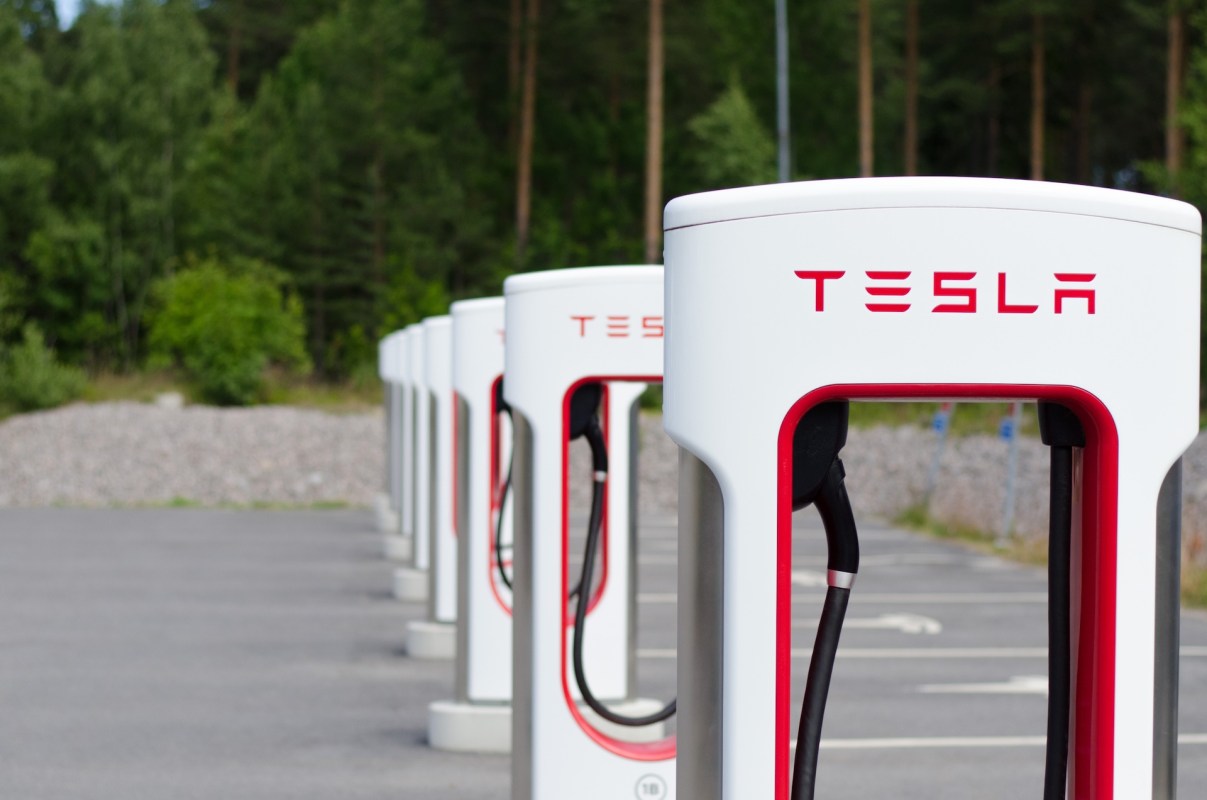
Finding an open fast charger in the United States is becoming easier, but some electric vehicle drivers may be paying more for that convenience.
The country has now surpassed 80,000 public fast-charging ports, even as Tesla's Supercharger prices climbed faster than the national average.
Here's what to know
As Electrek detailed, Paren's Q3 2026 State of the U.S. Fast EV Charging Industry report revealed operators installed 4,106 fast-charging ports at 664 stations from July through September, pushing the U.S. total to 80,964 ports across 14,614 locations.
No network added more in the quarter than Tesla, which brought 1,287 new ports online and added another 124 through its Supercharger for Business program, the analysis showed.
Site sizes are increasing as well, per the report. New non-Tesla stations averaged five ports, up from 4.1 in Q3 2025, while Tesla's new stations averaged 13.1 ports.
The company also opened 11 locations with at least 24 stalls. Having more plugs at each site could reduce wait times, but Tesla drivers are also seeing higher prices, as Electrek noted.
TCD Picks » Quince Spotlight
💡These best-sellers from Quince deliver affordable, sustainable luxury for all




The company's average non-member Supercharger rate rose 15% from Q3 2025 to 56.9 cents per kilowatt-hour, and its member rate increased 9% to 39.6 cents. Non-Tesla networks stayed near 53.3 cents per kWh for a fifth straight quarter.
"It's telling that Tesla's rates increased at far more than the national average," an Electrek commenter opined. "As long as Ionna holds to its 39 cent/kWh rate (the cost at most sites), they'll be cheaper than even Tesla's member rates. Walmart will certainly compete on price as well."
More background
Use of public fast chargers kept climbing in Q3 2026. Paren recorded 50.4 million fast-charging sessions during the quarter, up 26% from Q3 2025, and July alone set a monthly high at 17.6 million sessions.
That demand is not spread evenly across the country, Electrek said. Utilization in the 30 biggest charging markets averaged 21.1%, compared with 11% elsewhere, and Los Angeles led major metro areas at 31.8%. Urban areas accounted for 90% of Q3's new stations, leaving rural markets with just 68 of the 664 additions.
Reliability remained relatively steady. Paren gave the national network a score of 93.9 on its reliability index, which factors in successful sessions, retries, failed attempts, and downtime.
Timing can matter nearly as much as location. At stations with time-of-use pricing, Electrek reported average rates of 63.7 cents per kWh at peak times versus 43.8 cents off-peak.
What can be done?
Even with the continued build-out, station openings through September were still running about 20% below the same period in 2025.
Companies are also addressing another major complaint by deploying faster hardware. By Electrek's count, 73% of the new Q3 ports were rated at 250 kilowatts or above, versus 60% in Q3 2025. Beyond Tesla's network, chargers at 400 kW or more made up 35% of additions, up from 10% in Q3 2025, according to the report.
Growth is not limited to Tesla. Electrek said IONNA added 378 ports in Q3, including 44 stations created by converting former Circle K sites, while Walmart added 344 ports.
"As their networks expand, Tesla's pricing power will shrink," the same Electrek commenter predicted.
Where can I learn more?
Charging issues persist for EV drivers even as networks expand.
• Tesla drivers are questioning the cost of using Superchargers as prices keep climbing.
• At some Tesla sites, vandalism is disrupting access just as demand keeps rising.

Get TCD's free newsletters for easy tips, smart advice, and a chance to earn $5,000 toward home upgrades. To see more stories like this one, change your Google preferences here.






