


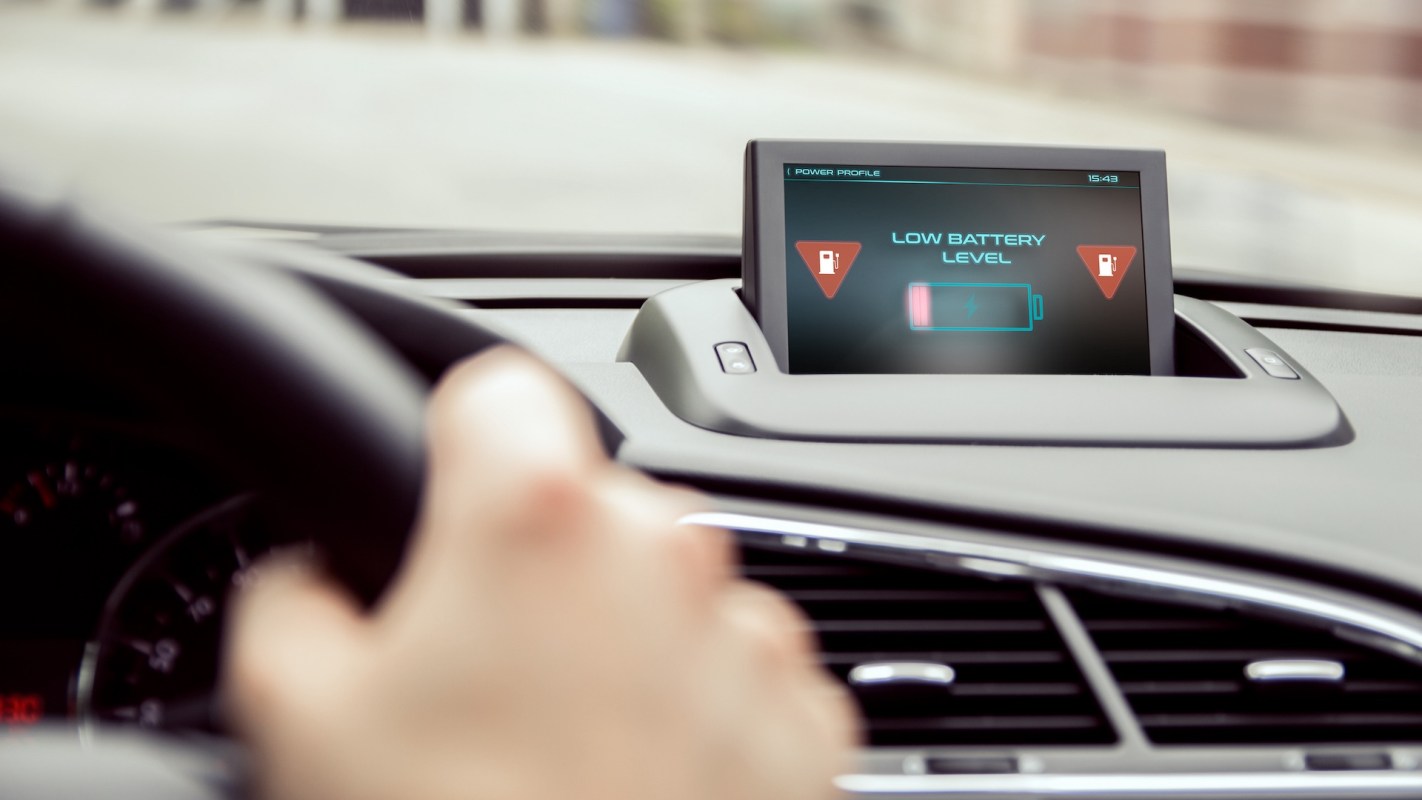
Many shoppers still cite fear of running out of battery as a reason to avoid EVs. They think reaching 0% on the dashboard will damage the battery and lead to a costly repair, but is that really the case?
Here's what to know
In a YouTube explainer, a creator who claims to be a charging engineer argued that reaching 0% on the display is usually less dramatic than people make it out to be.
In his breakdown, the bigger mistake is not hitting zero once, but leaving the vehicle there afterward.
According to the video, the percentage shown on an EV dashboard represents the usable portion of the pack, not the entire charge. Battery engineers anticipated that people would run an EV to 0% and planned for that. As he put it, "0 percent on your dashboard is not 0 percent in your battery."
Many EVs warn drivers around 20%, giving them ample time to find a sensible place to stop. Next, the battery management system often starts limiting power near 5% to increase the remaining range.
By the time the charge falls to roughly 2% to 3%, some vehicles may enter "turtle mode," cutting output and sometimes turning off climate control to help the car reach a safe place.
TCD Picks » Quince Spotlight
💡These best-sellers from Quince deliver affordable, sustainable luxury for all




Knowing human nature, he warned drivers not to treat that reserve as extra range: "It is a safety net, not a fuel tank."
More background
Because battery replacement is such a major EV worry, the video directly challenges the idea that a single trip to 0% will permanently ruin a battery pack. He warned that the real danger comes when a vehicle remains empty for days and continues to self-discharge.
He also said a car that has fully used its available power generally winds down instead of shutting off all at once. Power drops progressively, while braking and hazard lights still work. Power steering is also typically supported by the 12-volt system.
Commenters added perspective. One wrote: "If you get to 20%, and you think it's a stretch to the closest charger, SLOW DOWN." Another cautioned that "Not all cars are created equal!" after describing a model that lost charge much faster than expected after reaching the low battery state.
What can be done?
Drivers may be better off charging when the battery reaches about 15% to 20%, rather than waiting until the charge nears 0%. Charging at 20% can reduce stress and save time, especially in cold weather, when range estimates tend to be less reliable.
If a charge does get very low, reducing speed, cutting unnecessary energy use, and heading for a safe stop can improve the odds of reaching a charger without needing roadside assistance.
It is also worth checking the owner's manual before an emergency happens, since many EVs are meant to be moved on a flatbed rather than towed with the wheels down. Know your car and speak up. Don't fully rely on a tow truck driver to have the knowledge.
If you do hit zero, the key is to recharge as soon as possible instead of letting the car sit there. "Hitting zero once is fine. Leaving the car at zero for days is not."
Where can I learn more?
For more on EV battery health, these stories dig into lifespan, care, and what owners are seeing over time.
• Even in a freezing garage, what actually hurts batteries is usually prolonged neglect, not cold alone.
• Researchers have found misconceptions about EV battery lifespans that do not match how packs age on the road.
• Owners past 100,000 miles say the battery is rarely the part causing the biggest headaches.

Get TCD's free newsletters for easy tips, smart advice, and a chance to earn $5,000 toward home upgrades. To see more stories like this one, change your Google preferences here.






