


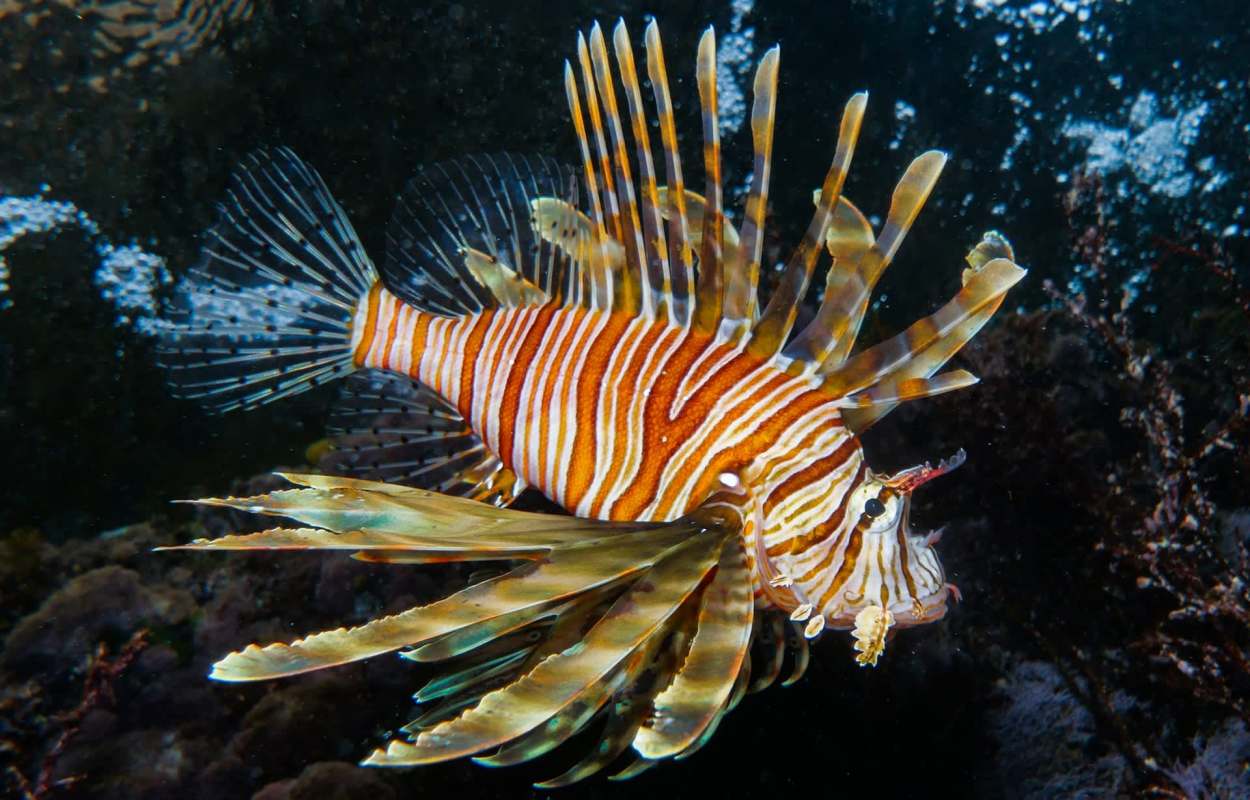
Conservationists are realizing that unusual wildlife sightings, like a lionfish in the Adriatic Sea, giant American bullfrogs in Belgian wetlands, and self-cloning crayfish in the Czech Republic, are all a part of ecosystem mismanagement issues across Europe.
According to the International Union for Conservation of Nature, which categorizes species based on their relative extinction risk, European conservation groups are trying to move more forcefully against introduced species before they become established on the continent.
That approach is being put to the test in the first 20 projects of the European Invasive Alien Species Rapid-Response Fund, an EU project that will run through 2028. These projects are running in nine European countries to prevent introduced species from further spreading.
Organizations can use expedited grants of 10,000 to 50,000 euros (about $11,670 to $58,360) through the new fund, letting them respond at once instead of waiting through slower traditional funding cycles, according to the IUCN.
That speed can make the difference between a contained response and a much larger ecological problem.
The IUCN says introduced plants and animals are rapidly changing Europe's natural environment. The organization links introduced species to 60% of recorded extinctions worldwide and says they were the sole cause of extinctions in 16% of cases. The IUCN estimates that the annual economic toll of this in Europe sits at a whopping $28 billion.
TCD Picks » Quince Spotlight
💡These best-sellers from Quince deliver affordable, sustainable luxury for all




When introduced species disrupt natural habitats, communities can feel the effects through damaged fisheries, altered landscapes, reduced biodiversity, and higher public costs tied to long-term control efforts.
The early projects span very different habitats and species. In Croatia, teams are taking lionfish out of marine protected areas. In Belgium, a project is eradicating giant American bullfrogs and African clawed frogs. And in the Czech Republic, people are removing the self-cloning marbled crayfish.
Elsewhere, work is targeting raccoons near the Austrian-Czech border and escaped ornamental plants like Japanese knotweed and Himalayan balsam.
Many of these species arrive thanks to people, through trade, travel, and related activity, according to the IUCN. While the plants themselves spread disease, reshape habitats, and outcompete native wildlife, it's up to people to take care of the environment. Delayed action tends to make removal far harder and more costly.

Get TCD's free newsletters for easy tips, smart advice, and a chance to earn $5,000 toward home upgrades. To see more stories like this one, change your Google preferences here.







