



As Western Europe swelters through extreme heat and record-breaking June temperatures, false claims have spread across social media alleging that 5G towers are to blame. However, climate scientists and telecom experts say wireless networks have no meaningful effect on weather systems or atmospheric temperatures.
What's happening?
Record June heat in Western Europe has coincided with a wave of social media posts accusing 5G of causing the high temperatures. Experts cited by AFP Fact Check said that claim is unsupported, noting that 5G does not meaningfully influence atmospheric heat or weather patterns.
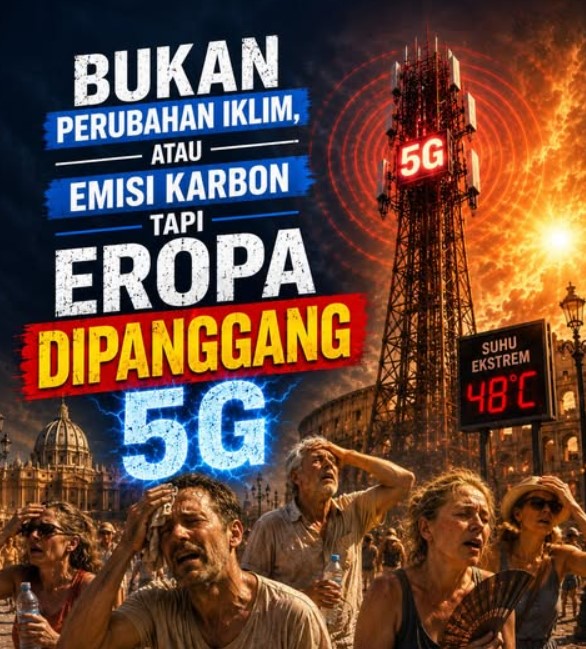
The rumor appeared on multiple platforms. On Facebook, one post said, "Not by climate change or carbon emission but Europe was burned by 5G," and referred to geo-engineering and the "global elite." The same claim was shared on Instagram as well.
The post features AI-generated imagery of Europeans suffering in 48-degree Celsius (roughly 118 degrees Fahrenheit) heat, while a looming 5G tower in front of Rome's Colosseum radiates red waves.
Researchers instead point to long-term climate warming. AFP said John Kennedy, the WMO's climate information chief, described the current heat as consistent with Europe's broader warming trend, adding that the continent is about two degrees warmer than it was around the 1976 heatwave and that temperature extremes have become more common.
They explained 5G as a mobile network standard built to transmit more data across several radio frequencies. Despite that mundane function, it has repeatedly drawn conspiracy theories that lack credible supporting evidence.
TCD Picks » Quince Spotlight
💡These best-sellers from Quince deliver affordable, sustainable luxury for all




Why does it matter?
False explanations for dangerous heat can distract from the real threats people face and from the actions that can actually help protect them.
Extreme heat is not just unpleasant; it is one of the deadliest weather hazards, especially for older adults, outdoor workers, and people without reliable access to cooling.
The timeline alone weakens the claim: Europe's deadly 2003 heatwave came well before 5G's 2019 rollout. AFP said that the event was associated with more than 71,000 deaths.
Experts also say the physics do not support the rumor.
Khoirul Anwar, an associate professor at Indonesia's Telkom University, said 5G radio waves are "extremely weak compared with the energy involved in heating the atmosphere in Europe."
Climate scientist Milan Kloewer likewise said the signals are "far too weak to heat the atmosphere or create weather systems."
Knowing that climate change is making heatwaves more frequent and more intense, communities can respond with better warning systems, cooling plans, and resilient infrastructure rather than chasing baseless theories online.
What's being done?
Fact-checkers, climate scientists, and meteorological agencies continue to push back on falsehoods as they spread.
At the same time, governments and cities across Europe are increasingly relying on heat alerts, public health guidance, and emergency response plans during periods of extreme heat. These efforts can help people reduce exposure, find cooling spaces, and recognize signs of heat illness earlier.

Get TCD's free newsletters for easy tips, smart advice, and a chance to earn $5,000 toward home upgrades. To see more stories like this one, change your Google preferences here.






