


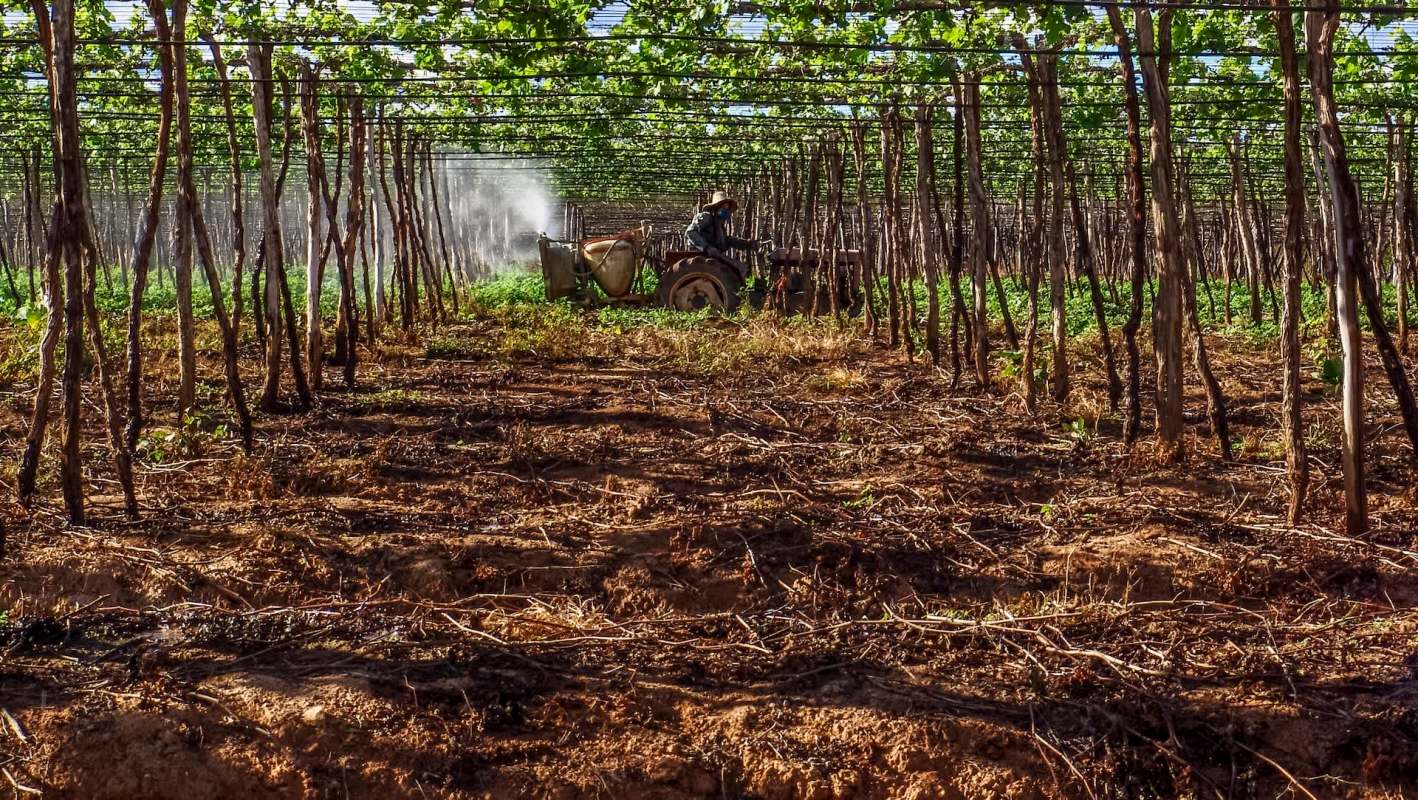
Pesticides banned from farms in the European Union are still being used in Brazil, where an investigation linked products sold by three major European companies to hundreds of poisoning reports.
Here's what to know
An Unearthed and Public Eye investigation found 32 deaths and 47 cases involving children younger than six among Brazilian poisoning reports naming brands sold by Bayer, BASF, or Syngenta. Its review identified 1,605 reports of suspected or confirmed pesticide poisonings involving those brands in 2025.
Investigators reviewed Brazilian health ministry records and found 2,857 reports naming identifiable agricultural pesticide brands. Of those, 56% involved products from the three companies. Around one-third of the reports involving those companies named products banned from agricultural use in the EU.
Bayer products appeared in 1,078 reports, compared with 425 for Syngenta and 179 for BASF. Reports involving more than one company counted toward each company's total.
Some frequently named products are manufactured in Europe for export despite restrictions on their use there. Among them is Syngenta's Reglone weedkiller, made in Huddersfield, England, even though its use is banned in the United Kingdom.
More background
Reglone's active ingredient, diquat, was banned in the U.K. and EU after experts identified substantial dangers to residents near fields treated with it, according to Unearthed and Public Eye.
TCD Picks » Quince Spotlight
💡These best-sellers from Quince deliver affordable, sustainable luxury for all




Reporting found that Syngenta shipped 5,647 U.S. tons (5,123 tonnes) of diquat out of the U.K. in 2023, with more than half going to Brazil.
Nelson Castoldi, an 80-year-old farmer, died after accidentally drinking Reglone that had been transferred into a Coca-Cola bottle, his family said. An autopsy attributed his death to diquat-induced failure of his respiratory and cardiovascular systems, according to Unearthed and Public Eye.
The investigation also identified 104 reports citing Bayer products subject to EU bans or severe restrictions. Many contained imidacloprid, an insecticide prohibited from outdoor use there in 2018 because of its danger to bees.
What's being done?
Brazil banned paraquat in 2020 after its health ministry linked the weedkiller to numerous poisonings and Parkinson's disease. Diquat use subsequently increased sharply, with Brazil's health ministry recording 75 diquat poisoning reports in 2025, compared with 36 across 2018-2022.
The United Nations' pesticide-management code calls for packaging sizes appropriate for small-scale farmers to discourage dangerous repackaging. But Nelson's son, Ivan Castoldi, said smaller Reglone bottles cost substantially more, pushing his family toward larger containers.
Bayer, BASF, and Syngenta said they invest in labeling, farmer training, and protective-equipment practices.
Former tractor operator Vanderleia da Silva Monteiro described how protective clothing wore thin and allowed pesticides through. BASF said it was confident in its products' safety when label instructions and applicable requirements are followed.
Michael Eddleston, a University of Edinburgh clinical toxicology professor, called for preventing exposure in the first place.
"Pesticide companies have a responsibility to put lives before profit, limiting access to highly hazardous pesticides to ensure that people are not put at risk in the first place," he said, according to Unearthed and Public Eye.

Get TCD's free newsletters for easy tips, smart advice, and a chance to earn $5,000 toward home upgrades. To see more stories like this one, change your Google preferences here.






