Scientists have identified erythrulose, a sugar that occurs naturally in raspberries, in a dust-and-gas cloud near the Milky Way's center, offering fresh evidence that some life-linked compounds can arise in deep space.
The result points to fairly advanced chemistry happening well before planets and any life on them come into existence.
What happened?
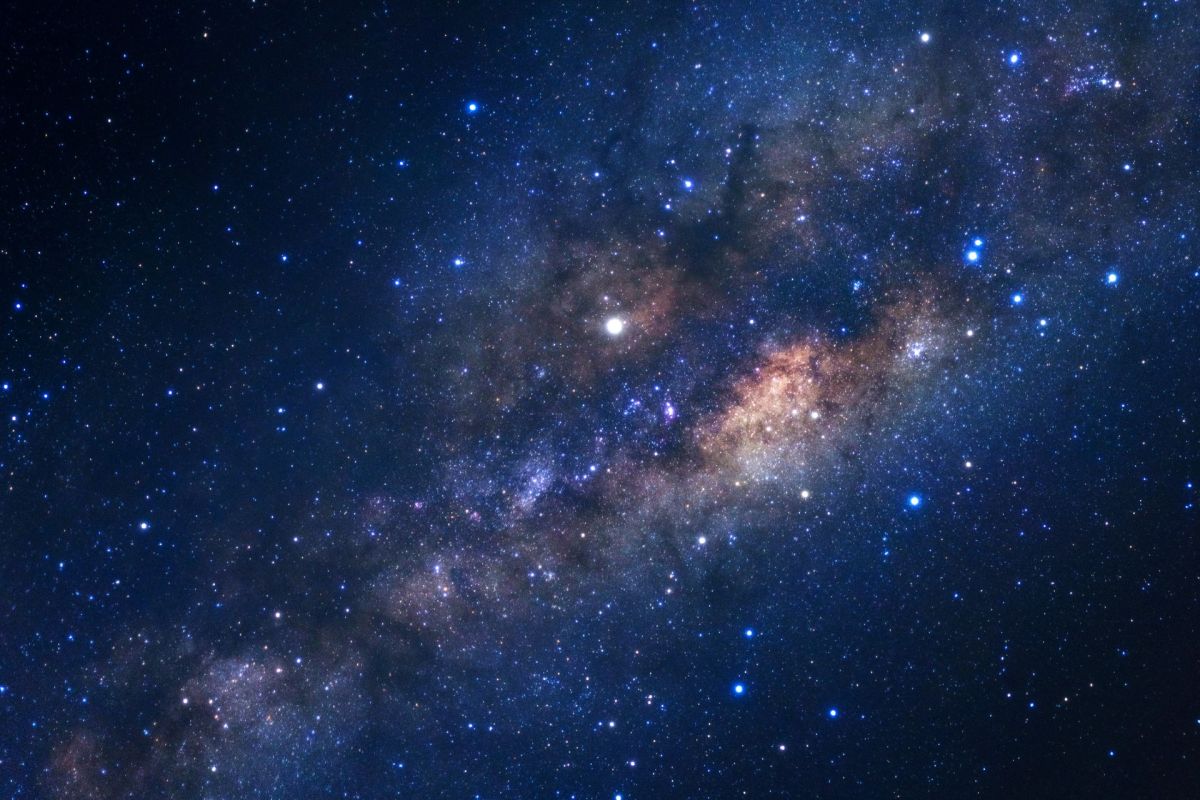
In work published Monday in Nature Astronomy, a team from Spain's Center for Astrobiology reported finding the four-carbon sugar erythrulose in G+0.693−0.027, a molecular cloud near the galaxy's center.
Using radio telescopes at the Yebes Observatory and IRAM, the researchers compared the cloud's radio-wave pattern with lab measurements of erythrulose, according to CNN.
The scientists had originally been looking for simpler three-carbon sugars and found none, making the result all the more striking.
"This finding was unexpected, as the prevailing view in astrochemistry is that interstellar molecules grow in size through the sequential addition of carbon atoms," said Izaskun Jiménez-Serra, an astronomer at Madrid's Center for Astrobiology and the Spanish National Research Council.
TCD Picks » Quince Spotlight
💡These best-sellers from Quince deliver affordable, sustainable luxury for all




Erythrulose occurs in very small quantities in raspberries and other fruits, and it is also used in self-tanning cosmetics.
Why does it matter?
In living organisms, sugars do basic but essential work: they serve as energy sources, contribute to structural components, and appear in genetic material including RNA and DNA.
Its presence between the stars implies that some of the chemistry associated with life could start earlier, and farther from planets, than scientists had assumed.
Researchers have identified more than 340 molecules in the Milky Way's interstellar material, but the study noted that no sugars had been confirmed there until now.
The finding also supports the idea that early Earth may have inherited some of its organic compounds from space.
"Sugar and sugar-related compounds have been found in asteroids, but the discovery of these compounds in interstellar space strengthens suggestions that our solar system may have been seeded with pre-existing organic compounds," said Mark Sephton, a professor in Imperial College London's department of Earth science and engineering who was not involved in the study.
What's being done?
Researchers are now trying to spot additional spaceborne molecules with biological relevance.
According to the study, erythrulose could arise from simpler ingredients on icy grains of dust and then feed into broader chemical systems during the birth of stars and planets.
Future searches may focus on sugars such as ribose, a component of RNA, along with other molecules associated with prebiotic chemistry.
Improved telescope observations, additional lab measurements, and follow-up studies of asteroids and comet material could help researchers trace how these compounds move from interstellar clouds into young solar systems.
Yoshihiro Furukawa, a professor at Tohoku University's Department of Earth Sciences in Japan, said sugars could also be delivered to planets by comets and asteroid dust.
Scientists have even estimated that large amounts of erythrulose may have reached Earth during ancient bombardment periods, though the details remain debated.
It also sharpens the search strategy for astronomers by pointing them toward more complex molecules in the environments where new worlds take shape.
"The detection of erythrulose is very exciting because it opens up the possibility of discovering in space other sugars such as ribose, which is part of RNA, and other important molecules for the origin of life," said Carlos Briones, a study coauthor and molecular evolution researcher at the Spanish National Research Council and the Center for Astrobiology.

Get TCD's free newsletters for easy tips, smart advice, and a chance to earn $5,000 toward home upgrades. To see more stories like this one, change your Google preferences here.