


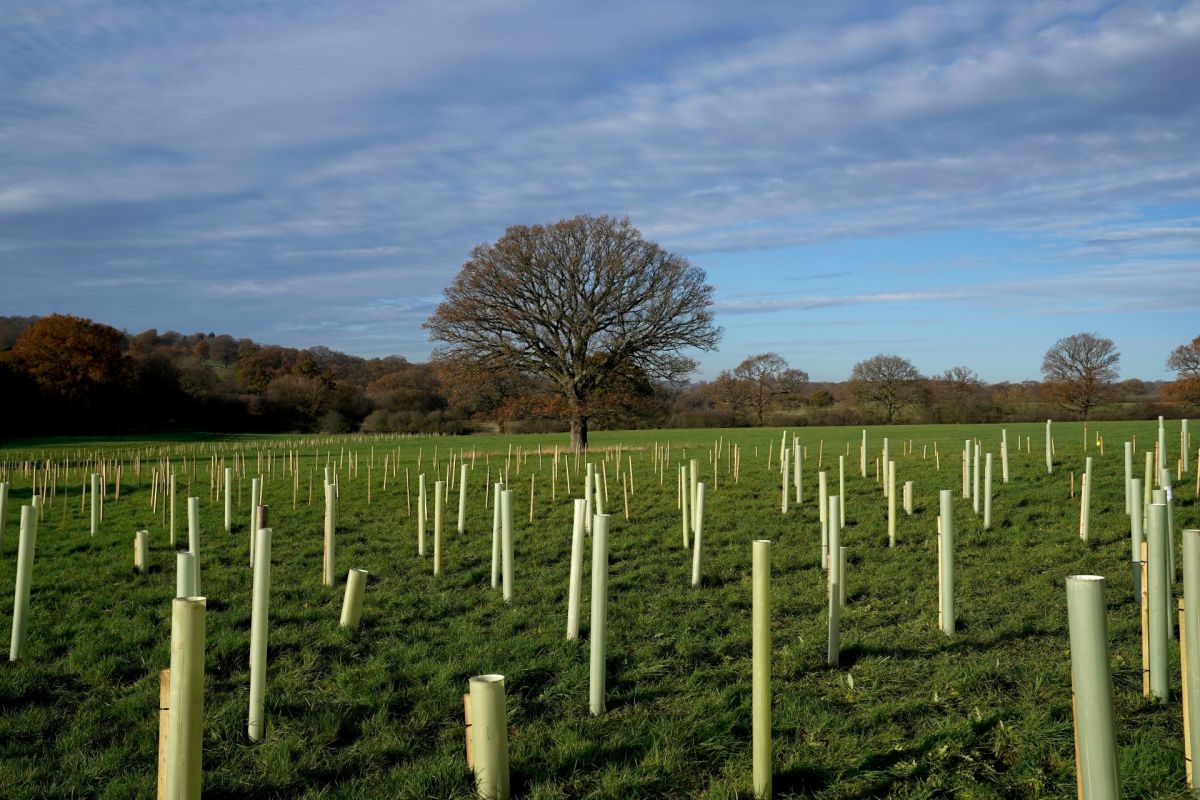
England is preparing to plant 500,000 trees over three years under a £79 million ($104 million) plan designed to help communities better withstand floods, droughts, and dangerous heat.
The proposal goes beyond tree planting, also backing the restoration of wetlands, river edges, and meadows to store water, cool built-up areas, and reduce damage from extreme weather, according to The Guardian.
Here's what to know
Angela Eagle, the environment secretary, presented the package at the Labour party conference in Liverpool on Sept. 30.
The plan sets aside £53 million ($70 million) for planting trees, along with £26 million ($34.4 million) for local nature recovery strategies.
Restoration money would go through mayors, local authorities, charities, and grassroots groups, expanding their role in shaping natural landscapes locally. Eagle emphasized that local areas are best placed to understand their own climate risks and environmental needs.
Ahead of the Sept. 30 conference speech, Eagle pointed to the drought as a clear reason for the push.
TCD Picks » Quince Spotlight
💡These best-sellers from Quince deliver affordable, sustainable luxury for all




"In areas where nature has been allowed to flourish, the ground held more water, and the droughts were less severe," her planned remarks observed.
Eagle also highlighted how urban tree cover can help when cities face both extreme heat and sudden downpours.
"On streets where trees have been planted, the shade meant temperatures were lower. And when rain finally came, those same trees reduced the risk of floods. We all deserve access to the benefits that nature can bring."
More background
The policy was introduced as England faces mounting pressure to prepare for more erratic weather.
Trees can lower city air temperatures by 7.2 degrees Fahrenheit (4C), helping make heat waves less intense in densely built neighborhoods.
A mature tree can capture 3,963 gallons (15,000 liters) of water annually, helping reduce runoff and flood risk during storms. Trees can also absorb air pollution, cut noise pollution by half, and support wildlife habitat in towns and cities.
Wetland loss is another major force behind the plan. More than 90% of England's wetlands have disappeared over the past century, leaving far fewer natural buffers to absorb heavy rain and store water during dry periods.
Craig Bennett, chief executive of The Wildlife Trusts, warned that this makes restoration especially urgent.
"We need to make Britain wet again," Bennett remarked. "We could have tens of thousands of new wetlands."
What's being done?
The government is framing its package as an investment in resilience rather than simply a beautification program.
The tree drive will run alongside wetland, riverbank, and meadow restoration, efforts which can retain moisture, slow floodwaters, and reduce drought impacts.
Another central idea is shifting power outward.
Eagle is expected to tie the plan to Andy Burnham's localism agenda by arguing that decisions should be made closer to communities rather than concentrated in the center.
Bennett described the plans as "very encouraging" and said councils have been trying for years to support nature without "the power, money or political support."
The announcement also follows criticism of funding to protect nature on Britain's farms.
The Sustainable Farming Incentive, a £253 million ($335 million) program backing steps like wildlife habitat conservation, tree planting, and soil improvement, opened for applications on Sept. 23 and ran through its funding within six hours, leaving many farmers empty-handed.
Richard Benwell, chief executive of the Wildlife and Countryside Link charity, lauded the plan.
"This is a good start towards Burnham's promise of the government getting ahead of long-term challenges, recognising nature's role in supporting our economy and adapting to climate change."
Where can I learn more?
England's new resilience push is part of a broader effort to use trees and habitat restoration to tackle heat, flooding, and biodiversity loss.
For more on that bigger picture, see coverage of a volunteer-led woodland creation, ancient tree protection in Britain, and why reforestation works best with local knowledge.
• In northeast England, volunteers gathered as new woodlands took root across the region.
• In Britain, advisers say protecting ancient trees remains vital for wildlife, cooling, and resilience.
• Scientists warn local knowledge is critical when reforestation is used to meet net-zero goals.

Get TCD's free newsletters for easy tips, smart advice, and a chance to earn $5,000 toward home upgrades. To see more stories like this one, change your Google preferences here.






