


Scientists may have found a way to speed up a natural process that lets seawater absorb and store planet-warming carbon dioxide. Ocean bacteria engineered by the team roughly tripled the rate at which crushed rock dissolved in laboratory tanks.
Work outside the laboratory is still needed before the Harvard-led team's approach can be used to tackle a persistent obstacle in rock-based carbon capture.
Here's what to know
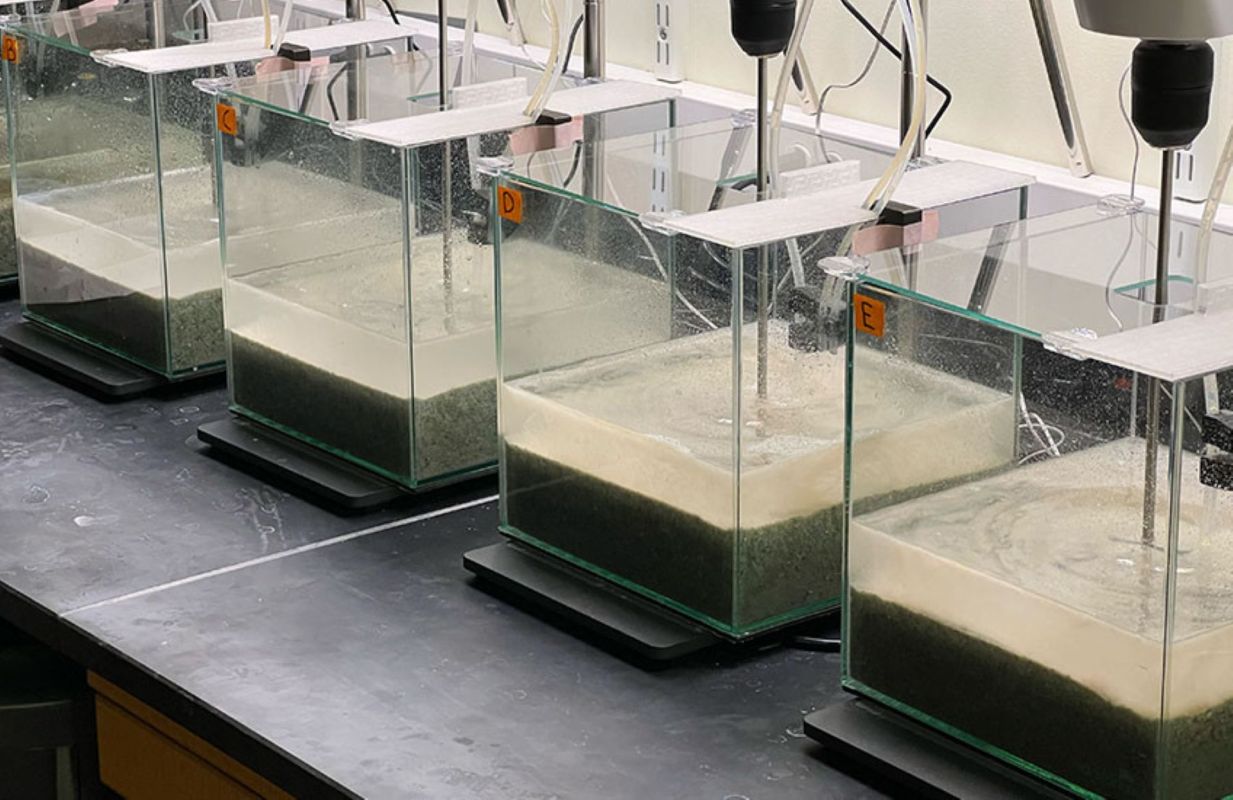
The team tested olivine sand in three-gallon glass tanks with seawater flowing through them, according to Earth.com. Each tank held more than 8.8 pounds of rock and received unfiltered water from Boston Harbor. Two nutrient-fed tanks also received weekly doses of engineered bacteria.
Magnesium release from the rock rose by a factor of 3.1 in the two bacteria-dosed tanks. The resulting increase in seawater alkalinity translated to a calculated removal of about 0.018 ounces (0.50 grams) of carbon dioxide per day.
Seawater can retain carbon as dissolved bicarbonate with the help of magnesium released by dissolving rock.
Neil Dalvie, who led the study, is a fellow focused on synthetic biology within Harvard Medical School's systems biology department. He worked alongside researchers from the Wyss Institute and the Stanford Doerr School of Sustainability, Earth.com reported.
TCD Picks » Quince Spotlight
💡These best-sellers from Quince deliver affordable, sustainable luxury for all




A rusty coating formed by iron makes the rock harder to dissolve. Overcoming that barrier was the focus of the team's study, published in Nature Biotechnology.
More background
To address the rust buildup, the researchers turned to a marine bacterium called Alteromonas macleodii.
The researchers replaced the bacteria's usual genetic control with a switch that keeps production of iron-grabbing molecules running. Called siderophores, these molecules help dissolve iron, but the microbes normally stop making them once they have enough iron.
Siderophore output in small reactors was over 100-fold higher for the engineered bacteria than for the natural strain. Compared with bacteria-free reactors, olivine dissolution was roughly 2.6 times faster; the unmodified bacteria had no clear effect.
Sugar production generated excessive carbon pollution, and bacteria fed on sugar lowered the water's alkalinity instead of raising it. The researchers turned to acetate instead.
Their life cycle model projected a net carbon removal gain of 74% over the rock-and-seawater setup, according to Earth.com, when using engineered bacteria, carbon-neutral acetate, and the laboratory's 2.6-fold increase in dissolution speed.
What's being done?
After roughly three weeks, rock dissolution and carbon capture slowed in every pilot tank as microbial films built up along the tank glass and sand surface.
Those films seemed to block water from mixing properly, and a thin crust built up over the rock. Most of the dissolving likely took place in the sand's top 0.4 inch (1 centimeter), a layer the authors proposed breaking up from time to time to keep the rock exposed.
The researchers are planning larger experiments while working to improve nutrient mixtures and make the bacteria more efficient.
Dalvie noted that a coastline or mine installation would need an enclosure resembling wastewater treatment infrastructure, per Earth.com. Expanding the process would also require large supplies of acetate produced with electricity and carbon dioxide.
Dalvie and three other authors have applied for a patent covering bacteria engineered to produce siderophores that prevent rust buildup on rock.
Dalvie described the research as a foundation for building a larger system.
"We've found a way that it could work and, maybe more importantly, now we have a model to calculate what it would look like to implement this at scale," he said.
Where can I learn more?
Rocks and microbes could help capture carbon and clean up pollution in other settings, too.
• In the Mississippi River Basin, farmers' limestone applications trap carbon dioxide while generating fewer emissions.
• At a Pittsburgh brownfield, microbes adapted to steel-era pollution could help clean other contaminated sites.
• In Micronesia, bacteria inhabiting fuel in WWII shipwrecks could help combat oil pollution.
• Buildings covered with moss-coated concrete could cool cities while helping clean the air.
• Billions of fish surface nightly, and their waste may trap carbon deep underwater.

Get TCD's free newsletters for easy tips, smart advice, and a chance to earn $5,000 toward home upgrades. To see more stories like this one, change your Google preferences here.
Cool Picks






