


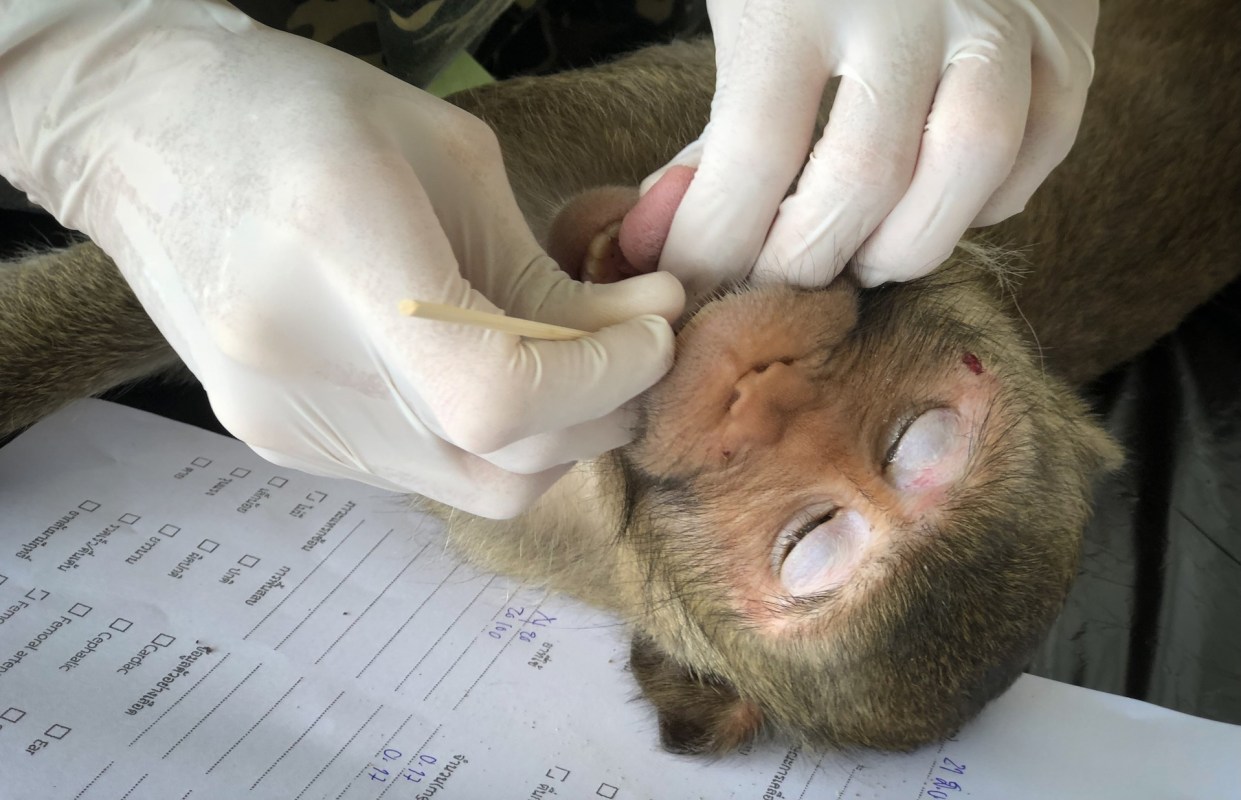
Federal officials have again refused to consider protections for the long-tailed macaque, an endangered monkey imported into the United States by the tens of thousands each year for biomedical research.
That outcome keeps a major wildlife trade pathway intact even as the species continues to decline across Southeast Asia.
What happened?
According to Mongabay, the long-tailed macaque was placed on the International Union for Conservation of Nature Red List as endangered in 2022 after losing at least half its population over three decades. On July 14, 2026, the U.S. Fish and Wildlife Service rejected a second request to consider the species for protection under the Endangered Species Act.
An Endangered Species Act listing could have curbed U.S. imports of the monkey for biomedical research, which is a major threat to its survival. Mongabay reported that the U.S. brings in more than 30,000 long-tailed macaques each year, more than any other country.
In 2023 and again in 2025, People for the Ethical Treatment of Animals petitioned the Fish and Wildlife Service to protect the species. Both times, the agency said the petitions did not provide "substantial scientific information indicating listing may be warranted."
Why does it matter?
Long-tailed macaques are native to Southeast Asia, and their decline can signal broader pressure on forests, local ecosystems, and the communities that rely on them for stability, food systems, and livelihoods.
TCD Picks » Quince Spotlight
💡These best-sellers from Quince deliver affordable, sustainable luxury for all




A 2025 study suggested that breeding farms in Cambodia, Laos, and Vietnam that supply laboratories abroad may be supplemented with macaques taken from the wild. That means animals could still be removed from already stressed wild populations even when the trade is described as farm-based.
What's being done?
The push for federal action is continuing. PETA has petitioned twice, arguing that the monkey's endangered classification and the agency's own statements about illegal trade should have led to a deeper review under U.S. law.
Advocates say the species' endangered classification and the agency's own statements about illegal trade should have been enough to trigger a full review. Federal regulators, however, continue to maintain that the petitions did not provide what is necessary to warrant the listing.

Get TCD's free newsletters for easy tips, smart advice, and a chance to earn $5,000 toward home upgrades. To see more stories like this one, change your Google preferences here.






