


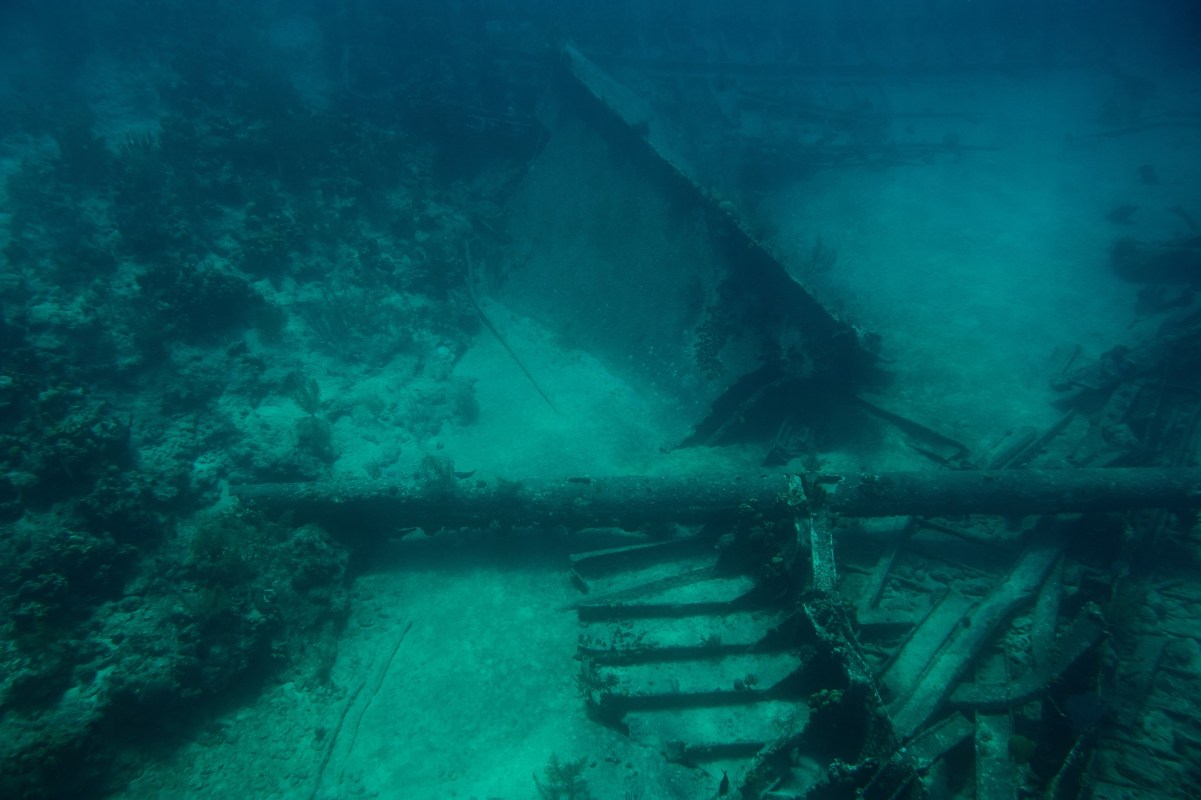
A failed 1559 Spanish colony off Pensacola, Florida, left colonial-era ships on the bottom of the ocean after a hurricane swept through the area. Those ships remained undiscovered for over 400 years, until now.
Archaeologists investigating three shipwrecks connected to the colony say the most striking finding may be something other than the wrecks themselves.
Here's what to know
These findings trace back to the unsuccessful expedition of Spanish conquistador Tristán de Luna y Arellano. In August 1559, he reached the Pensacola area with 11 ships carrying 1,500 soldiers, colonists, and enslaved people, as Popular Mechanics reported.
The settlement came 48 years before Jamestown and survived only about two years. In September 1559, a hurricane tore through the area, wrecking most of the fleet and destroying supplies that had been stored aboard the ships.
University of West Florida researchers William J. Wilson and Gregory D. Cook examined three wrecks from that voyage: Emanuel Point I, Emanuel Point II, and Emanuel Point III. He concluded that their magnetic signatures were unusually weak.
Archaeologists have used magnetometers to search for shipwrecks by detecting iron for decades. Cook described the principle this way: "Magnetometers detect anomalies in Earth's magnetic field, caused by the presence of iron, which is common on shipwreck sites."
TCD Picks » Quince Spotlight
💡These best-sellers from Quince deliver affordable, sustainable luxury for all




How much of North America's earliest colonial history is still underwater, hiding in plain sight?
More background
The Emanuel Point wrecks were identified in 1992, 2006, and 2016, but the third emerged only because divers were already excavating another nearby site.
Cook recounted that moment this way: "We trained dive teams to conduct circle searches with probes or hand-held metal detectors. Almost immediately on this day, divers surfaced and said they could feel a hard return — or 'stones' — with their probes."
Overall, the research indicates that very old wrecks may not produce the magnetic signatures archaeologists usually expect.
"The Emanuel Point shipwrecks do not necessarily fit the magnetic anomaly criteria often used for locating shipwrecks," the study notes.
A key reason is that little iron remains.
At Emanuel Point III, researchers linked only about 9.1 pounds (4.15 kilograms) of iron to the anomaly. On EP II and EP III, small iron fasteners could be detected by a handheld gradiometer only from about 9 inches away.
The lack of a substantial magnetic signature could be from metal that had been stripped after the ships sank, or it may have been lost gradually to corrosion over the centuries.
Sites like these can reveal how early colonists traveled, built settlements, and responded to disasters.
What's being done?
The researchers called for a more flexible approach to underwater surveys. Instead of relying on one rigid set of detection rules, they recommend "survey designs that reflect the types of resources likely to be present."
That could mean revisiting weak or ambiguous magnetic signals, pairing magnetometers with close-range tools, and adjusting expectations for older wooden ships that may have lost most of their iron over time.
That shift in survey tactics could help archaeologists uncover more early colonial wrecks and build a fuller record of life in the Americas before English colonies came to dominate the historical narrative.
As the study put it, "The characteristics of the Emanuel Point shipwreck anomalies do not appear to be common across other early colonial shipwrecks in North America. Whether or not that is due to much lower rates of detection is unclear at this time."
Where can I learn more?
Other underwater discoveries and colonial-era finds show how major pieces of history can stay hidden for centuries. These stories cover newly identified shipwrecks in the Bahamas, Spain, Italy, and England, plus a Spanish mission uncovered in Florida.
• In Nassau Harbor in the Bahamas, shipwrecks linked to piracy revealed the real-world reach of Caribbean raiders.
• Off Menorca, Spain, three untouched 13th-century shipwrecks preserved cargo and a relic unlike any other.
• Off southern Italy, a shipwreck with 300 amphorae mapped a 2,400-year-old Mediterranean trade route.
• Off Devon, England, a Dutch trader hauling 9,000 gold coins was finally identified.
• In Florida, a lost Spanish mission emerged while archaeologists searched for a Civil War battlefield.

Get TCD's free newsletters for easy tips, smart advice, and a chance to earn $5,000 toward home upgrades. To see more stories like this one, change your Google preferences here.






