


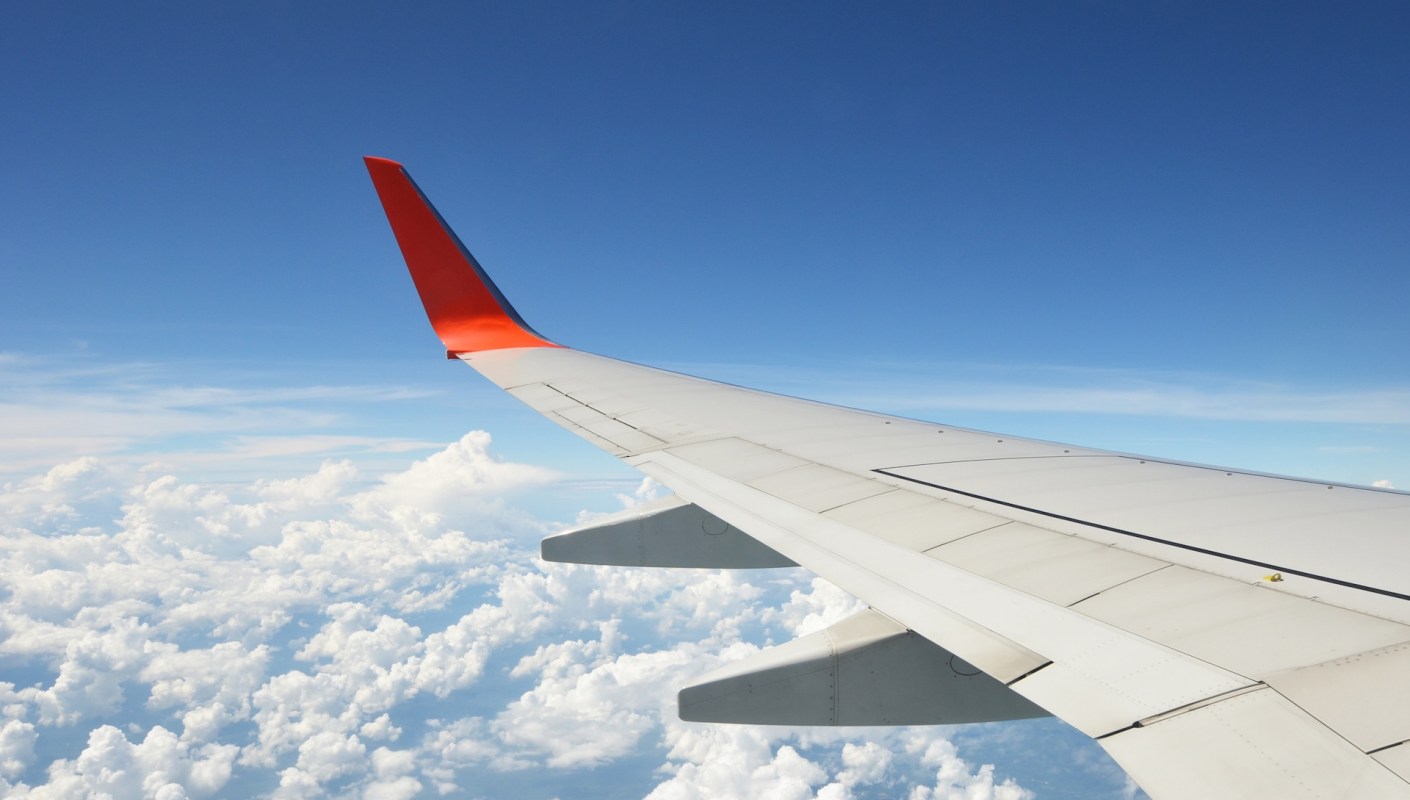
A Dutch startup has flown a scaled demonstrator of an electric passenger aircraft, which it says could eventually seat 90 people and rely on about 40 battery packs housed in its wings.
If the concept works at full size, regional air travel could become far quieter and far less polluting than conventional flights.
Here's what to know
In the Netherlands, Elysian Aircraft used a scaled E9X demonstrator for test flights that the company views as an early step toward a much larger electric airliner, Euronews reported. Once the plane returned to the ground, attention shifted to reviewing the results in Elysian's laboratory near Amsterdam's Schiphol Airport.
Daniel Jacobson, co-founder and co-CEO of Elysian Aircraft, said the overall configuration for the eventual aircraft has largely been determined.
"There will be 6 engines. And we have folding wingtips, so that we fit into the current gates' infrastructure of the airports, because the wings are very large. We are talking about more than 50 metres," Jacobson said.
A major part of the design centers on where the batteries go. In a full-scale wing mock-up shown to Euronews, the packs are built directly into the wing structure. The plan calls for roughly 40 battery packs spread throughout the wing, each weighing about 2,205 pounds.
TCD Picks » Quince Spotlight
💡These best-sellers from Quince deliver affordable, sustainable luxury for all




The company says the aircraft is intended to fly 90 passengers about 500 miles (800 kilometers) in its initial form, before later extending that range to about 620 miles (1,000 kilometers), with service entry targeted for 2034.
More background
With global passenger traffic expected to roughly double over the next two decades, aviation remains a significant climate problem, Euronews reported. Elysian has argued that electric flight could address a meaningful share of that growth instead of remaining a niche option limited to extremely short trips.
"By being able to transport 90 passengers for initially 800 kilometres and eventually 1000 kilometres you can reduce emissions to zero, from half the world's flights," he said. "That is a very large amount of flight activity in the world. And you reduce total emissions from aerospace by 20%."
At Teuge, where small electric planes already fly, E-Flight Academy co-founder Merlijn van Vliet pointed to the quieter experience in the air and on the ground.
"They don't hear us. So, we can fly wherever we want and they don't hear us on the ground," he said while flying toward Deventer.
Framing the project as a challenge to long-held skepticism, Jacobson said the academic world and the aviation industry had largely believed a large electric aircraft could not be made: "There was really this consensus in the academic world and in the industry that flying electrically with a large aircraft would never be possible. We have disproven that with our research on our design."
What's being done?
The startup has 10 million euros (about $11.1 million at current exchange rates) in capital and is using it to further develop the E9X, including efforts to reduce weight, improve thermal management, and integrate batteries into the wing.
At Teuge regional airport, E-Flight Academy is already training pilots from several airlines on electric aircraft.
Van Vliet said the academy's two-seater uses "two batteries with 11 kilowatt-hours each," for a total of 22 kilowatt-hours, allowing "45 to 50 minutes" of flight time plus "10 minutes of reserve capacity."
Charging infrastructure is also expanding. Jurjen de Jong, co-founder of NRG2fly, told Euronews that his company plans to extend charging networks from the Netherlands into the Nordic States, France, Germany, and Switzerland to support "low-emission, low-noise electric mobility."
Teuge is also testing an airport energy hub. De Jong said the site has "500 solar panels on the rooftop," and that "their energy is stored in a battery. So basically, we have a whole energy hub which is providing energy instead of taking energy from the grid."
"My dream is to have all regional electric planes powered by the sun," de Jong said. "And then we can leave a better world for me, my children, and everybody."
Where can I learn more?
These other recent aviation and battery developments show how electric flight is moving beyond small prototypes.
• In New York, the largest battery-electric aircraft flew nearly 30 minutes on about $5.
• In the U.K., officials cut support for electric planes as Heathrow's third runway nears final planning decision.
• In Germany, researchers built thicker battery electrodes that could lift energy density 15%.
• LG says its new LMR battery is cheaper than LFP and packs more range.
• SK On and Factorial Energy joined forces to scale solid-state batteries for future transport.

Get TCD's free newsletters for easy tips, smart advice, and a chance to earn $5,000 toward home upgrades. To see more stories like this one, change your Google preferences here.






