


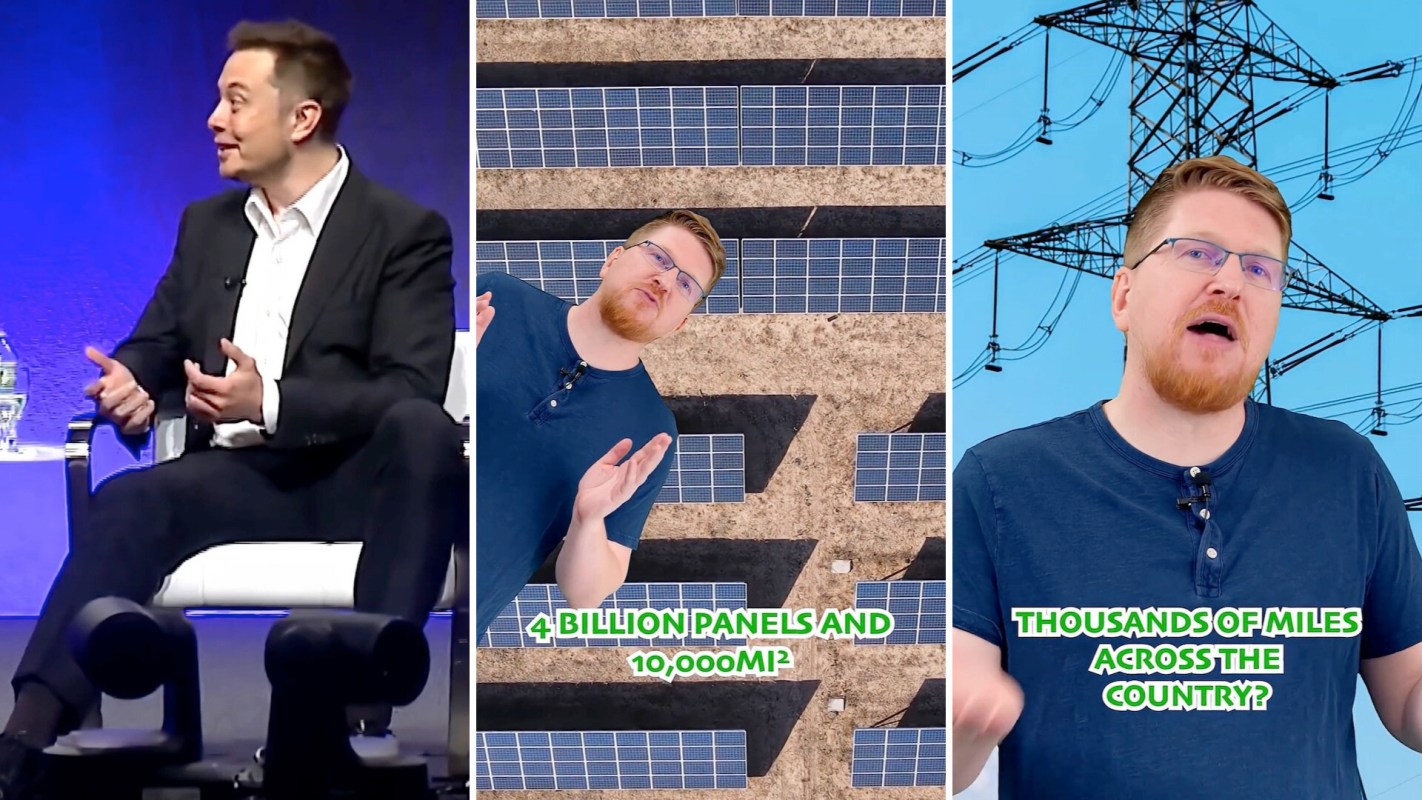
At the center of Elon Musk's proposal is a single massive installation. It would cover a sunny 100-mile-by-100-mile section of Nevada with solar panels, and in theory it could supply all the electricity the United States uses.
An EcoBits (@EcoBitsOfficial) explainer says that scale is more believable on paper than it first sounds. The idea becomes much harder, however, once the feasibility of it is put under the microscope.
Here's what to know
In a YouTube video, the concept is sized at roughly 4 billion panels over about 10,000 square miles. That is essentially a 100-by-100-mile field in a very sunny place like Nevada.
The argument begins with the sheer amount of incoming solar energy. EcoBits confirms that Elon's math isn't wrong in favorable conditions.
That is why utility-scale solar keeps attracting interest. If enough of that incoming energy were captured, it could help run the electric systems people depend on in homes, workplaces, and city services every day.
But the video treats generation as only the opening step, not the full solution. There is the matter of matching the grid to that generation, so you avoid blackouts and overloading the system.
TCD Picks » Quince Spotlight
💡These best-sellers from Quince deliver affordable, sustainable luxury for all




More background
That day-night mismatch comes up first. Electricity demand does not stop after sunset, so any plan built around daytime solar production has to answer how to deliver energy at night. Battery storage is the potential answer to this dilemma.
EcoBits reveals that matching the necessary storage would also require a huge amount of land to house all the battery packs for a night, let alone all the other disturbances that could arise.
Geography complicates the proposal too. Even if Nevada hosted a huge concentration of panels and batteries, national use would still depend on solving the transmission problems raised in the video. Long story short, the logistics are quite complicated given America's dated grid, and the various upgrades are immense to deliver energy everywhere.
Output would also vary with conditions on the ground and in the sky. A system this large would need both consistency and scale. There's also the issue of securing all the land, solar panels, and associated raw materials.
Taken together, those points shift the argument away from whether sunshine is plentiful enough and toward whether the U.S. can assemble the batteries, grid links, and backup capacity required to make solar power dependable.
What can be done?
The video's broader conclusion is that panels alone would not make Musk's concept workable in the real world.
One requirement would be storage large enough to carry excess daytime generation into the evening, because the one-farm scenario breaks down if after-dark demand cannot be covered.
It would also require long-distance transmission. With an adequate network to move electricity efficiently from sunny regions to the rest of the country, cities and companies would not need to depend only on power produced nearby. And it would need safeguards against changing weather and other disruptions.
So while Elon's premise that the sun could power the U.S. with a huge installation isn't wrong, the truth is that there's a reason it simply can't realistically do so anytime soon, or maybe ever.
"The real difficulty is everything else that follows," EcoBits concludes. "Storing it, moving it, and delivering it reliably every second of every day."
Where can I learn more?
The solar build-out looks different in practice than Musk's lofty project.
• In Nevada, NV Energy's Gemini project is now the largest solar and battery system in the United States.
• In Utah, Green River Energy Center pairs nearly a million panels with 484 Tesla Megapacks for after-dark demand.
• In Wyoming, the Cowboy-Solar project moved closer to reality with battery-backed power for homes.

Get TCD's free newsletters for easy tips, smart advice, and a chance to earn $5,000 toward home upgrades. To see more stories like this one, change your Google preferences here.






