


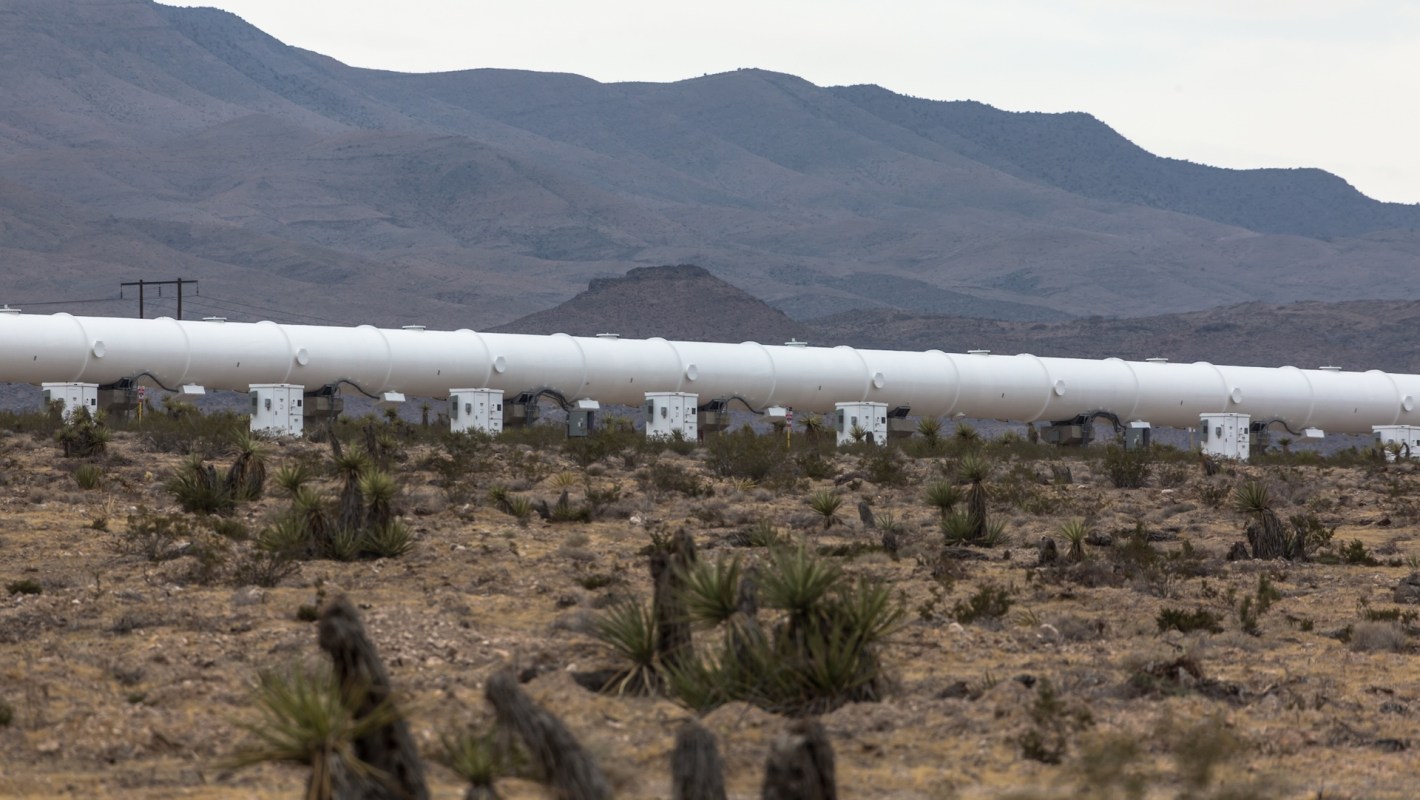
Elon Musk is once again promoting a hyperloop-style tunnel in Texas, now saying The Boring Company is working on a connection between Austin and San Antonio that could surpass 200 mph.
That headline promise suggests a roughly 30-minute trip instead of the often lengthy crawl along Interstate 35, which can top two hours.
For now, though, the proposal has no mapped route, no construction schedule, no price tag, and no clear sign of a public commitment, Electrek reported.
Here's what to know
On X, Musk detailed the purported project.
"Boring Company is working on a simple, precursor Hyperloop tunnel between Austin and San Antonio (>200 mph)," Musk wrote. "Due to traffic congestion, that journey can currently take up to 2.5 hours. Boring Company can reduce that to a consistent <30 mins."
Because Austin and San Antonio are 80 miles apart, the travel-time claim is at least theoretically plausible, as Electrek noted.
TCD Picks » Quince Spotlight
💡These best-sellers from Quince deliver affordable, sustainable luxury for all




Notably absent were the basics needed to make it a reality — the company has no permit and no timeline.
When The Boring Company responded, it said it "would be excited and honored to build this massive infrastructure project."
It offered no details.
More background
Musk's post revived a concept he introduced in a 2013 paper, wherein he described pods moving through near-vacuum tubes at 700 mph.
Over a decade later, that concept has yet to produce a functioning passenger system.
Electrek cited Musk's 2017 statement that he had "verbal" government approval for a New York-to-Washington, D.C. The Boring Company also reportedly was granted permission to construct a station in the capital.
Neither effort materialized, and its more recent testing in Texas has prompted further doubts.
In 2022, The Boring Company said it was conducting a "full-scale" hyperloop test near Austin — yet the setup was a Tesla moving through a tube at ordinary air pressure, not a vacuum-based pod system.
What's being done?
The Boring Company has completed infrastructure in the Las Vegas Loop.
That system uses human-driven Teslas to move passengers through tunnels among stops, and those vehicles hit about 35 mph in early rides — far slower than hyperloop-style expectations. Self-driving is still not operational there.
While flashy proposals can create hope for faster, cleaner travel, congestion and pollution problems remain unresolved.
Until specifics emerge, the Texas hyperloop can only be viewed as another attention-grabbing promise rather than a viable, confirmed transit project.
Where can I learn more?
Musk's latest tunnel pitch came as other high-speed transit plans competed for attention, from Boring Company activity in Nashville, Tennessee, to a separate rail proposal in Texas.
• Musk's tunneling project in Nashville faced serious legal and planning trouble.
• In China, engineers pushed a rival high-speed system to 387 mph.
• In Texas, backers said a Houston-to-Dallas high-speed rail is working toward a 2030 opening.
• The Boring Company made its latest Nashville land purchase as transit ambitions expanded.

Get TCD's free newsletters for easy tips, smart advice, and a chance to earn $5,000 toward home upgrades. To see more stories like this one, change your Google preferences here.






