


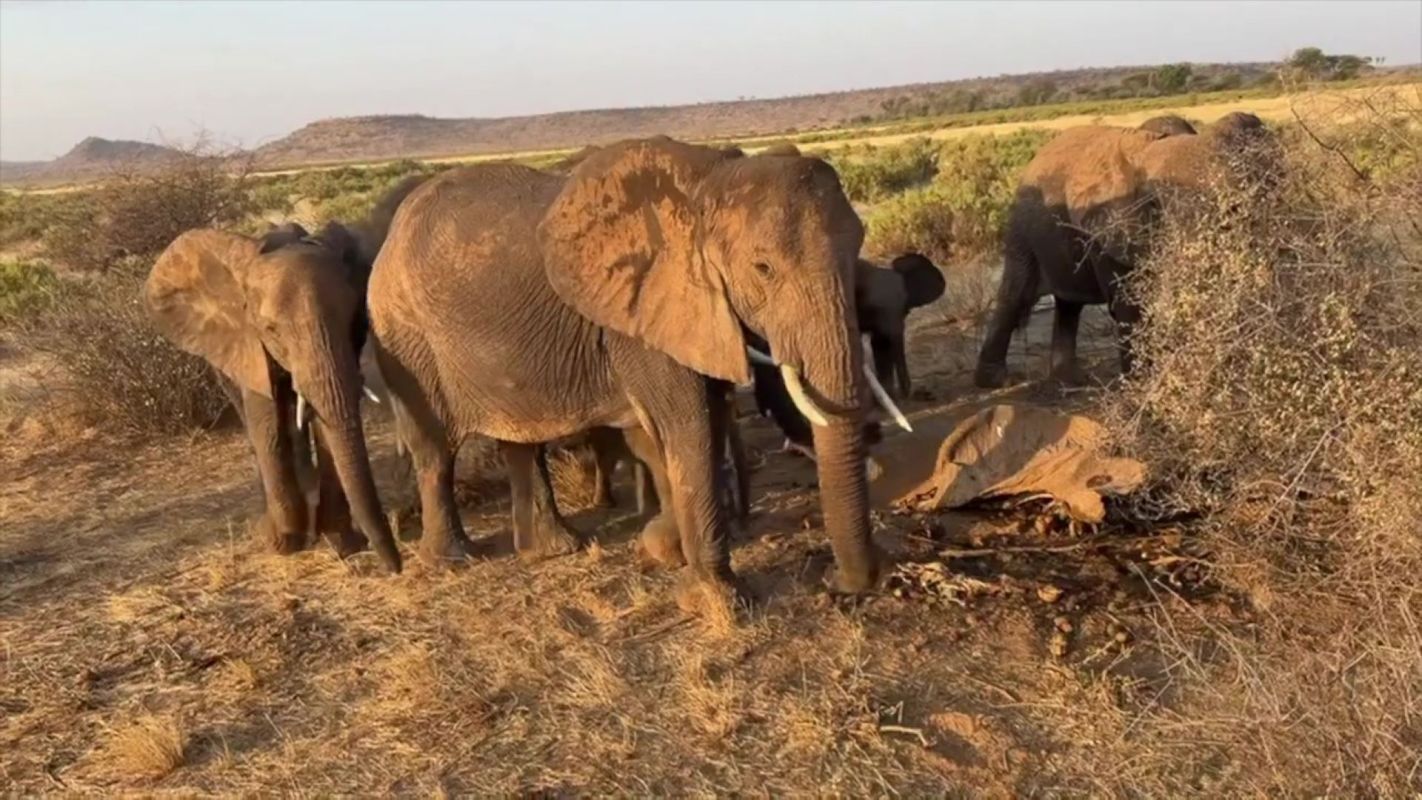
A family of elephants in Kenya made an abrupt, coordinated change in direction after catching a scent on the wind — and what they were following turned out to be the remains of a young female elephant from another herd.
The observation, shared by conservation group Save the Elephants, offered a striking glimpse into how much scientists are still learning about elephant social behavior and their responses to death.
What happened?
In an Instagram post, Save the Elephants explained that a group of elephants part of the Royals family in Kenya recently strayed off their normal path towards nearby hills. Save the Elephants said the elephants paused, lifted their trunks as if testing the air, and then broke from their usual course with sudden purpose.
Only after following the family did observers learn what had redirected them. The Instagram post said that pursuit led to the carcass of a young female from the Artists family that had died of natural causes.
At the site, the Royal elephants spent time "quietly investigating, smelling and interacting with the remains," Save the Elephants wrote. The group said even very young calves seemed to join in.
The post noted that even after decades of research, elephant social behaviors can still be a mystery to scientists and conservation groups.
TCD Picks » Quince Spotlight
💡These best-sellers from Quince deliver affordable, sustainable luxury for all




Why does it matter?
Elephants are already known for their intelligence, memory, and strong social bonds, but moments like this help show how layered those bonds may be.
Field research and conservation efforts make observations like this possible. By following elephant families over years and decades, conservation groups can identify patterns, recognize individuals, and notice when something truly unusual happens.
That kind of patient monitoring is essential not just for science but for conservation as well. It helps researchers better understand migration routes, family structures, calf development, and how elephants respond to threats and deaths in their environment.
Those insights can inform better protection strategies in places where elephants face habitat loss, human conflict, and poaching pressure.
"No matter how many years we spend with elephants, we still have so much to learn from them," Save the Elephants wrote.

Get TCD's free newsletters for easy tips, smart advice, and a chance to earn $5,000 toward home upgrades. To see more stories like this one, change your Google preferences here.






