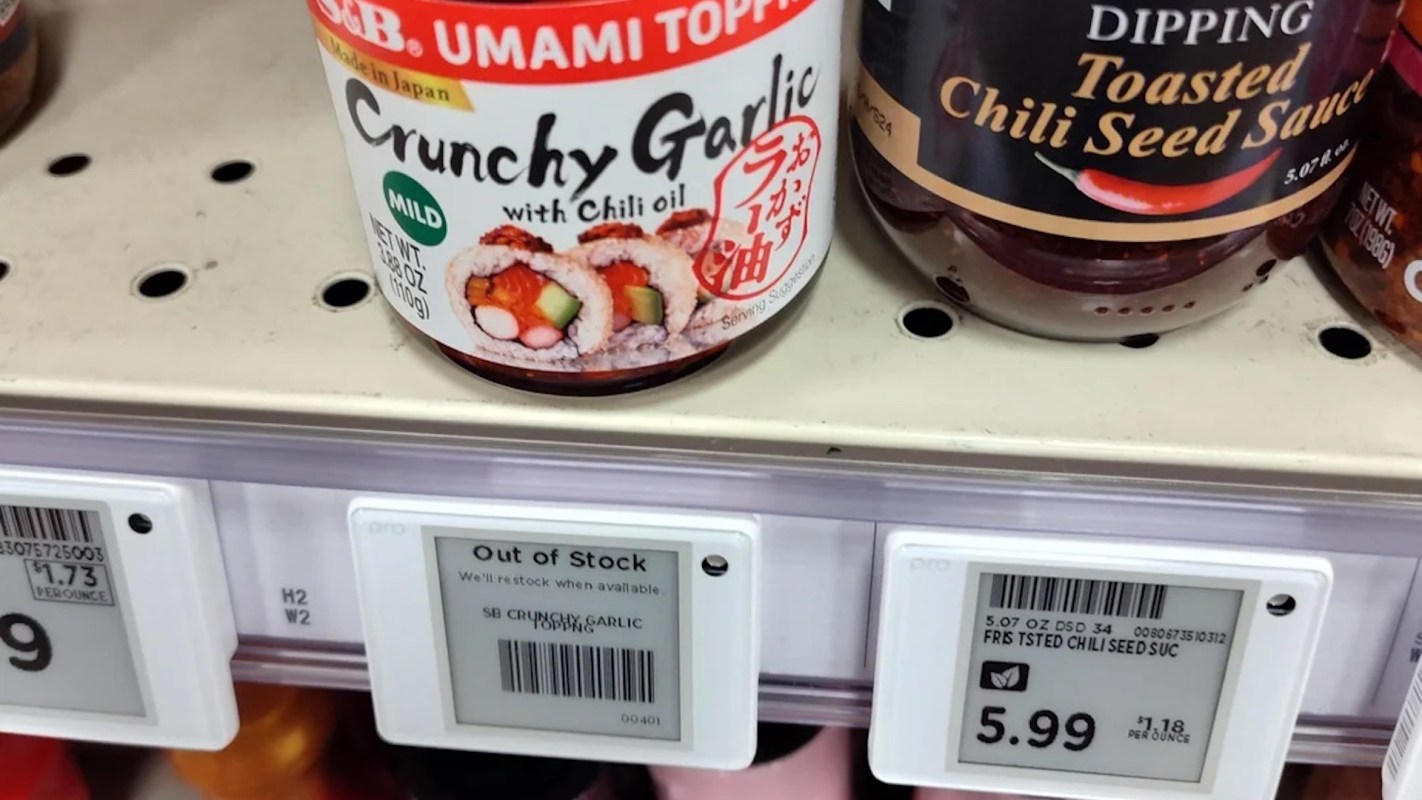
A missing price on a grocery shelf can be more than a minor annoyance when shoppers are already at their wit's end with grocery prices.
That's why one photo of an electronic shelf label obscuring an item's price struck such a nerve on the r/MildlyInfuriating subreddit.
Here's what to know
A post shared on Reddit showed a digital grocery tag hiding an item's cost because the system appeared to mark it as unavailable, even though the product was still on the shelf.
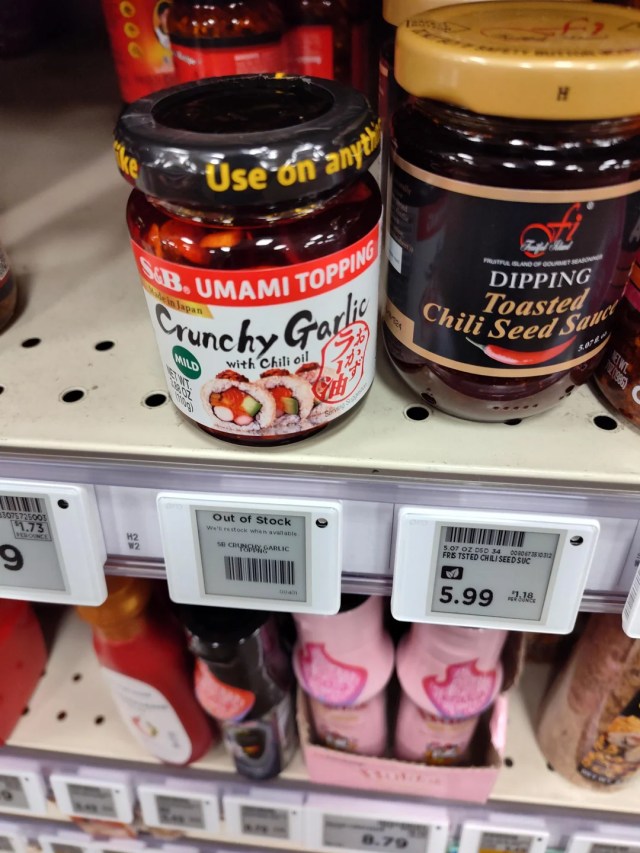
"The 'Smart' future is here," the original poster wrote alongside the image of a jar of crunchy garlic with chili oil.
For some commenters, that malfunction immediately raised concerns about prices changing too easily.
One commenter wrote: "It's so they can raise them as you walk thru the store!"
TCD Picks » Quince Spotlight
💡These best-sellers from Quince deliver affordable, sustainable luxury for all




Retail workers in the thread said the screen itself might not be the real problem.
"You have to manually swap what the tag displays with a handheld device and the employee stocking the shelf did not have one on hand!" explained a commenter who works in a store with the tags. "This is because the company is too cheap to pay for an appropriate amount of them."
For many users, the problem was less about screens replacing paper and more about stores using technology in ways that leave shoppers in the dark.
More background
Supporters of electronic shelf labels often pitch them as a practical upgrade. Grocery stores can manage tens of thousands of tags, and replacing paper ones takes printing, staff time, and repeated checks. When stores skip or rush updates, inaccurate or outdated prices can remain.
Using fewer printed tags could reduce waste, and better syncing could help stores avoid pricing errors that frustrate workers and customers alike.
One commenter made the case: "If there's one thing to make electronic for your business it should be price tags."
Still, when a display goes blank, shoppers lose a basic way to compare costs and stay on budget. That is especially aggravating when grocery prices already feel unpredictable.
The thread also reflected a broader worry that digital labels could make surge-style pricing easier.
"Many states are passing laws against surge pricing and targeted pricing," one commenter noted.
What can be done?
A price can remain visible even when an inventory system thinks an item is unavailable. If a product is out of stock, the price can still be displayed.
The discussion also points to a staffing and equipment issue. Retailers need enough working devices and trained employees to keep digital tags accurate. The thread suggests that a weak rollout, not just the technology itself, is what turns a useful tool into a source of frustration.
More broadly, clear rules around price transparency could help rebuild trust.
"That doesn't mean not showing the price - whether an item is out of stock or not - is okay," a user wrote. "Customers should still be able to compare prices if even an item is out of stock."
Where can I learn more?
The debate over electronic shelf labels goes beyond this one Reddit post, touching everything from missing prices to how digital pricing systems are managed.
• Walmart workers said the digital price tag system has been a complete disaster.
• At Kroger, digital price tags prompted lawmakers to question grocery surge pricing.

Get TCD's free newsletters for easy tips, smart advice, and a chance to earn $5,000 toward home upgrades. To see more stories like this one, change your Google preferences here.