


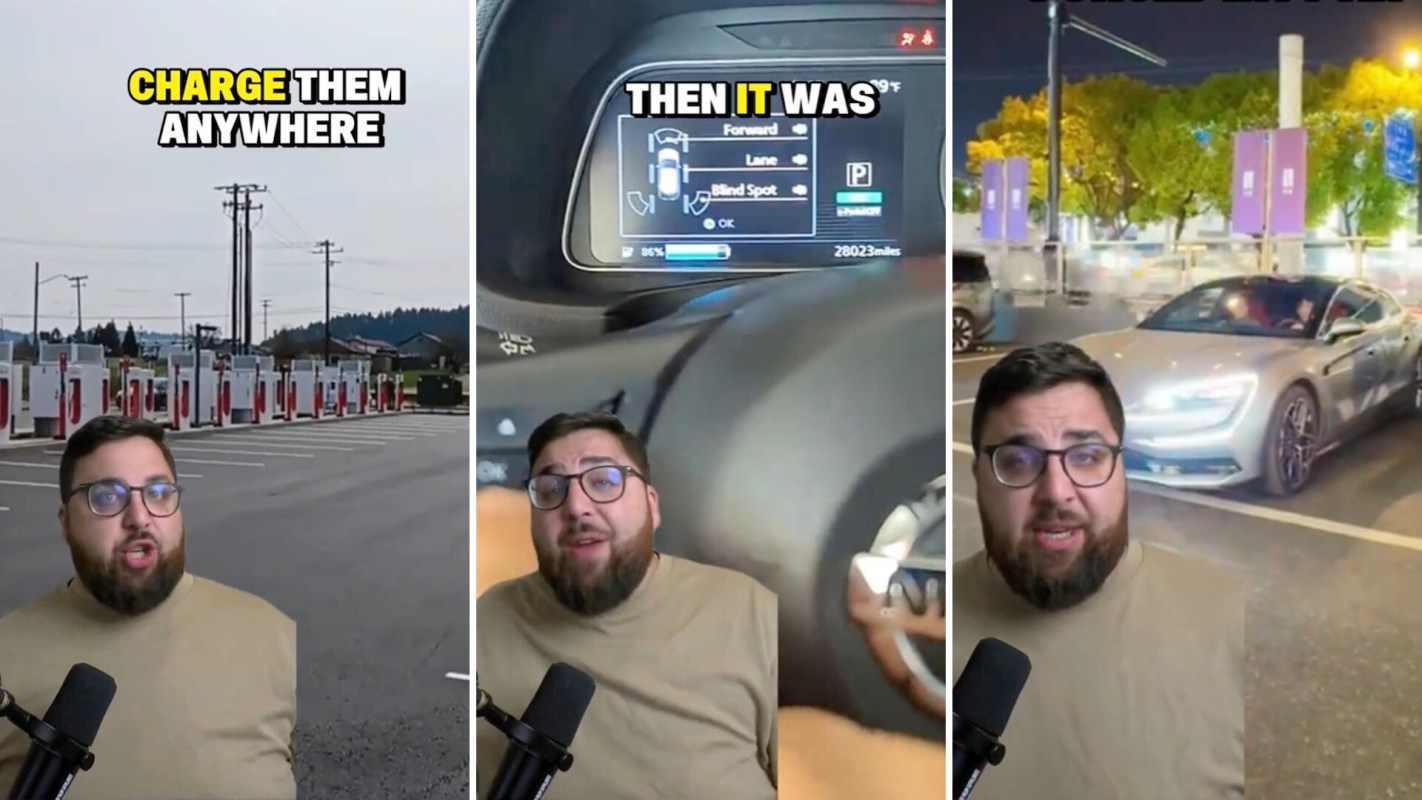
A viral TikTok is resonating with drivers who feel like every answer to one electric-vehicle criticism only seems to prompt another objection.
This time, the conversation centers on a high-speed Chinese battery stress test that content creator MoneyShift (@.moneyshift) says shows that EV critics keep "moving the goalposts."
Here's what to know
In a TikTok post, the creator walks viewers through a progression that many people shopping for EVs may find familiar.
@.moneyshift watch the goalposts move on evs. first there was nowhere to charge, then chargers went everywhere. then fast charging kills the battery, overblown. then they charge too slow, so china rolled out megawatt flash charging. now it's that flash charging destroys the pack. so byd pulled a yangwang u7 off a showroom floor, drove it 18,600 miles in 8 days at a 149 mph average in 97 degree heat, flash charged it 350 times, and the battery held 98.7 percent. that's byd's own test and 350 charges is a week not a decade, both matter. nobody should be forced into an ev, buy whatever you want. i just want the arguments to be honest ones #byd #electriccar #yangwang #tiktokgrowthchallenge ♬ original sound - MoneyShift
In MoneyShift's telling, the debate has moved from limited access to charging to warnings that fast charging would damage batteries, and then to complaints that charging still takes too long.
As a response to that latest point, the creator recapped how Chinese automaker BYD took a Yangwang U7 from a showroom and put it through 18,600 miles in eight days, averaging 149 miles per hour in 97-degree heat, with 80% humidity and the air conditioning running.
The post said that after 350 flash charges, the battery still had "99% of its capacity," while the caption gave the figure as 98.7%.
TCD Picks » Quince Spotlight
💡These best-sellers from Quince deliver affordable, sustainable luxury for all




"Now, that's BYD's own test, not an independent one," the creator did add as an important caveat. Still, most of the charging questions seem to have been answered.
"We don't have these types of convos about gas cars," a frustrated user reacted.
More background
Battery health, charging availability, and refueling or recharge times remain among the biggest concerns for consumers deciding what kind of car to buy.
Those concerns are real, but so are the benefits of EV ownership, including lower fuel costs and reduced routine maintenance. Electric vehicles do not require oil changes, and they typically have fewer moving parts that wear out than gas-powered cars.
The creator argued that the criticism has changed as the technology has improved. Charging stations are more common than they once were, and some automakers are now promoting megawatt-level "flash charging" that can add a couple hundred miles in roughly five minutes.
Commenters also pointed to ongoing challenges specific to the American market.
"Here's an honest one," a user said. "EVs are too expensive in the US."
"Yeah but that's China," another commenter noted. "American cars will have planned obsolescence."
What can be done?
When buying an electric vehicle, it helps to consider daily driving habits, nearby charging access, and ownership costs rather than focusing solely on online debates.
Vehicle choices can be evaluated based on purchase price, charging or fueling costs, maintenance demands, and how well they fit into everyday life.
The creator ultimately framed the debate in those terms, saying: "Buy whatever you want. Diesel, gas, hybrid, buy whatever. Just buy it on merit. I just want arguments against them, to be honest ones."
That's a healthy approach, instead of demonizing EVs or constant "whataboutism" from proponents of gas-powered vehicles.
Where can I learn more?
A lot of the examples driving this conversation are coming out of China, where automakers and battery companies are pushing ultra-fast charging and building out huge charging networks. The broader debate also touches on cold-weather performance, battery safety rules, and how cheaper EVs can reset buyer expectations.
• CATL says its fast-charging battery can add 300 miles in just 10 minutes.
• In China, Shell built a charging station with nearly 300 stalls for EV drivers.
• In Norway, a cold-weather range test pitted Tesla against Chinese EV rivals.
• China is enforcing its toughest EV battery rules yet, raising safety standards.
• BYD's budget Seagull helped China's $11K EV reshape expectations around electric-car affordability.
These stories help explain why the EV debate keeps evolving as the technology improves. For shoppers, they offer something more useful than the usual online arguing: real benchmarks to compare.

Get TCD's free newsletters for easy tips, smart advice, and a chance to earn $5,000 toward home upgrades. To see more stories like this one, change your Google preferences here.






