


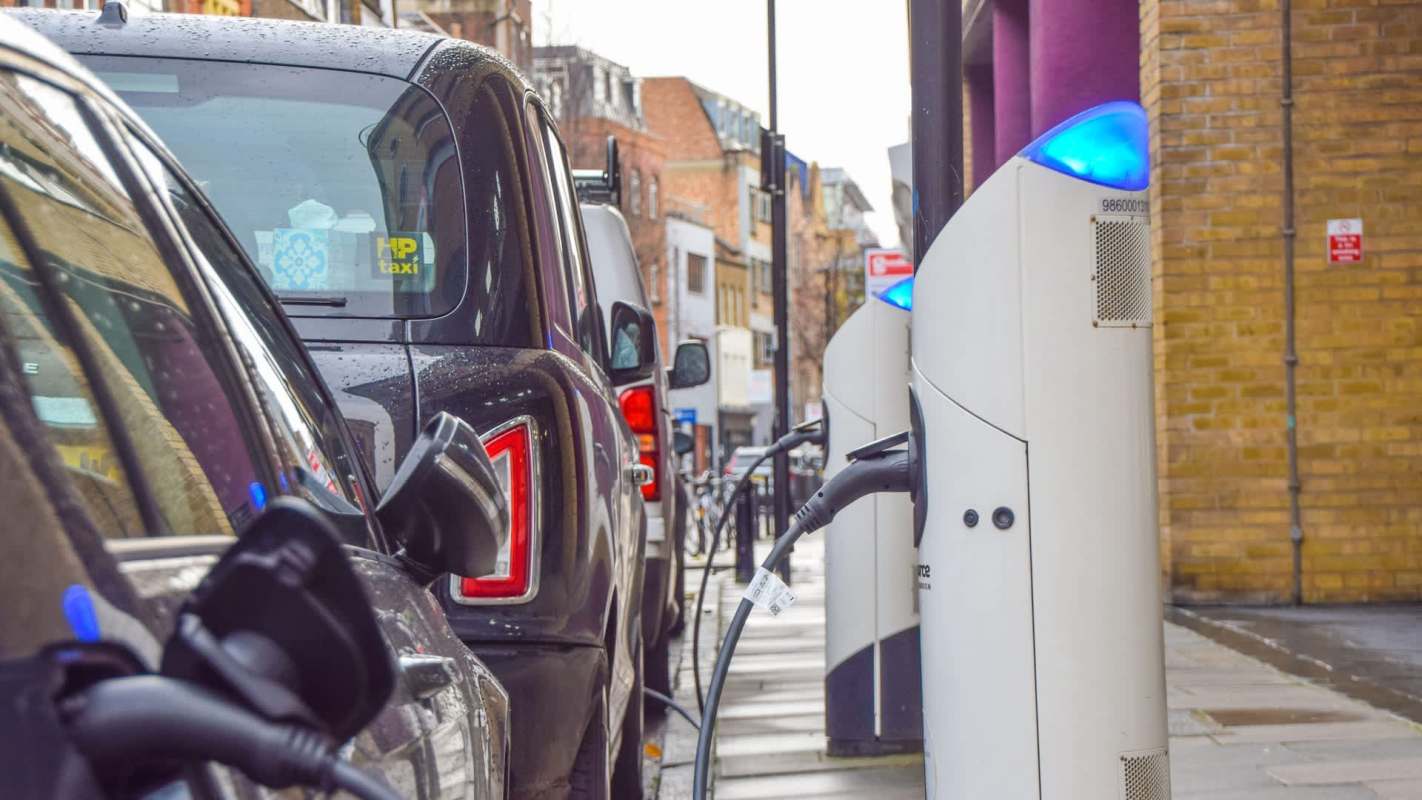
Rising petrol and diesel costs are reshaping the cost calculus for British motorists.
An analysis by Carbon Brief indicates that in the U.K., electric vehicles offer not only lower emissions, but also a far lower running bill than petrol or diesel cars.
Here's what to know
An EV charged on an off-peak tariff — discounted rates at times of low demand — costs about 2.3 pence per mile in the U.K., compared with 20.1 pence for petrol and 21 pence for diesel.
That makes electric driving up to nine times cheaper per mile, according to Carbon Brief.
Government figures help explain the gap: since February 2026, average diesel prices have climbed 38% to £7.42 ($9.81) per gallon or £1.96 ($2.59) per liter, while petrol has risen 31% to £6.51 ($8.61) per gallon or £1.72 ($2.28) per liter.
Prices were already pushing toward that threshold, with some petrol stations close to £7.57 ($10.01) per gallon, or £2 ($2.65) per liter. Diesel was expected to move past that record level after a Sept. 20 strike on Russia's Kapotnya oil refinery and amid broader Middle East tensions.
TCD Picks » Quince Spotlight
💡These best-sellers from Quince deliver affordable, sustainable luxury for all




The advantage remains even without cheaper overnight charging.
At the household electricity cap, an EV still costs about 7 pence per mile to drive, or roughly one-third the per-mile cost of a petrol or diesel car.
Over the same distance, charging an EV at home could save U.K. drivers roughly £80 ($105.82) versus buying petrol, Carbon Brief estimated.
More background
Carbon Brief linked the jump in pump prices to oil moving above $100 a barrel as fighting involving Yemen's Houthis and Saudi Arabia intensified.
It also cited mounting strain on Russia's refining system, with Russian refineries struck about once every three days on average in the first half of 2026.
Before that pressure, Russia ranked as the world's No. 2 diesel exporter.
Higher gas and diesel prices put pressure on household budgets, especially for people who rely on a car for commuting, school runs, or work.
Electricity costs, meanwhile, are increasing much more slowly. Ofgem's October cap change was expected to lift electricity unit rates by under 1%, from 26.1 pence to 26.3 pence per unit.
A much sharper rise of about 20% is forecast for January 2027 as higher gas prices feed through to wholesale power costs. Even then, EVs would still be far cheaper to operate than petrol or diesel cars.
Carbon Brief, citing the Society of Motor Manufacturers & Traders, reported that battery EVs accounted for about 30% of new cars sold in August 2026, up from 26.5% in August 2025.
What can be done?
The biggest savings still appear to come from charging at home, particularly on off-peak tariffs.
Public chargers remain significantly more expensive than charging with domestic electricity rates; the U.K. government estimates roughly 90% of electric car charging takes place at home.
That means the economics of EV ownership can vary depending on whether a household has access to home charging.
Carbon Brief's June 2026 analysis put annual fuel savings for EV drivers at about £1,100 ($1,455) over petrol drivers, an estimate that rose to roughly £1,200 ($1,587) after factoring in higher interim energy prices.
Future costs are on the horizon as well — the U.K. government plans to start a pay-per-mile EV tax in April 2028 that would add 3 pence per mile.
Nevertheless, Carbon Brief found that even with that extra charge, EVs will remain significantly cheaper to run than petrol or diesel vehicles.
Petrol cars still make up 55% of vehicles on U.K. roads, while fully electric battery EVs account for only 6% of the roughly 35 million in use.
Where can I learn more?
For a closer look at the numbers, these stories contrast EV costs with gas and diesel cars. They cover charging costs, sticker prices, and ownership expenses in the U.K. and U.S.
• A Yale University map shows the shocking cost comparison between EV charging and gas.
• In the U.K., electric vehicles are now cheaper to buy than gas cars.
• Across the U.S., home EV charging costs just 5 to 6 cents a mile.
• Longtime drivers say shocking cost differences make EV upkeep cheaper than gas cars.

Get TCD's free newsletters for easy tips, smart advice, and a chance to earn $5,000 toward home upgrades. To see more stories like this one, change your Google preferences here.






