


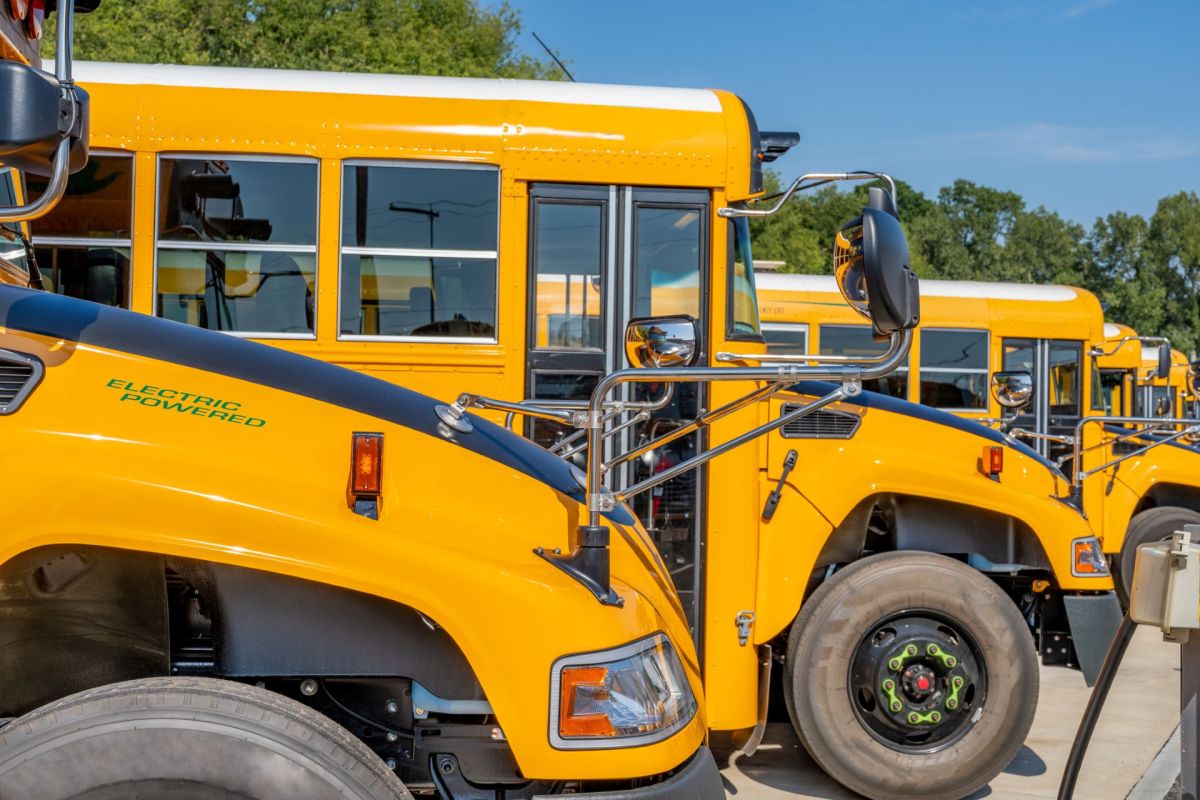
Colorado students in Jefferson County are heading to school on six new electric buses that reduce pollution and send stored power back to the grid when parked.
Here's what to know
Denver7 reported that Jeffco Public Schools has been using the buses to carry students since the start of classes in August and is officially unveiling the vehicles and their six bi-directional chargers. During downtime, the buses double as battery storage, serving double duty on top of transportation.
Jeffco Public Schools bus driver Albert Gallegos said riders immediately commented on how different the buses felt. "They're very comfortable, not loud, and they're smooth. The smoothest bus I've driven," he told Denver7.
Across the 12- to 15-year service life of the six buses, Jeffco expects about $560,000 in fuel and routine maintenance savings. The district's previous fleet relied on propane and hybrid models.
To justify the investment, the district pointed out that electricity rates are typically steadier than diesel or propane prices. Jeffco also said the buses should require less regular maintenance since they have fewer moving parts, while regenerative braking can reduce brake wear.
More background
Jeffco said the buses are best suited to dense suburban routes with frequent stops, where braking can put energy back into the battery. Their range is about 100 to 150 miles per charge.
TCD Picks » Quince Spotlight
💡These best-sellers from Quince deliver affordable, sustainable luxury for all




The district is assigning them to routes of about 60 to 75 miles a day so there is extra room for heating and air conditioning needs for different weather. That setup also matches a predictable two-tier schedule, with a morning run, an afternoon run, and several hours at the terminal midday for recharging.
"This winter will provide the district with crucial real-world data on how local Colorado temperatures, elevation changes, and cabin heating affect battery performance before making broader decisions about expanding the fleet," the district said, per Denver7.
If the vehicle-to-grid portion of the pilot works as planned, the buses may be used as stored power resources when demand is high, such as during summer periods or peak evening hours. If all goes well, the electricity could support nearby district facilities and might also produce utility bill credits or revenue through the district's partnership with Xcel Energy.
What's being done?
The pilot is backed by Highland Electric Fleets and about $3.4 million in Xcel Energy funding, and the district said any expansion of the existing fleet would be gradual. Decisions on when and where to add more buses will depend on data such as cost per mile, cold weather reliability, maintenance history, energy expenses, and total cost of ownership.
Gallegos said, "I'd like to see what it does in the winter. In the snow. I have driven a lot of the buses, and I would like to see what it does because it's a lot heavier. It's all battery."
The district is examining charger lifespan, replacement timing, depot grid capacity, and the investment required to add electrical infrastructure at other terminals. The six buses are staying on shorter, more predictable routes that leave a midday window for charging.
Jeffco's projected $560,000 in savings explains why many everyday drivers are also considering buying an electric vehicle. As with the district's fleet, EV owners can save money on fuel costs and reduced routine maintenance because there are no oil changes and fewer complex moving parts. Charging an EV at home often costs half as much as using public chargers, though basic Level 1 charging tends to be slow. Qmerit provides free, instant installation estimates for faster Level 2 home charger installations.
Where can I learn more?
Other recent coverage looks at the surge in electric school bus orders, the long-term savings fleets can see, and how schools and cities are expanding charging.
• School districts nationwide saw orders for electric buses surge tenfold between 2021 and 2022.
• Across U.S. fleets, the lifetime savings of an electric bus can reach six figures.
• GM says its EVs to power homes could keep lights on and support the grid.
• At Hope College, students built an EV charging breakthrough that could reshape city planning.
• Boston chose an experimental method of installing curbside chargers as cities expand EV access.

Get TCD's free newsletters for easy tips, smart advice, and a chance to earn $5,000 toward home upgrades. To see more stories like this one, change your Google preferences here.






