


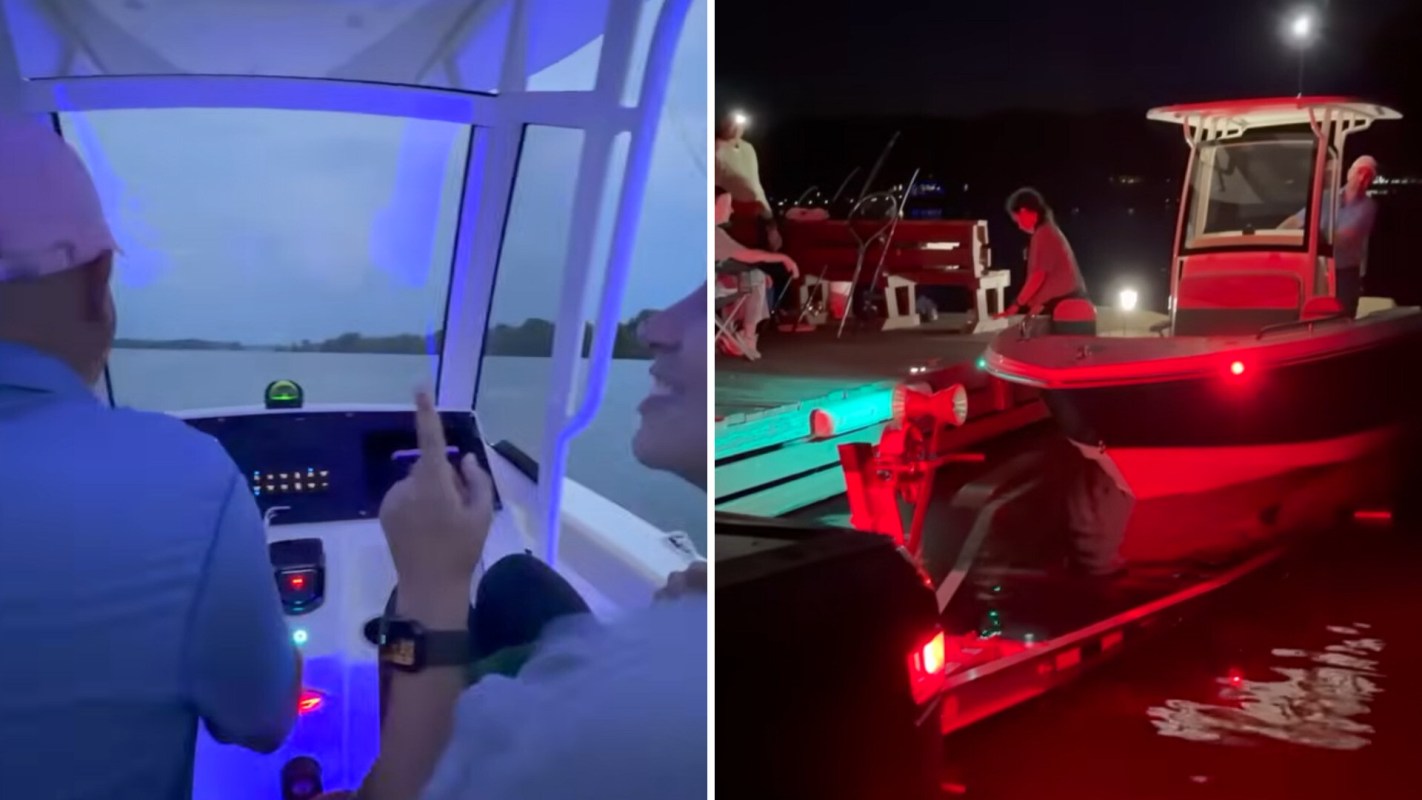
A boat powered by an 84-kilowatt-hour battery got a demanding real-world test on the North Carolina-Virginia line, offering a clearer picture of what marine electrification looks like when maximum power is used continuously.
The outing was less a leisurely cruise than a sustained wide-open-throttle endurance run, and it ended only when the battery quit on the water.
What happened?
In a YouTube video by Out of Spec Reviews (@OutofSpecReviews), the focus was on a worst-case endurance test: a Scout 215 XSF electric center-console with a Flux Marine setup was run at wide-open throttle until its battery was depleted.
On Lake Gaston, along the North Carolina-Virginia border, the team started with a full 84-kWh pack.
As one host put it, "We're going to charge it up to full. We're going to go 100% power until it dies."
Once an earlier trim problem was fixed, the boat ran at about 27 to 28 mph while using roughly 80 to 85 kilowatts.
TCD Picks » Quince Spotlight
💡These best-sellers from Quince deliver affordable, sustainable luxury for all




At one point, the display estimated around 54 minutes of full-throttle operation and a worst-case range of roughly 25-27 miles.
Near the end of the run, the warnings turned more urgent: "Your battery charge is below 10%. Low power mode has been turned on," after which the hosts reacted with lines including, "It's dying."
Why does it matter?
Because electric boats are still relatively uncommon, a test like this helps answer practical ownership questions that spec sheets alone often leave open.
Electric propulsion can mean lower fueling costs and less routine maintenance than gas-powered alternatives — no oil changes, fewer moving parts, and in some cases, no winterization headaches.
On the water, range is especially tough because a boat has to push through the water, which takes a lot of energy.
As one host noted, that efficiency challenge is one of the biggest tradeoffs compared with electric cars.
The test demonstrated that electric marine technology is moving beyond theory and into practical use.
One commenter pointed to a potential business opportunity, writing: "I could see a boat rental company on a lake having a fleet of these, and a couple DCFC cabinets installed on a dock."
The same shift is happening on land as well, where more drivers are considering buying an electric vehicle to cut fuel expenses and maintenance bills.
What's being done?
Companies such as Flux Marine are developing complete electric propulsion packages that can be installed in new boats or, potentially, replace conventional powertrains in existing ones.
That flexibility could help more marinas, rental operators, and boat owners try electric options without waiting for the entire industry to shift at once.
Charging remains one of the biggest questions for both electric boats and EVs. Charging an EV at home often costs about half as much as using public chargers, but basic Level 1 charging is slow. For people who want faster home charging, Qmerit provides free, instant installation estimates for Level 2 charger installations.
For now, the strongest use cases may be shorter lake outings, marinas with charging access, or fleets that regularly return to the same dock.
Another commenter pointed to the next logical test: "Would love a range test at like half throttle now. Like comfortable cruising speed."
That may ultimately be where this technology shines most: not necessarily in all-out endurance contests, but in everyday use, where quiet operation, lower maintenance, and lower energy costs can add up.

Get TCD's free newsletters for easy tips, smart advice, and a chance to earn $5,000 toward home upgrades. To see more stories like this one, change your Google preferences here.






