


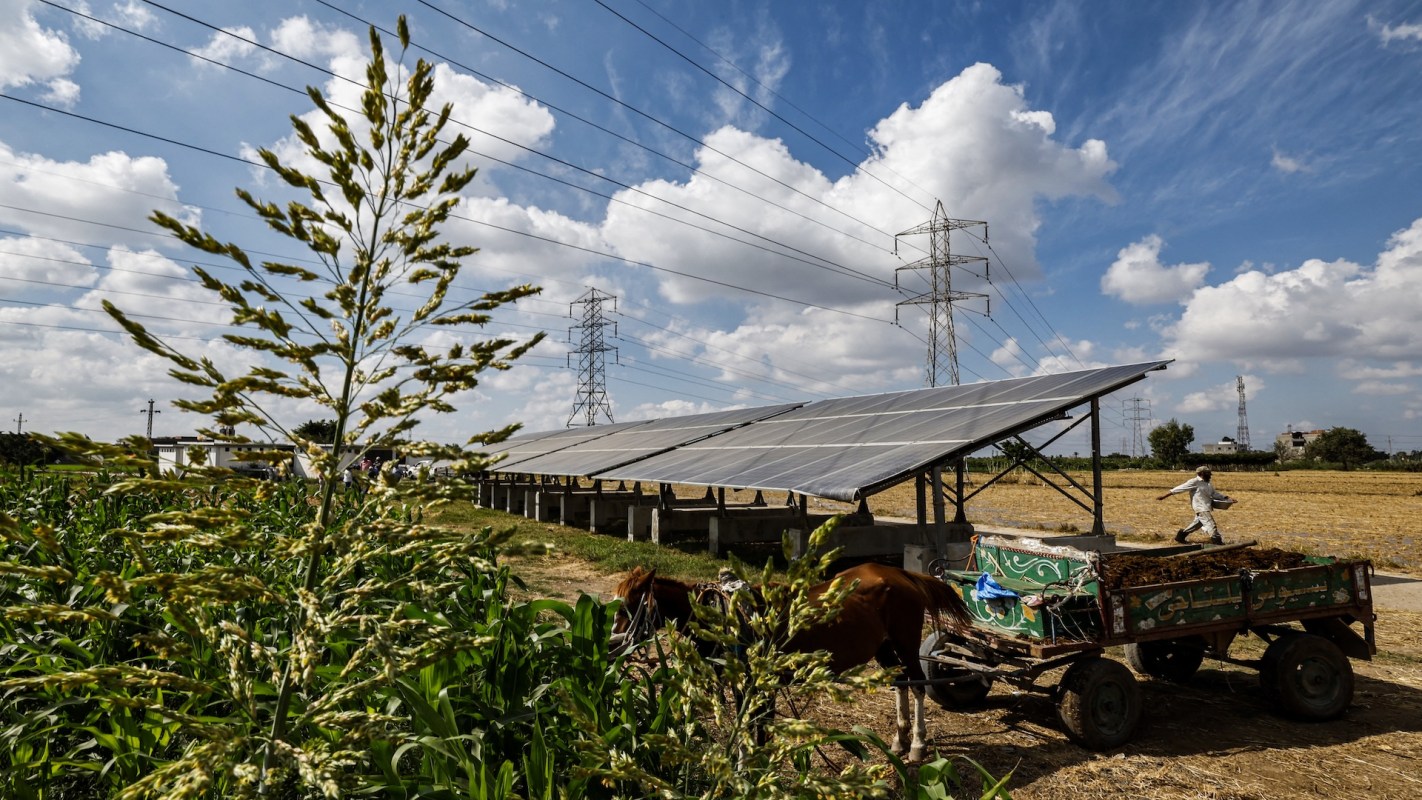
Egypt is revisiting an old survival strategy with a new tool as it looks for ways to manage fierce sun and scarce water so farms can keep producing food.
In pilot projects across the country, Grist reported farmers are testing whether the same land can grow food, save water, and produce electricity at once by raising solar panels above crops.
Here's what to know
Two pilot efforts in Egypt are trying agrivoltaics, which installs solar panels above crops so the plants receive filtered light and the ground stays cooler while holding more moisture.
That mix could be especially important in a country where farmers are under increasing pressure from extreme heat and shrinking water supplies, Grist noted. If the panels cut evaporation and reduce heat stress on plants, they may help safeguard harvests that support families and local economies.
The trials are also comparing multiple panel designs, including checkerboard-style layouts that leave openings for extra sunlight to reach the crops.
"There is no perfect guideline on how to get there, so I imagine many projects like ours will be trying out different things," Gofran Chowdhury, head of innovation at the renewable energy company 3E, explained to Grist.
TCD Picks » Quince Spotlight
💡These best-sellers from Quince deliver affordable, sustainable luxury for all




Those more open arrangements may produce less electricity than tightly packed solar farms, but they could raise the overall productivity of farmland by supporting both power generation and agriculture.
That two-purpose setup may also improve farmers' finances, as Grist noted. If one field can yield crops and electricity at the same time, it could create another income stream while using less water.
More background
A growing body of research suggests that some plants do better with partial shade.
Many species developed under partial shade, so long stretches of intense heat can be difficult for them. Grist noted research in Nevada's deserts found that shade from solar panels helped preserve soil moisture, benefiting the threecorner milkvetch, which otherwise would struggle in the conditions.
In Colorado, the outlet reported that rooftop crops grown under panels used about one-third as much water as plants without that shade.
The advantages are not limited to water use. On rooftops, solar panels can also reduce wind exposure and soften extreme heat around plants, creating a more consistent environment for growth.
Together, those effects could support more dependable food production while easing pressure on already scarce water supplies. In the Colorado research, Grist reported that cucumbers grown under solar shade reached unusually large sizes.
Results like these are helping shift agrivoltaics from a research concept toward a practical tool for climate adaptation.
What's being done?
According to Grist, funders and partner groups in Egypt are testing agrivoltaics in both small farming communities and larger agricultural settings.
They are trying to identify which designs are best suited to local crops, temperatures, and water conditions. The work also includes transparent solar panels that still produce electricity while allowing light through. That could give farmers more flexibility when growing crops with different sunlight needs.
The projects are aimed at getting cleaner electricity, less water loss, and healthier crops from the same piece of land. Maged El-Said, founder of Habiba Community, explained the appeal of using land for electricity and agriculture.
"I have the solution that I can have both," El-Said told Grist. "Well, why not?"

Get TCD's free newsletters for easy tips, smart advice, and a chance to earn $5,000 toward home upgrades. To see more stories like this one, change your Google preferences here.







