


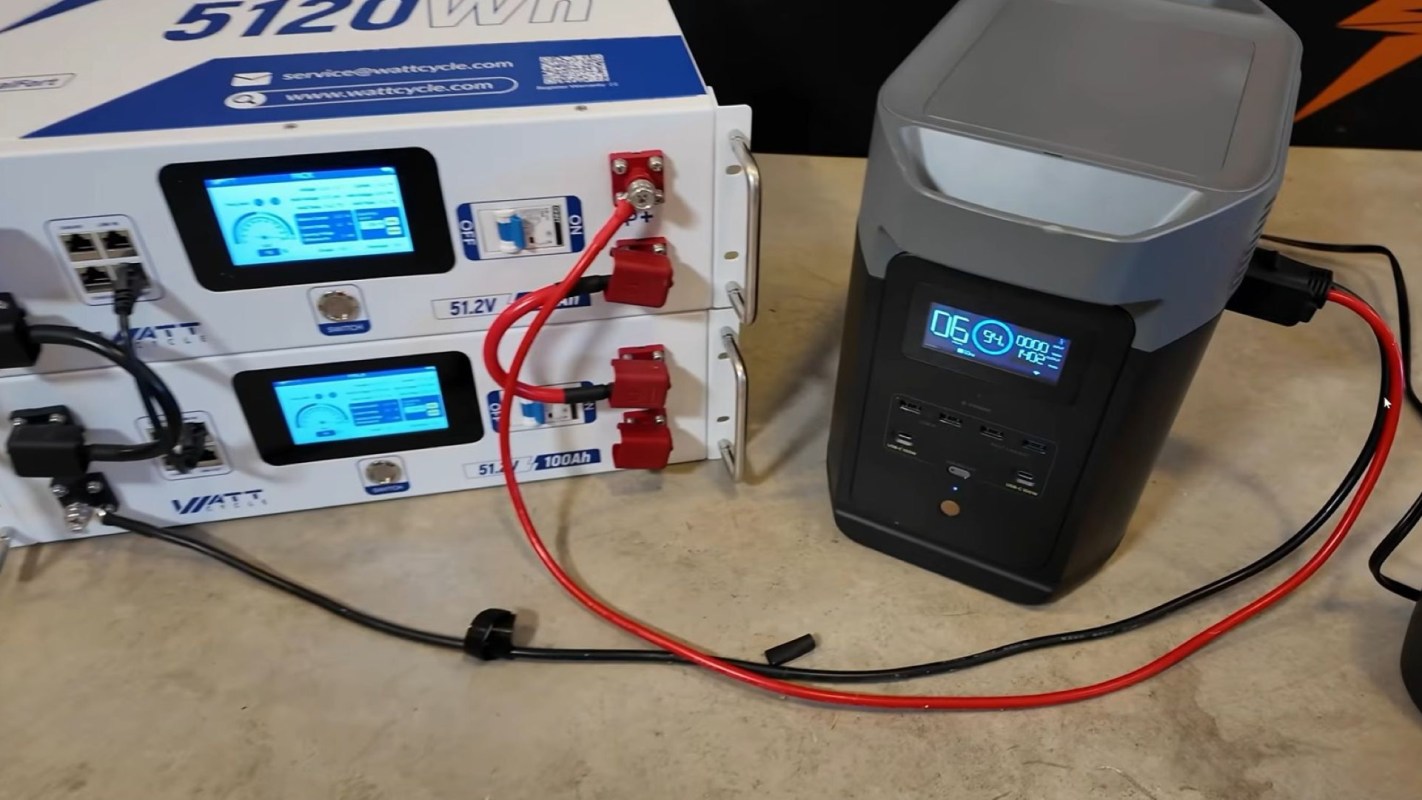
EcoFlow DELTA Pro owners looking for a lower-cost way to expand backup power may want to think twice before relying on one increasingly popular workaround.
Here's what to know
According to an explainer video by YouTube account There's A Trick For That (@theresatrickforthat), the EcoFlow DELTA Pro Smart Generator Adapter has an XT150 connection on the front, while the back plugs into the DELTA Pro's larger expansion port.
Rather than confirming that this would enable the WattCycle-style battery hack, the creator said three viewers who already had the adapter told him they couldn't get the setup to work. He said the most likely reason is the way the pins are mapped.
His explanation focused on the connector mismatch: the XT150 side has six pins, while the DELTA Pro-side connector has eight. That could mean the adapter passes enough through to run EcoFlow's smart generator, but not enough to support the communication needed for the battery hack to work correctly.
For those considering DELTA Pro-style backup for outage protection, adding battery storage is one of the best ways to protect your home during outages, save money on energy, and gain more energy independence.
Explore EnergySage to compare home battery storage options and competitive installation estimates; EnergySage has teamed up with electrification brand Qmerit to help homeowners get the best price on home battery storage solutions.
More background
On the transfer-switch question, the creator said he checked a Junbpaw automatic transfer switch with a multimeter and described it as useful for RVs and vans that alternate between two power sources. Based on that test, he said the unit switches the neutral along with the hot legs, which helps avoid ground-neutral bonding issues during changeover.
He also used a Mango Power kit to show anti-islanding behavior during bad weather, when input was about 68 watts before grid power was disconnected. The shutdown looked almost immediate, and the creator said the requirement is believed to be about 20 milliseconds to prevent electricity from backfeeding to the grid.
Crushed by your bills? See instant solar savings from vetted installers in just a few clicks With energy prices through the roof, there's never been a better time to go solar — and EasyHome can help you find the best prices from the best installers in your area. EasyHome takes the guesswork and headaches out of energy upgrades by showing you estimated savings from a network of vetted local partners. To get started, just enter your ZIP and share a few details about your home — seeing your estimate is really that easy. |

The video also addressed whether identical LiFePO4 batteries that had spent about 10 months in a 24-volt system could later be used in a 48-volt arrangement. The creator said yes, with one caveat: older batteries may empty a little sooner than brand-new ones, though he described 10 months of use as relatively minor for lithium iron phosphate batteries.
What can be done?
That leaves little reason for DELTA Pro owners to assume the Smart Generator Adapter can serve as a simple bridge for the battery hack. The creator said a DELTA Pro-specific adapter is in development, which would likely be a more straightforward route than relying on a plug-and-play combination that three viewers said failed.
For people building larger DIY battery banks, the video said reusing existing packs can still make sense when the batteries are identical. The creator also said an active battery balancing system can help older and newer batteries stay more closely aligned and recover more usable capacity from the combined bank.
For homeowners who want backup power without piecing together a custom system, Pila offers another strong option. Pila's plug-and-play batteries cost a fraction of a whole-home backup system. Adding battery storage is also one of the best ways to keep essential devices running during blackouts while reducing dependence on the grid.
Where can I learn more?
If you're looking at backup power options beyond DIY adapter workarounds, these stories explore alternatives gaining traction.
• At CES, companies showcased backup power without rewiring as home batteries get simpler.
• More homeowners are getting backup batteries without upfront costs through new financing options.
• Utilities are testing smart-charging systems to avoid grid strain as battery use grows.

Get TCD's free newsletters for easy tips, smart advice, and a chance to earn $5,000 toward home upgrades. To see more stories like this one, change your Google preferences here.






