


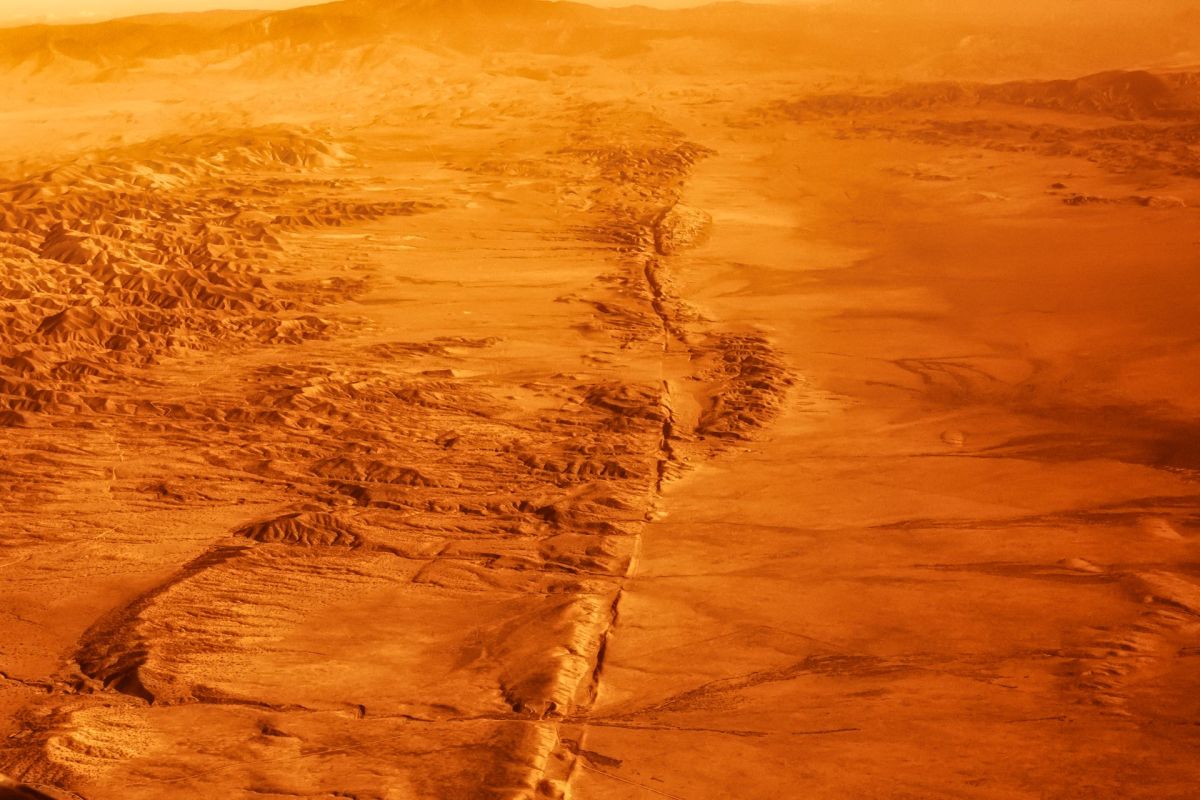
New research suggests the potential for earthquakes is intensifying on Southern California's San Andreas and San Jacinto faults, where tectonic stress has risen to its highest level in roughly 1,000 years.
Scientists are not saying they can predict when the next big earthquake will hit, but they are warning that the region's seismic risk is becoming harder to ignore.
What's happening?
In a study released June 3, researchers reported unusually high tectonic stress across Southern California's San Andreas and San Jacinto fault networks, according to a Gizmodo article.
Researchers used a 3D earthquake cycle model and geological records based on radiocarbon dating, tree-ring anomalies, and historical rupture evidence to simulate how stress has accumulated over the past millennium.
Cajon Pass, where the two faults meet near Los Angeles, parts of the Inland Empire, and the Coachella Valley, emerged as a major hotspot. The researchers found that some sections have reached, and in cases surpassed, their highest stress levels of the last 1,000 years.
"The question of when and how the next major earthquake will occur in this region is one of the most pressing problems in applied geoscience," lead author Liliane Burkhard said, per Gizmodo.
TCD Picks » Quince Spotlight
💡These best-sellers from Quince deliver affordable, sustainable luxury for all




The model showed 3.6 megapascals of stress on the San Jacinto-San Bernardino segment and 2.8 on the Mojave South section of the San Andreas. That combination could raise the odds of a rupture jumping across both fault systems.
Why does it matter?
A major earthquake can cause collapsed buildings, damaged infrastructure, injury or death, days or even weeks without power or water, and enormous recovery costs for families and local governments.
Damaged gas appliances or gas lines can increase the danger of leaks, fires, and unhealthy indoor air after a quake. Harsh chemical products can rupture and spill during a natural event. Also, building materials and electrical wires that are damaged can cause potential danger long after the quake.
Those impacts can also bring steep financial consequences for individuals and communities, including medical bills, missed work, temporary housing costs, insurance disputes, and additional strain on emergency services and hospitals.
The study further suggests that Cajon Pass may act as an "earthquake gate," meaning the next major rupture could be even more destructive if it spreads across both fault systems rather than remaining confined to one.
As Burkhard put it, "So not only is it concerning that the stresses are reaching historic highs, but also that the relative stress conditions between the two fault systems are approaching the range we associate with major ruptures crossing both faults simultaneously — and that is a scenario with much larger consequences for the region."
What's being done?
Researchers said the study provides a better framework for hazard assessment, not a countdown clock, and that more precise modeling can help planners, engineers, and emergency officials prepare infrastructure and response systems for worst-case scenarios.
For households, preparedness can still make a meaningful difference. Securing heavy furniture, keeping emergency water and food on hand, maintaining a flashlight and first-aid kit, and knowing your family's communication plan can all help reduce risk.
If you have gas appliances, it's also worth understanding emergency shutoff guidance from your local utility and looking into ways to modernize your home over time to remove the danger.
Reducing toxic chemicals kept in the house can help protect your health in case of cleaning material ruptures or spills. Choosing gentler supplies and learning how to use natural cleaning products can be a practical harm-reduction step, especially for households with kids or anyone with breathing issues.
Burkhard said, "Our results provide a clearer, physics-based picture of the current stress state of the fault system, and the framework we developed is not just applicable to California, but also for other complex fault junctions worldwide."
She added, "Cajon Pass doesn't simply block or channel earthquakes: It responds to stress conditions, and those conditions change over centuries."

Get TCD's free newsletters for easy tips, smart advice, and a chance to earn $5,000 toward home upgrades. To see more stories like this one, change your Google preferences here.






