


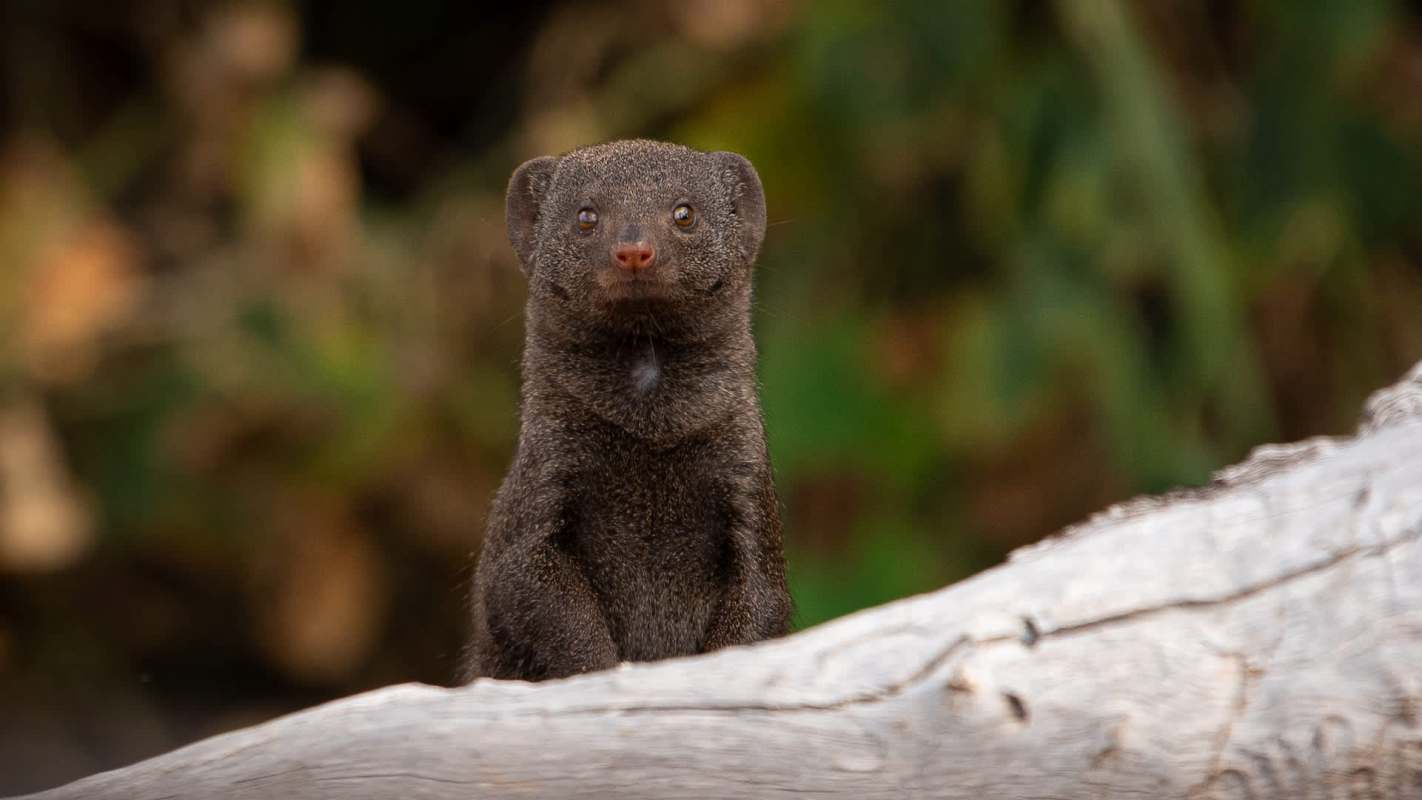
Despite their small size, common dwarf mongooses have big plans: they may plan ahead when other rival groups could be close.
New research indicates that these highly social mammals start changing their behavior before a rival group shows up, rather than only responding once a confrontation is underway.
What happened?
A paper published in Nature Ecology & Evolution used 10 years of data on common dwarf mongooses, or Helogale parvula, in South Africa, according to Popular Science.
Common dwarf mongooses are the smallest carnivores in Africa and usually live in groups of about five to 30. Encounters between neighboring groups can become dangerous very quickly.
The researchers concluded that the animals seem able to identify where in their territory a clash is more likely and adjust ahead of time. Those changes included differences in calling, movement through the territory, and where they decided to sleep.
The pattern was most pronounced in parts of the territory where the odds of meeting rivals were highest, even if no rival group was actually there at the time.
TCD Picks » Quince Spotlight
💡These best-sellers from Quince deliver affordable, sustainable luxury for all




The findings also suggest that the kind of threat shapes the response. Sentinel mongooses called more when a potential rival group was larger, while some other choices — such as evening sleeping-site selection — changed most when nearby groups were similar in size, when conflict could be especially costly.
Why does it matter?
The findings suggest these animals are operating within what researchers described as a landscape of conflict, rather than treating conflict as something that begins only at the instant of contact.
That helps explain how smaller or less powerful groups survive in competitive environments. Strategic movement, communication, and protection of resources can all reduce the risk of injury or loss. In the wild, those choices can determine whether animals maintain access to food, shelter, and safe territory.
The research may also help biologists better understand how social animals make decisions under stress — and how ecosystems are shaped not only by direct fights, but by the constant expectation that one could happen.
What are people saying?
According to Popular Science, Andy Radford, the study's senior author and a behavioral ecologist at the University of Bristol, said, "We know that battles between groups can be very dangerous for participants. What we've shown now is that there are constant behavioural changes to mitigate these risks and enhance the likelihood of future contest success."
Josh Arbon, the study's lead author and a behavioral ecologist at the University of Cambridge, added, "Not only are the mongooses keeping track of where their enemies might be, but they're factoring in the relative size of different groups. They can then tailor their pre-emptive behaviour accordingly."

Get TCD's free newsletters for easy tips, smart advice, and a chance to earn $5,000 toward home upgrades. To see more stories like this one, change your Google preferences here.







