


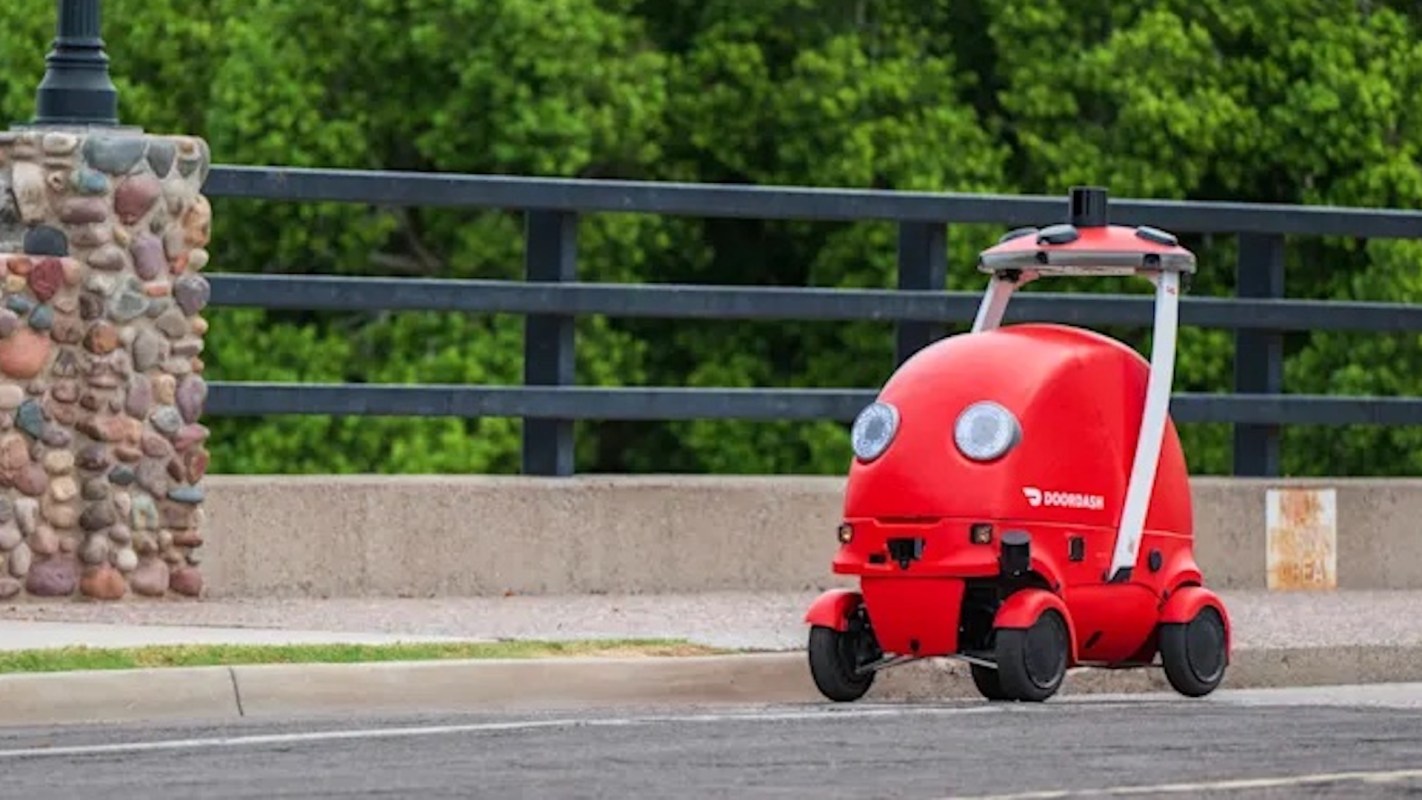
A small, fully electric delivery robot is taking on a major winter challenge as DoorDash tests its ability to navigate rain, sleet, and snow on Salt Lake City streets.
The cold-weather trial of Dot, DoorDash's red, beetle-like vehicle, could help bring robotic food deliveries to more places year-round.
Here's what to know
Salt Lake City customers cannot yet request deliveries from Dot, which already operates in other cities under conditions described as "everyday" in a company news release. DoorDash is using the local pilot to help the robot navigate winter weather, according to The Salt Lake Tribune.
Dot can travel on sidewalks, streets, and driveways, though bike lanes are its main route. At a September presentation to the city's Business Advisory Board, Anna Powell, who oversees government relations as a senior manager at DoorDash, said the robot reaches about 20 mph.
Its cargo compartment can accommodate six large pizza boxes and a food load weighing up to 30 pounds, allowing it to deliver substantial takeout orders to customers' doors. Dot is best suited for deliveries under four miles, Powell explained.
More background
Dot's electric operation offers a way to transport food without burning gasoline on those trips.
TCD Picks » Quince Spotlight
💡These best-sellers from Quince deliver affordable, sustainable luxury for all




A DoorDash representative told the board that the robot's operations in Arizona matched the gasoline use of car-based delivery drivers, which totaled 11,252 gallons, according to the Tribune.
When Dot picks up an order, the customer's tip is refunded, reducing the cost of robot-handled deliveries.
Powell told the board that DoorDash had 70,000 active delivery workers, known as dashers, in Utah.
Powell said workers could focus on larger, more lucrative deliveries that need human judgment and attention while Dot takes on orders they usually decline, the Tribune reported.
What's being done?
Ashu Rege, vice president of autonomy and head of DoorDash Labs, described the pilot's goals in the company's news release.
"By piloting Dot in rain and snow in Salt Lake City, we're building the safety case and operational knowledge needed to expand this technology responsibly — not just to more cities, but to more days of the year when people need it most," Rege said.
For residents sharing streets with the 350-pound machine, safety is another important consideration.
A DoorDash representative told the board that Dot is designed to recognize emergency vehicles and avoid pedestrians, whether they are in crosswalks or suddenly enter its path. The robot is also designed to stop for small animals.
"We're looking forward to working with city leaders, bike advocates and the Salt Lake City community to ensure that Dot can develop the capability to serve all cities," Rege said.
Where can I learn more?
Dot's winter trial comes amid concerns about the safety of autonomous vehicles and their impact on workers. These stories cover sidewalk access, a delivery robot crash, DoorDash's worker settlement and chatbot dispute, and opposition to London robotaxi tests.
• A U.K. charity wants delivery robots banned from pavements to protect disabled people.
• In Tallinn, a delivery robot maker blamed a bright billboard and faulty sensor after a crash injured nine.
• DoorDash will pay $131.5 million to New York workers, admitting it "screwed up."
• A DoorDash customer says its chatbot promised a full refund, then denied one after cancellation.
• In London, robotaxi tests draw backlash from drivers worried about machines working around the clock.

Get TCD's free newsletters for easy tips, smart advice, and a chance to earn $5,000 toward home upgrades. To see more stories like this one, change your Google preferences here.






